Skip to Main Content
Subscribe to Newsletters
Global X Logo
Search
Content loaded

Explore

Our ETFs

Investment Insights

Product ResearchCharting DisruptionMidyear Outlook 2026

Investor Resources

EducationHow to InvestTax Resources

About Us

About Global XNewsroomCareersContact Us

Follow Us

socaial media icon for LinkedInLinkedInSocial media icon for X (twitter)XSocial media icon for FacebookFacebookSocial media icon for InstagramInstagramSocial media icon for Youtube

Copyright © 2026 Global X. All rights reserved.

Privacy PolicyAccessibility Statement
YouTube

Subscribe to our newsletter

Get the latest news and updates from our team.

Subscribe

SEI Investments Distribution Co. (1 Freedom Valley Drive, Oaks, PA, 19456) is the distributor for the Global X Funds.

Check the background of SIDCO and Global X's Registered Representatives on FINRA's BrokerCheck.

Content
Product ResearchHealthcareCharting Disruption

GLP-1s Are Just Getting Started: Prospects Beyond Diabetes and Obesity

x
A
Arelis AgostoDirector of Research & Strategy
Dec 29, 2023·3 min read

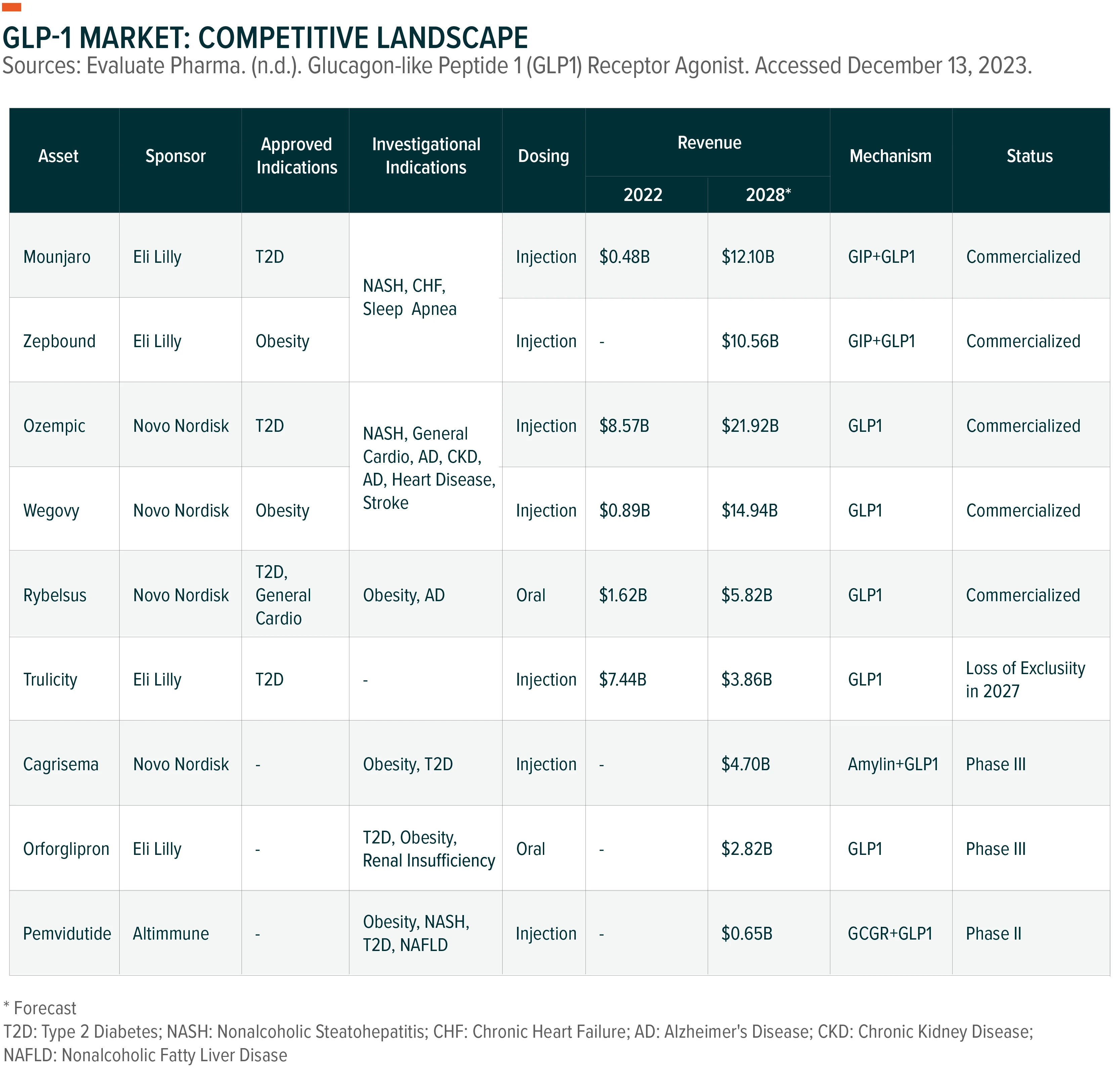
Almost overnight, FDA-approved diabetes drugs have become household names for their success in achieving weight loss. While we still envision a long runway for growth in these categories, the healthcare industry seeks to replicate success in other illnesses and expand the addressable market for these therapies even further.

This piece is part of a series that dives deeper into this year’s iteration of our flagship research piece, Charting Disruption.
231206-GLP1s-Leveraging-Successes_05

Key Takeaways

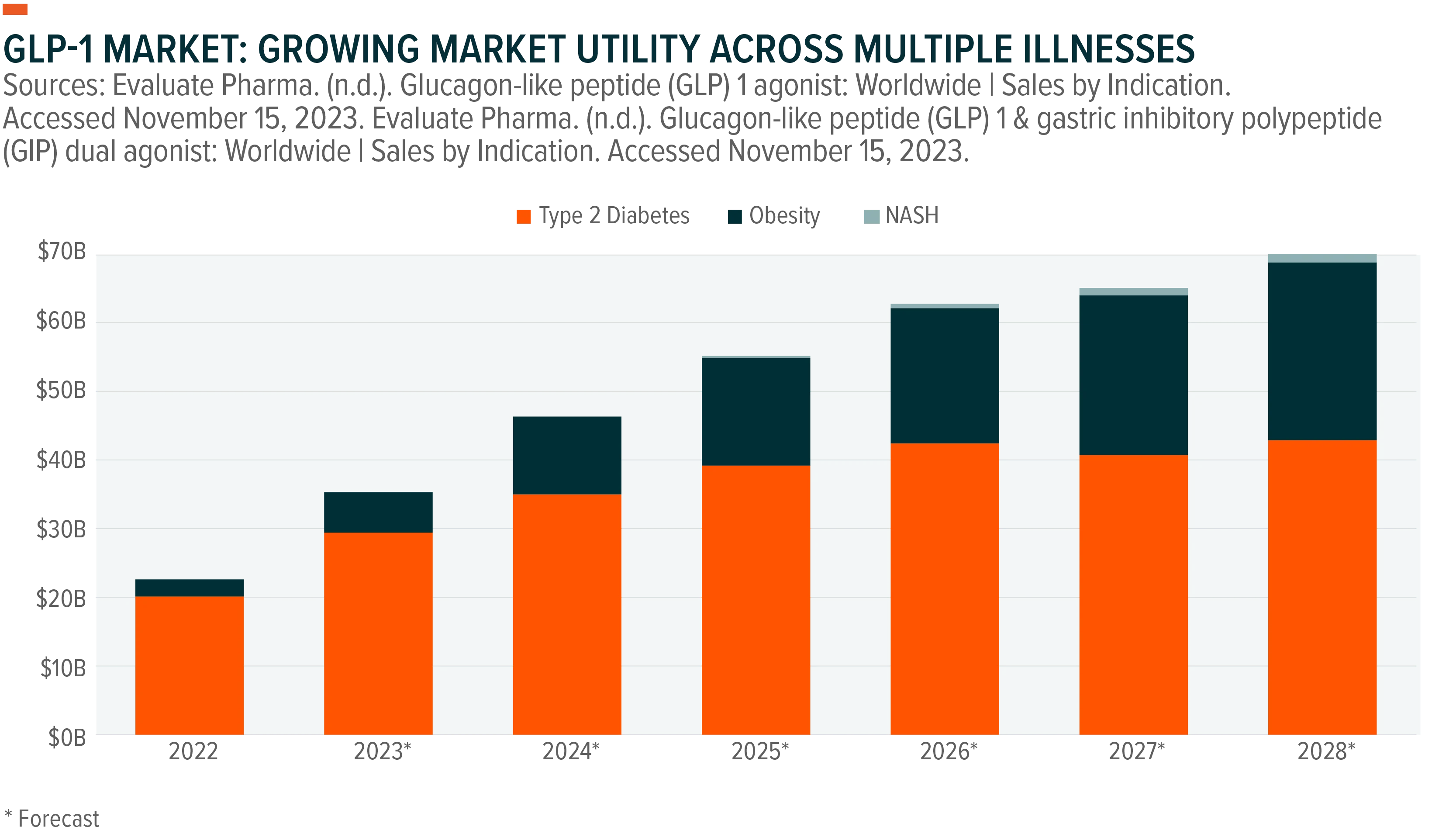
  • Glucagon-like peptide 1 (GLP-1) agonists have revolutionized the treatment of type 2 diabetes and obesity, achieving $23 billion in 2022 sales.1,2

  • The potential use for GLP-1s is being investigated in obesity-related illnesses like cardiovascular diseases and liver disorders.

  • Obesity and the obesity-related illnesses that GLP-1s target represent a massive addressable market, and sales of the treatments are expected to surge past $77 billion by 2028.3,4
     

GLP-1s: The Backstory

GLP-1 stimulates the body to produce more insulin when a patient’s blood sugar levels start to rise, helping manage diabetic symptoms. This treatment category has revolutionized the type 2 diabetes (T2D) space, achieving $20 billion in 2022 T2D sales, led by the success of Novo Nordisk’s Ozempic and Eli Lilly’s Mounjaro.5,6

GLP-1 treatments have also shown the ability to curb hunger, opening their potential use for obesity. Patients undergoing GLP-1 treatments have experienced weight loss of up to 22.5% of their body weight, rivalling weight loss from gastric bypass and sleeve gastrectomy surgeries.7

Following strong clinical trial results, higher-dose versions of Ozempic and Mounjaro, called Wegovy and Zepbound, respectively, have been approved for obesity by the FDA.8,9

Spurred by recent approvals, the obesity market is expected to be worth over $100 billion by the end of the decade, up from $2.8 billion in 2022.10,11
 

Looking Ahead: GLP-1s in Obesity-Related Disorders

Most recently, we’ve seen particular hope for GLP-1s in illnesses with a high correlation to obesity. Global obesity rates have nearly tripled since 1975, increasing prevalence rates for related disorders.12

  • Type 2 Diabetes (T2D):

    • Obesity accounts for 80–85% of the risk of developing T2D.13

There are currently 54 active clinical trials studying the expanded use of GLP-1s in other illnesses beyond diabetes and obesity, with the first such launch expected in 2025.19 Clinical data thus far has been encouraging. Novo Nordisk’s Wegovy, for example, recently showed a 20% reduction to incidence of heart attack, stroke, or death from heart disease.20
231206-GLP1s-Leveraging-Successes_04

Case Study: Non-Alcoholic Liver Disease

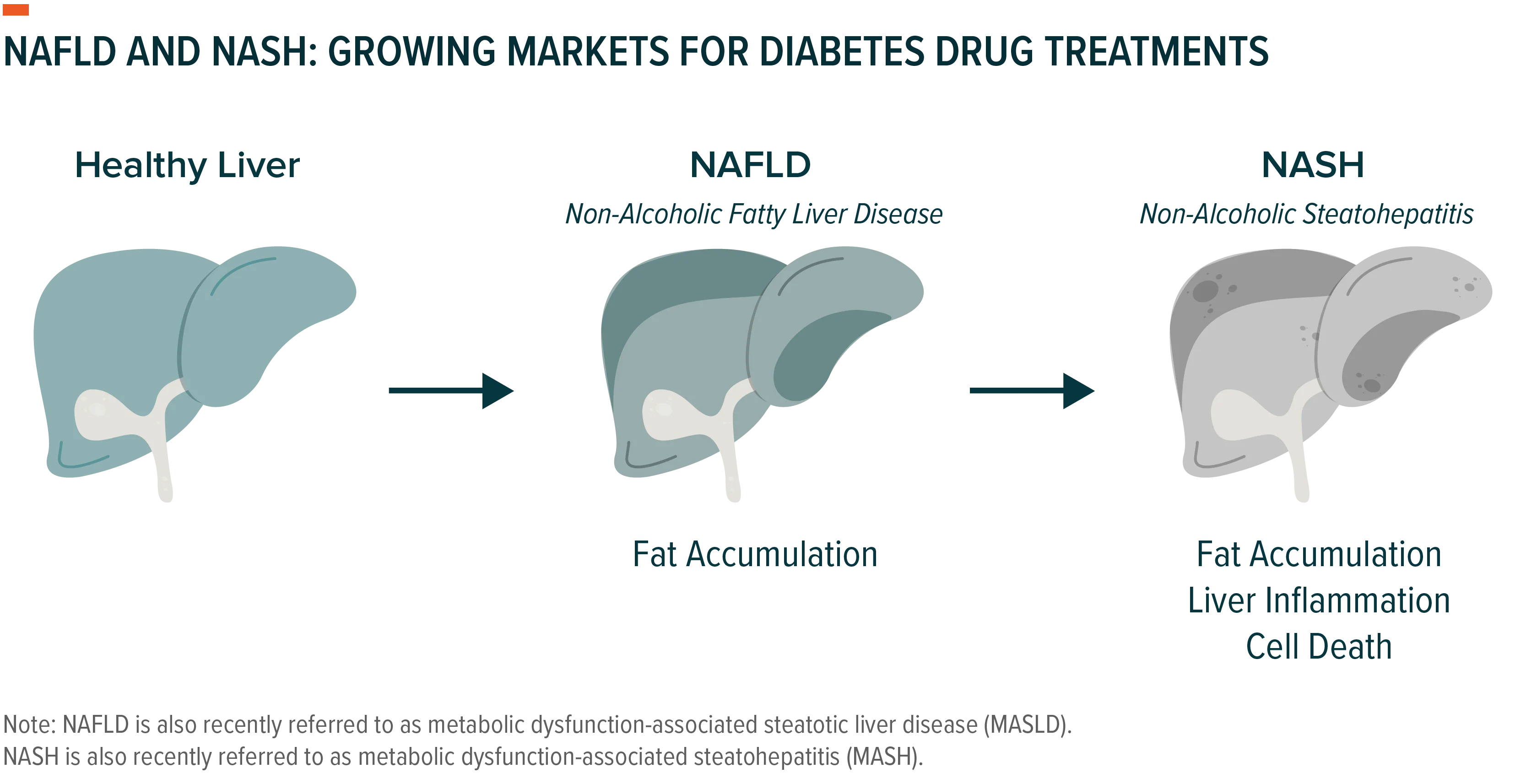
The potential for GLP-1s in liver disease is of particular interest. NAFLD and NASH currently have no approved treatments though they impact 25% and 5% of U.S. adults, respectively.21 As cases continue to largely go untreated, NASH prevalence is projected to increase 63% between 2015 and 2030.22
231206-GLP1s-Leveraging-Successes_01


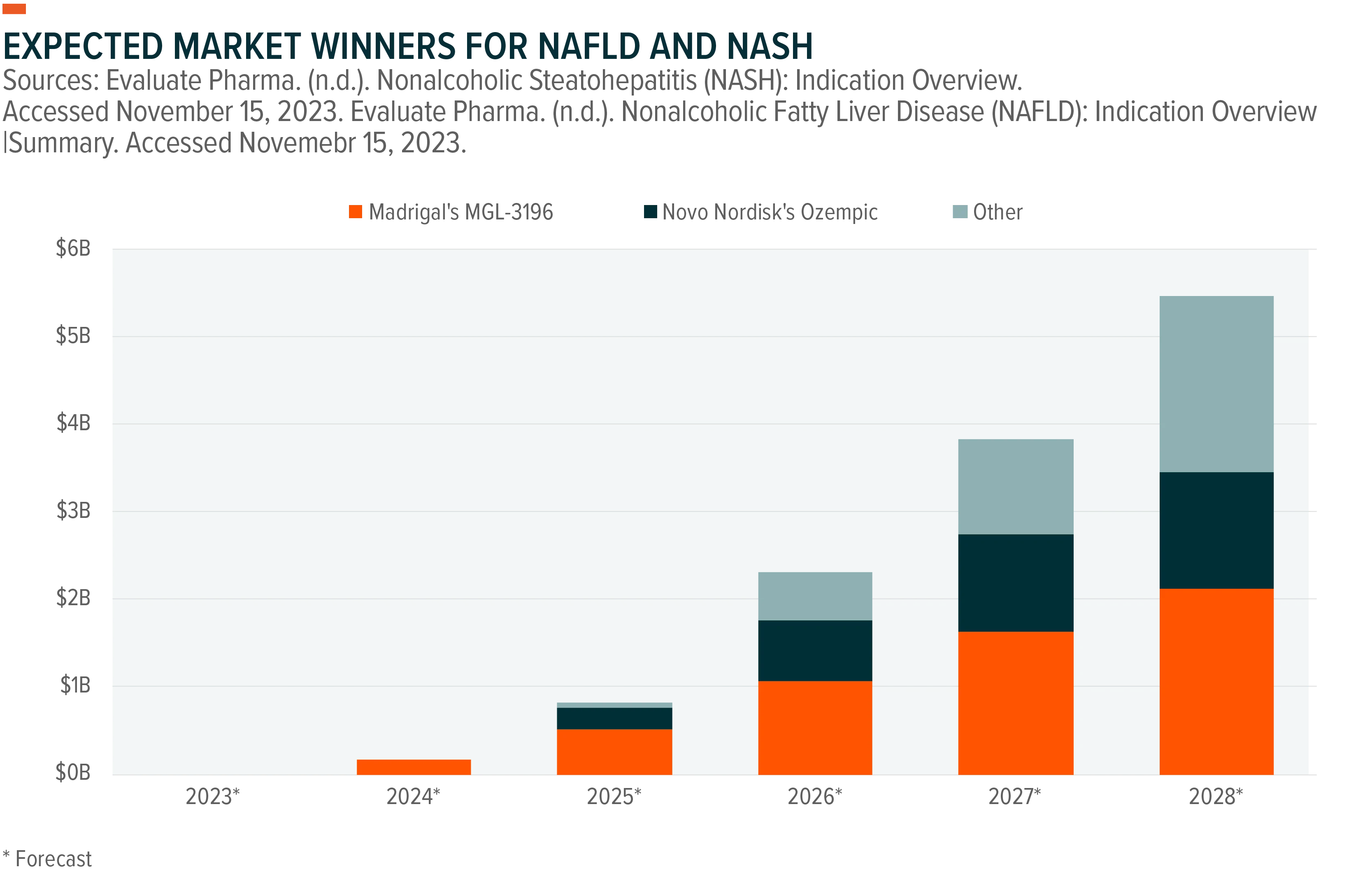
Given overlap in risk factors between diabetes and liver disease, diabetic treatment Ozempic is expected to be the second highest grossing treatment for NAFLD and NASH by 2028.23,24
231206-GLP1s-Leveraging-Successes_02

Conclusion

Demand for GLP-1s has been extremely strong and is likely to increase further as new indications are expected. To date, sales have been limited by supply, not demand. To meet demand, both Lilly and Novo look to expand supply capacity of their GLP-1 portfolios. Eli Lilly has invested $11 billion over the last three years to scale its manufacturing capacity.25 Novo Nordisk, for its part, announced a total of $8.3 billion in investments just in November 2023.26

Demand has also prompted other pharmaceutical firms to enter the GLP-1 market. Roche recently agreed to take over privately-held Carmot Therapeutics for $2.7 billion, marking its entry into the growing obesity space.27 This follows AstraZeneca deal worth up to $2 billion to license a GLP-1 pill from China-based biotech firm Eccogene.28

Overall, we see significant growth opportunities within the GLP-1 category, driven by the expansion of supply to meet the high demand and anticipated approvals for new disease categories.

T2D accounts for $380 billion in associated costs in the U.S.14

Cardiovascular Disease (CVD):

Obesity accounts for up to 78% of hypertension cases.15

Cardiovascular disease accounts for $320 billion in associated costs in the U.S.16

Liver Disorders:

Up to 90% of obese individuals have non-alcoholic fatty liver disease (NAFLD), a precursor to non-alcoholic steatohepatitis (NASH).17

NAFLD accounts for $103 billion in associated costs in the U.S.18

Related articles

1of2
Product ResearchCharting DisruptionThematic Growth

Introducing Charting Disruption: Outlook for 2026 and Beyond

This year’s iteration of our flagship research project, Charting Disruption 2026, aims to shed a quantifiable light on what the future may hold.

A

Arelis Agosto

Nov 3, 20256 min read
Product ResearchCharting DisruptionArtificial Intelligence

Artificial Intelligence: The Race to Human-Level Reasoning

Product ResearchCharting DisruptionThematic Growth

Introducing Charting Disruption: Outlook for 2026 and Beyond

This year’s iteration of our flagship research project, Charting Disruption 2026, aims to shed a quantifiable light on what the future may hold.

Footnotes

1. Evaluate Pharma. (n.d.). Glucagon-like peptide (GLP) 1 agonist: Worldwide | Sales by Indication. Accessed November 15, 2023.

2. Evaluate Pharma. (n.d.). Glucagon-like peptide (GLP) 1 & gastric inhibitory polypeptide (GIP) dual agonist: Worldwide | Sales by Indication. Accessed November 15, 2023.

3. Evaluate Pharma. (n.d.). Glucagon-like peptide (GLP) 1 agonist: Worldwide | Sales by Indication. Accessed November 15, 2023.

4. Evaluate Pharma. (n.d.). Glucagon-like peptide (GLP) 1 & gastric inhibitory polypeptide (GIP) dual agonist: Worldwide | Sales by Indication. Accessed November 15, 2023.

5. Evaluate Pharma. (n.d.). Glucagon-like peptide (GLP) 1 agonist: Worldwide | Sales by Indication. Accessed November 15, 2023.

6. Evaluate Pharma. (n.d.). Glucagon-like peptide (GLP) 1 & gastric inhibitory polypeptide (GIP) dual agonist: Worldwide | Sales by Indication. Accessed November 15, 2023.

7. Eli Lilly. (2022, April 28). Lilly’s Trizepatide delivered up to 22.5% weight loss in adults with obesity or overweight with SURMOUNT-1.

8. Food and Drug Administration. (2021, June 4). FDA Approves New Drug Treatment for Chronic Weight Management, First Since 2014.

9. Food and Drug Administration. (2023, November 8). FDA Approves New Medication for Chronic Weight Management.

10. Barron’s. (2023, September 7). Weight-Loss Drug Market Can Hit $100 Billion, J.P. Morgan Says. That Makes Eli Lilly Stock a Big Winner.

11. Evaluate Pharma. (n.d.). Obesity: Indication Overview. Accessed November 15, 2023.

12. World Health Organization. (2021, June 9). Obesity and overweight.

13. Diabetes U.K. (2022, September 8). Diabetes & Obesity.

14. International Diabetes Federation. (2021). Diabetes Atlas 2021.

15. National Institute of Health. (2020, February). Obesity-related hypertension: a review of pathophysiology, management, and the role of metabolic surgery.

16. American Heart Association. (2021, April 30). Spending on cardiovascular disease and cardiovascular risk factors in the United States: 1996 to 2016.

17. National Institute of Health. (2019). Obesity, nonalcoholic fatty liver disease and adipocytokines network in promotion of cancer.

18. National Institute of Health. (2016, November). The economic and clinical burden of nonalcoholic fatty liver disease in the United States and Europe.

19. Evaluate Pharma. (n.d.). Evaluate Omnium : Development Risk | Clinical Trials | Unified Clinical Trials. Accessed November 15, 2023.

20. Reuters. (2023, November 13). Wegovy’s heart benefits due to more than weight loss, Novo says.

21. American Liver Foundation. (2023, August 18). NASH definition & prevalence.

22. American Liver Foundation. (2023, September 11). Fatty liver disease.

23. Evaluate Pharma. (n.d.a). Nonalcoholic Steatohepatitis (NASH): Indication Overview. Accessed November 15, 2023.24. Evaluate Pharma. (n.d.b). Nonalcoholic Fatty Liver Disease (NAFLD): Indication Overview. Accessed November 15, 2023.25. Fierce Pharma. (2023, November 17). Eli Lilly takes manufacturing push to Germany with plans for $2.5B injectable plant.26. Fierce Pharma. (2023, November 27). Novo Nordisk keeps GLP-1 expansion spree rolling with $2.3B manufacturing upgrade in France.27. Reuters. (2023, December 4). Roche joins race for obesity drugs with $2.7 billion Carmot deal.28. AstraZeneca. (2023, November 9). AstraZeneca licenses novel agent for the treatment of cardiometabolic conditions and obesity.

AI’s rise is fueling a substantial buildout in centralized infrastructure that could cut compute costs and potentially unleash value through new applications.

T

Tejas Dessai

Nov 3, 20256 min read
A

Arelis Agosto

Nov 3, 20256 min read
Product ResearchCharting DisruptionArtificial Intelligence

Artificial Intelligence: The Race to Human-Level Reasoning

AI’s rise is fueling a substantial buildout in centralized infrastructure that could cut compute costs and potentially unleash value through new applications.

T

Tejas Dessai

Nov 3, 20256 min read