
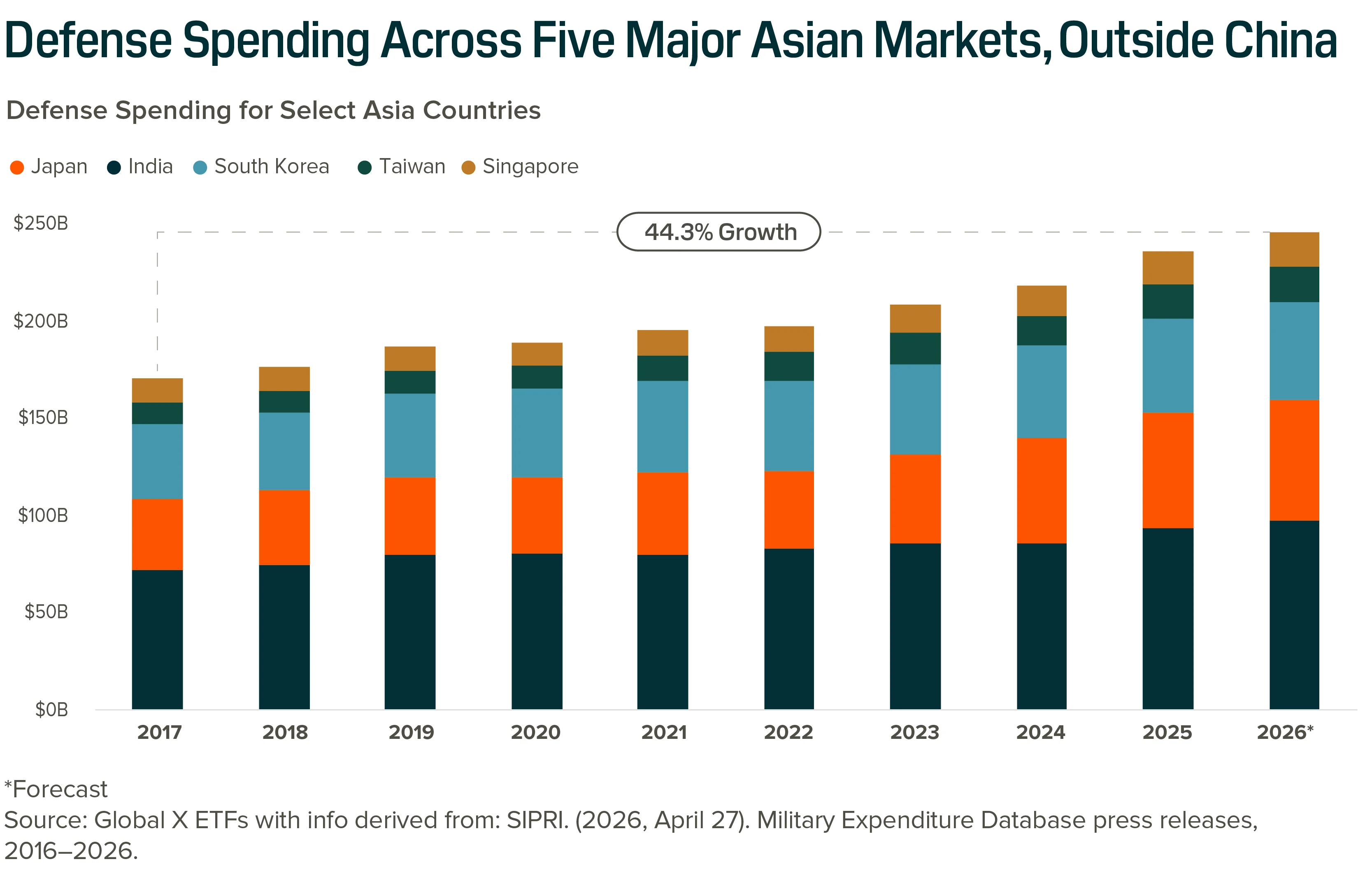
Asia is rearming at its fastest pace in more than 15 years. Fueled by rising geopolitical tensions and a push for greater military self-reliance, defense spending across Asia and Oceania surpassed $681 billion in 2025, growing 8.1% in real (inflation-adjusted) terms—the fastest annual increase since 2009. Among five major Asian military spenders outside China—India, Japan, South Korea, Taiwan, and Singapore—we estimate combined defense expenditure to rise 44.3% between 2017 and 2026, underscoring the scale and persistence of the region’s military buildup.1
The investment cycle is broad-based, with countries pursuing distinct national priorities. South Korea is bolstering domestic security and expanding defense exports, India is scaling domestic arms manufacturing, Japan is investing in unmanned systems, and Taiwan is scaling asymmetric defense capabilities. Across these markets, advances in AI, autonomous systems, and cybersecurity are reshaping military operations and broadening the opportunity across defense hardware, software, and advanced technologies.
To help investors gain exposure to these trends, we’re launching the Global X Asia Defense Tech ETF (SHLA), which seeks to track the Global X Asia Defense Tech Index (the “Underlying Index”), providing exposure to up to 50 Asian defense tech companies.
Key Takeaways
Rising military budgets and policies favoring domestic production could support a sustained investment cycle across Asia’s defense industry.
AI, unmanned systems, and cybersecurity are becoming integral to Asian military operations, expanding the opportunity across advanced hardware, software, and the technologies that connect and protect them.
SHLA offers focused exposure to Asia-listed companies across cybersecurity, defense technology, and advanced military systems and hardware, the segments we believe stand to benefit most from these shifts.
Asia’s Push for Defense Self-Reliance Is Accelerating Investment
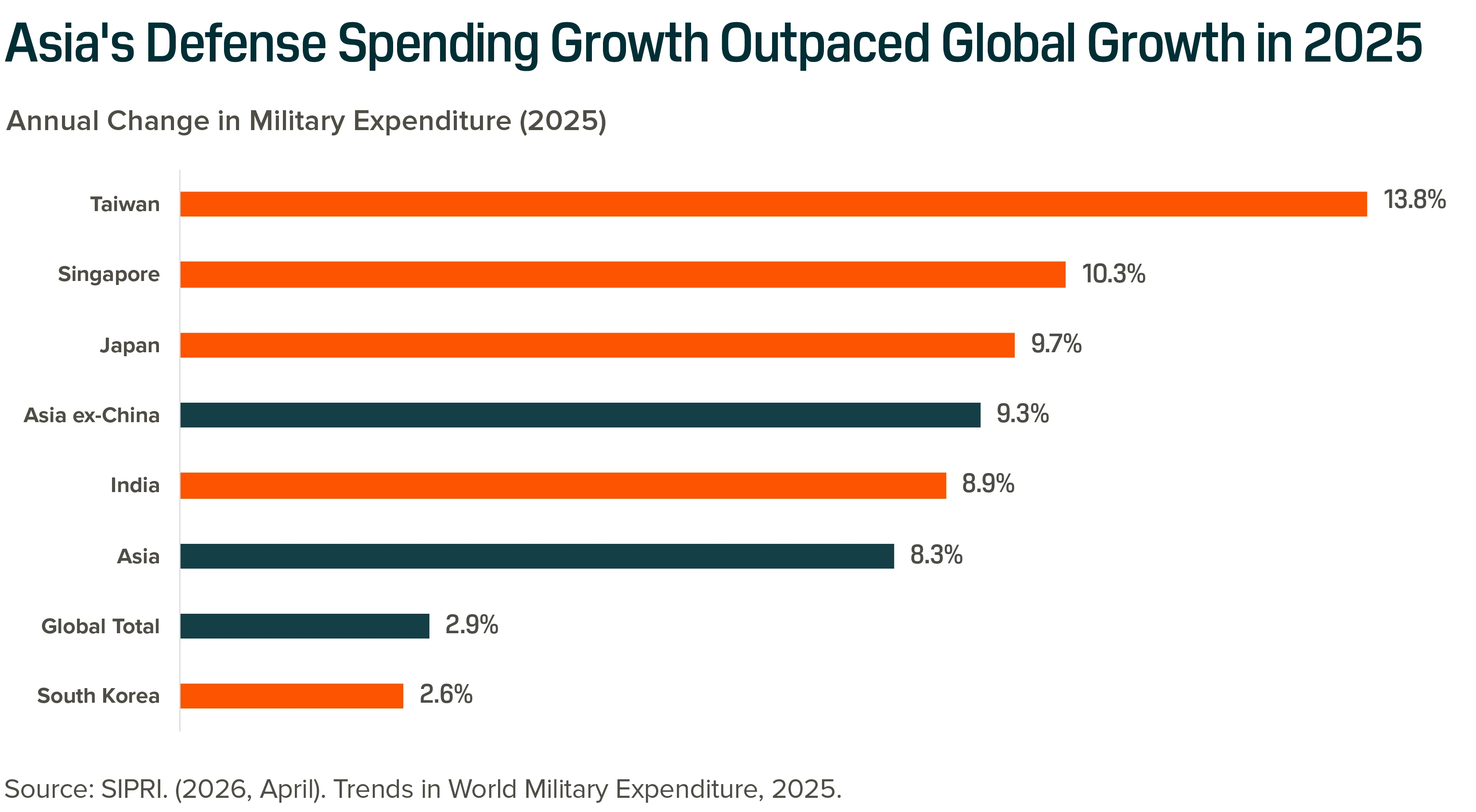
Asia's defense spending growth has outpaced the broader global rearmament cycle. The region's five largest military spenders outside China—India, Japan, South Korea, Taiwan, and Singapore—spent nearly $236 billion on defense in 2025, an increase of 8.2% year-over-year (YoY), compared with global growth of 2.9%.2 Spending across these five markets is projected to reach $362 billion by 2030, representing a further 54% increase from 2025 levels.3
Importantly, this momentum is supported by longer-term commitments to military modernization and self-reliance. Taiwan is targeting defense spending equivalent to 5% of GDP by 2030, up from 3.32% in its 2026 budget, while South Korea is targeting 3.5% by 2035, from 2.4% in 2026. India is also targeting approximately 2.5% by FY2031, compared with 2% in Fiscal Year (FY) 2026-2027.4,5 We believe these commitments could provide greater visibility into future procurement, supporting sustained investment across the region's defense industrial base.
Domestic Procurement and Innovation Strengthen Asia’s Defense Industry
Asia’s defense opportunity rests on two complementary priorities: expanding domestic production and strengthening military capabilities through technology. To reduce reliance on foreign suppliers, governments are increasing domestic capacity to develop, manufacture, and maintain critical equipment at home.
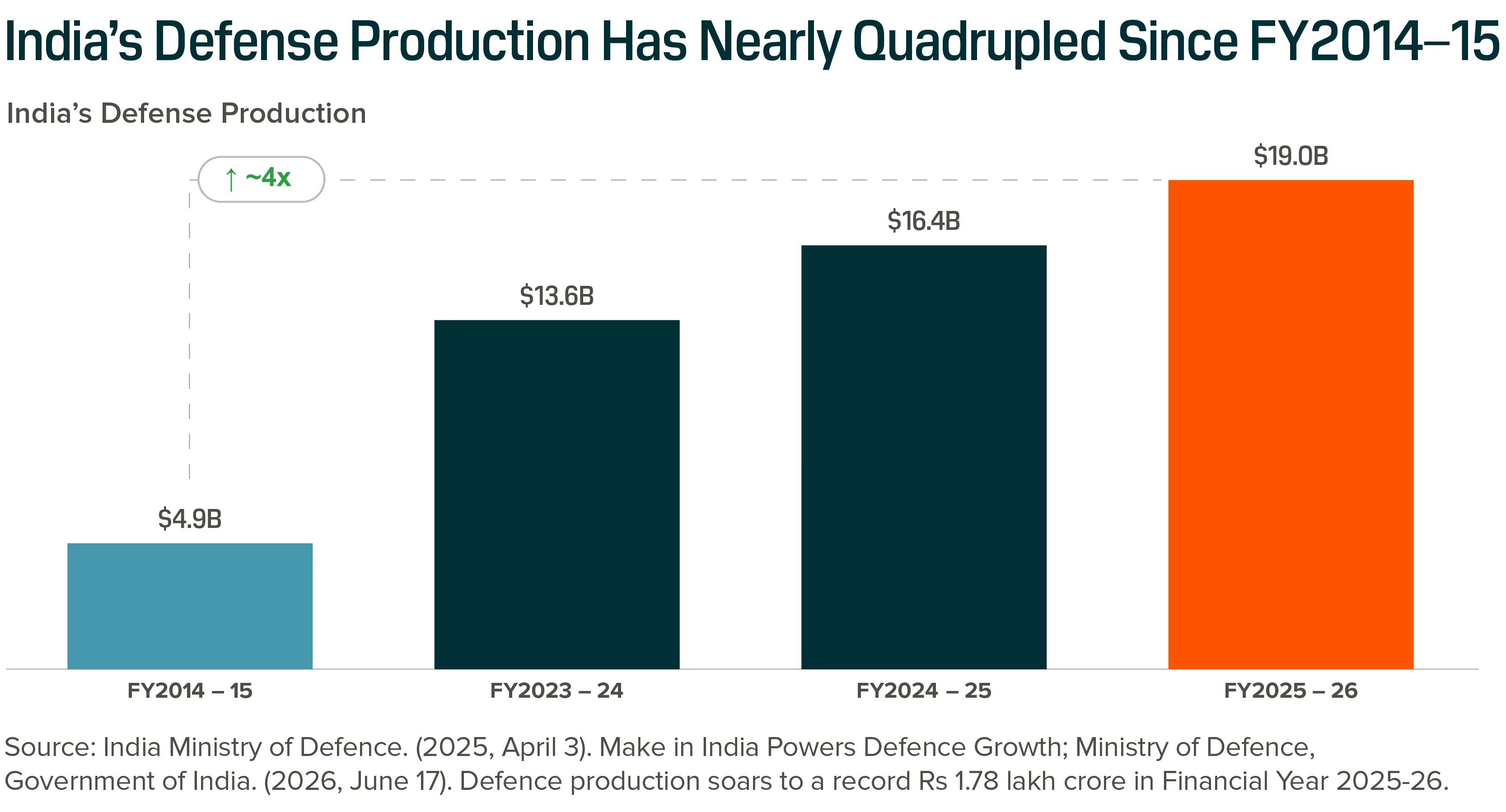
Procurement policies can direct more spending toward local firms, providing a more dependable customer base and encouraging investment in engineering and manufacturing capacity. India, for example, has earmarked 75%, about INR1.39 trillion ($14.82 billion) of its FY 2026–27 defense capital acquisition budget for domestic manufacturing, up from 40% in FY2020–21.6 This localization push is already translating into business opportunities, with domestic companies securing 177 of the 193 defense contracts awarded in FY2024–25 in India.7
At the same time, military modernization increasingly depends on the software, sensors, AI, and secure communications that make equipment more effective. Demand therefore extends beyond building new platforms to upgrading those already in service. This broadens the opportunity across established manufacturers integrating advanced technologies and specialist providers supplying the systems that enable them.
Together, these priorities can expand both the scale and duration of the revenue opportunity. Equipment sales establish an installed base that requires maintenance and periodic upgrades over decades, while digital capabilities create additional demand for software updates, integration, and support as threats evolve. For traditional contractors, these activities can complement hardware production with ongoing service revenue and potentially higher-margin offerings. We believe companies combining manufacturing expertise with proprietary technology could capture more value throughout a platform’s service life, supporting greater revenue visibility and potential margin expansion.
Regional Suppliers with Distinct Specialties Are Converting Budgets into Production and Exports
The defense opportunity in Asia extends beyond domestic procurement to global export markets. While local spending can support the development of new industrial capabilities, exports can help spread engineering costs across a broader customer base. The opportunity also varies across markets, reflecting distinct industrial strengths and security priorities.
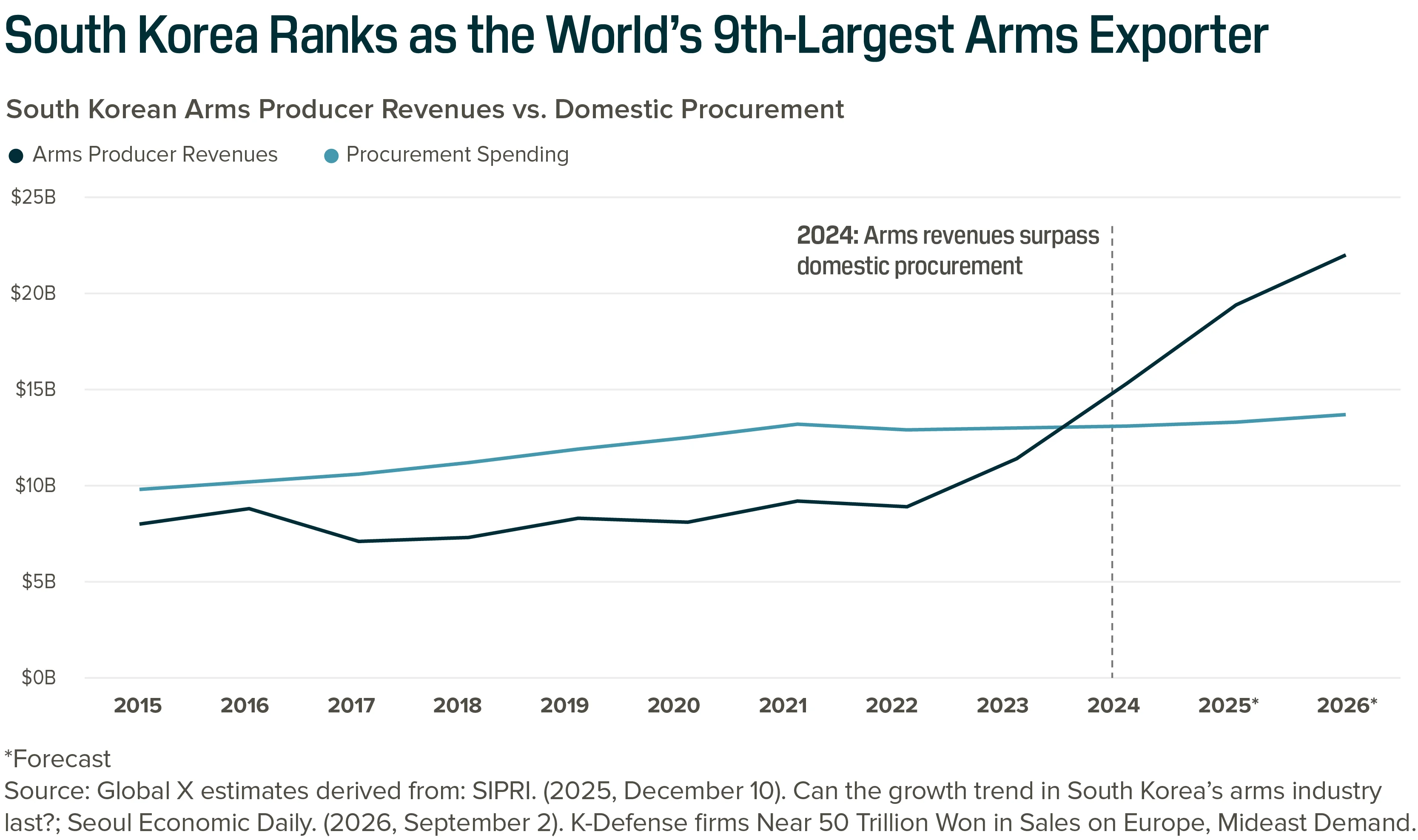
South Korea Is Becoming an Arms-Export Powerhouse
South Korea's defense investment is being driven by the evolving military threat from North Korea, alongside a broader push to strengthen national security and defense self-reliance. Its government proposed a KRW73.27 trillion ($54.73 billion) defense budget for 2027, an 8.2% increase from the 2026 level, with an emphasis on modernizing capabilities and shifting toward a more technology-centered military.8
Overseas orders add another source of growth. In early 2026, Hanwha Aerospace signed an approximately $922 million contract to supply Norway with Chunmoo multiple rocket launch systems, guided missiles, and logistics support.9 This followed an approximately $4 billion agreement signed in December 2025 to supply guided missiles through a joint venture in Poland, with deliveries scheduled to begin in 2030.10 South Korean shipbuilders such as Hyundai Heavy Industries and Hanwha Ocean are also working with the U.S. on naval modernization programs.11
These agreements illustrate how export relationships can deepen into local production and longer-term support. We believe that model positions South Korean companies to benefit from demand for both weapons platforms and the technologies that enhance their effectiveness, broadening suppliers’ revenue bases.
Japan’s Record Defense Budget Could Broaden Demand Across Its Defense Supply Chain
Japan is undertaking one of its largest military buildups in decades, with military expenditure rising 9.7% to $62.2 billion in 2025, its highest share of GDP since 1958.12 Driven by growing regional security concerns, Japan is investing to strengthen its domestic defense capabilities, with a growing emphasis on advanced weapons, unmanned systems, and space technology.
This shift is translating into significant investment opportunities across Japan's defense industry. The country allocated approximately $6.08 billion toward stand-off defense capabilities and $1.73 billion toward unmanned systems in FY2026, including domestically developed missiles and its SHIELD initiative, which aims to integrate low-cost aerial, maritime, and underwater drones into a layered defense network.13
Space is also emerging as a critical component of Japan's defense modernization. The government allocated approximately $1.08 billion to space-related defense capabilities in FY2026, while a consortium of Japanese companies secured a ¥283.1 billion contract to provide satellite imagery and related services through 2031.14 Participants include established suppliers such as Mitsubishi Electric and emerging space technology companies including Synspective and iQPS, illustrating how defense investment is creating new opportunities across Japan's commercial space ecosystem.15
We believe Japan's growing emphasis on domestic defense technology could benefit both established manufacturers and specialized suppliers across advanced weapons, autonomy, satellite intelligence, and related systems, expanding the opportunity beyond traditional military hardware.
India’s Push for Local Manufacturing Fuels Record Defense Exports, Reducing Reliance on Imports
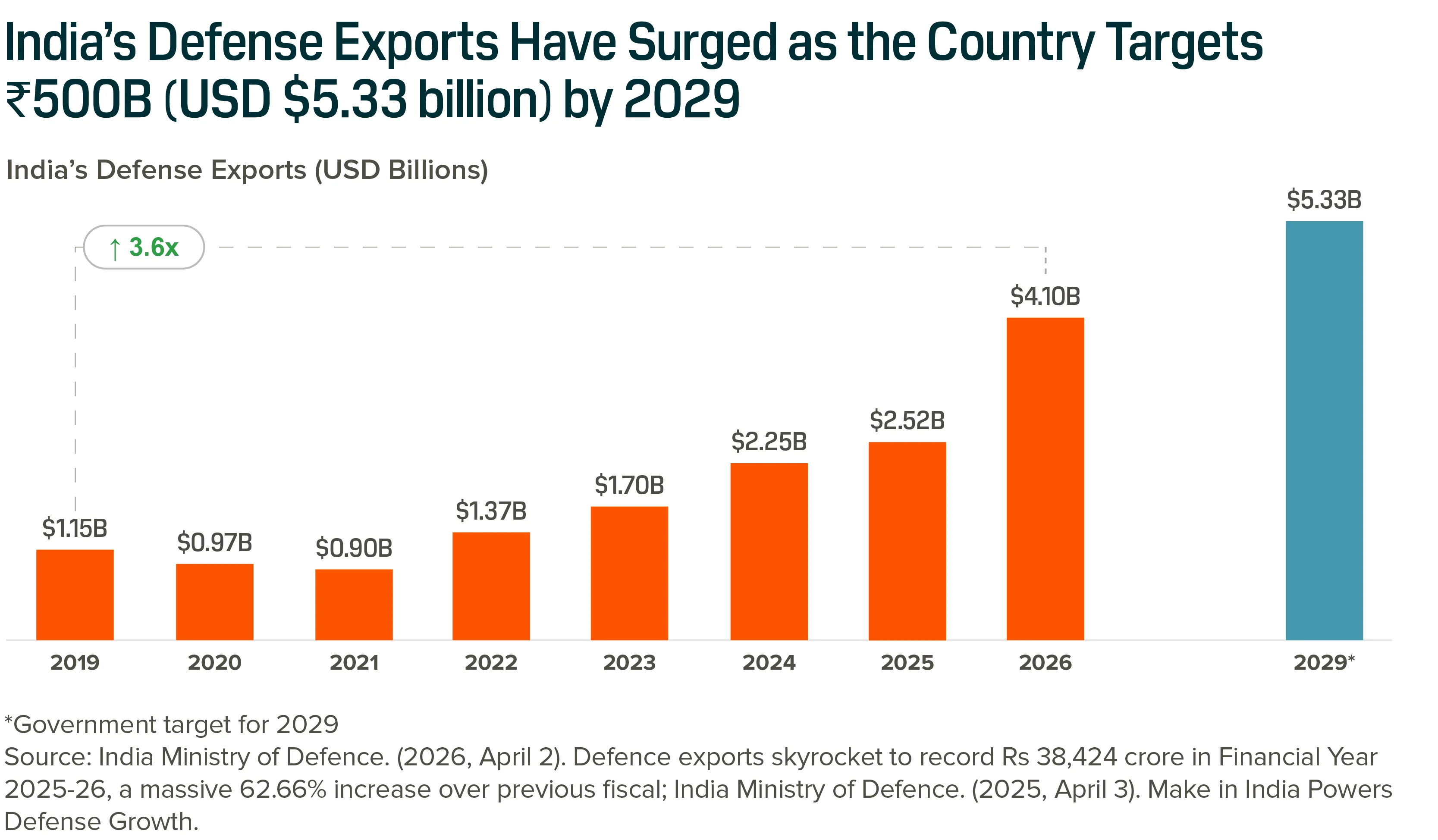
India’s large domestic defense market and policies favoring local production are strengthening its manufacturing base. The FY2026–27 Ministry of Defence budget totals approximately $83.72 billion, up 15.2% from the prior year’s budget estimate.16 As domestic capabilities have expanded, reliance on imported defense equipment has fallen from 65–70% historically to around 35% as of July 2026.17
Growing exports are broadening the opportunity, with overseas defense sales in FY2025-26 increasing 62.7% from the previous fiscal year.18 We believe domestic procurement and international demand can help suppliers scale production, fund further innovation, and reduce their dependence on individual programs.
Taiwan Illustrates the Shift Toward Autonomous and Asymmetric Defense
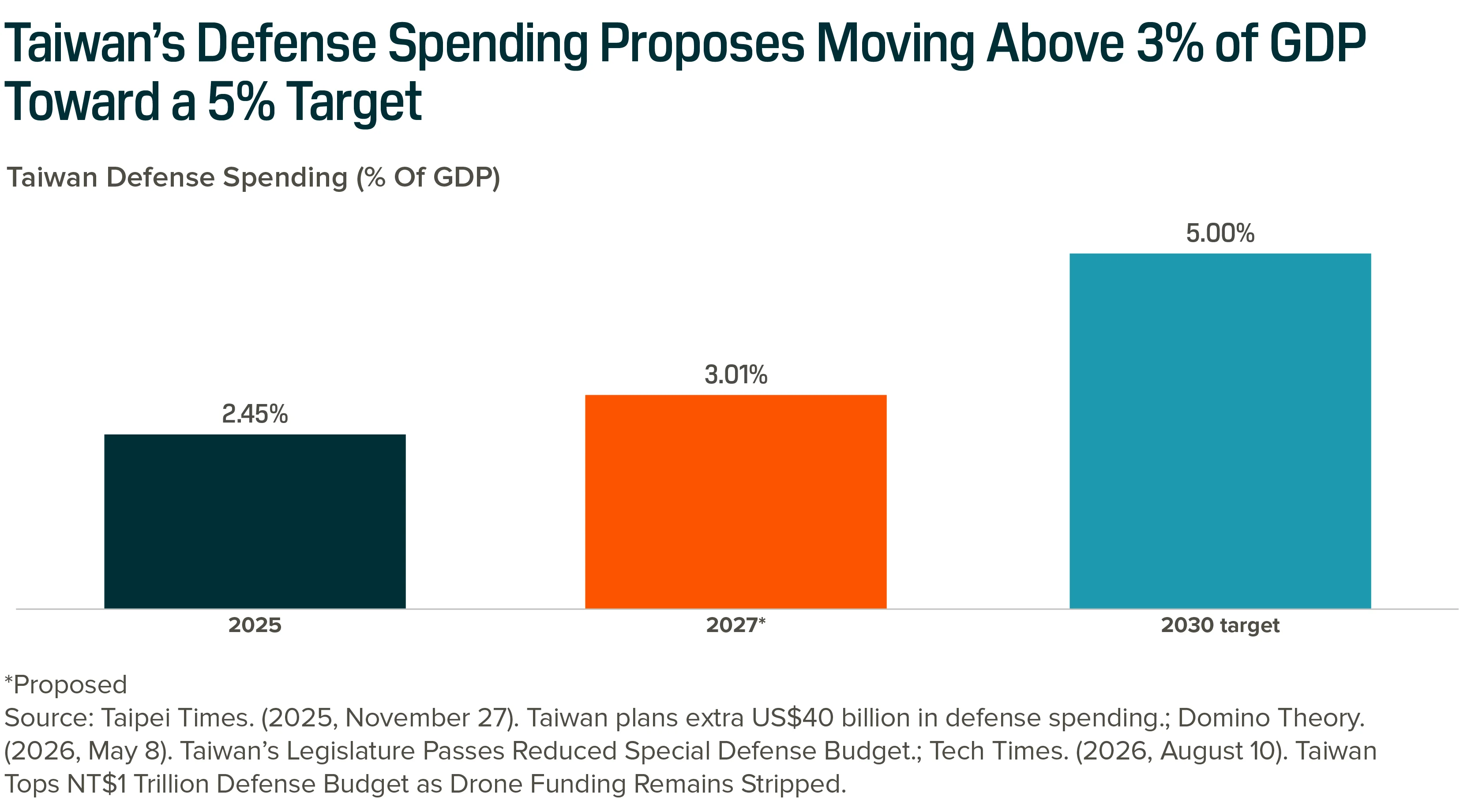
Taiwan’s proposed 2027 defense budget totals $35.3 billion, or 3.01% of GDP, which would exceed 3% for the first time since 2009.19 President Lai Ching-te is targeting 5% by 2030, prioritizing unmanned systems and automated defenses to strengthen deterrence against a larger adversary.20
Air defense priorities include connected sensors, AI-assisted threat assessment, and counter-drone technologies that enable more coordinated responses while preserving human control over engagements. These capabilities also support critical infrastructure protection, broadening their potential applications.
Aerospace Industrial Development Corporation, for example, has developed a counter-drone system combining radar, electronic jamming, and lasers.21 We believe such initiatives can help Taiwan’s electronics and aerospace suppliers capture more defense spending by expanding from individual components into integrated systems.
Technology Is Reshaping the Economics of Asia’s Defense Modernization and Gaining a Larger Share of Budgets
Core to Asia’s defense modernization is generating more capability per platform and per dollar spent. Software, sensors, and secure networks enable forces to detect threats earlier, coordinate responses, and upgrade existing equipment.
Recent drone warfare in Europe and the Middle East underscores the economic imperative: unmanned systems costing thousands of dollars can prompt interceptions using missiles costing millions.22 Repeated attacks can strain budgets and exhaust defensive inventories, strengthening demand for layered defenses that combine conventional missiles with lower-cost interceptors, electronic warfare, and emerging directed-energy systems. The objective is to match the response to the threat.
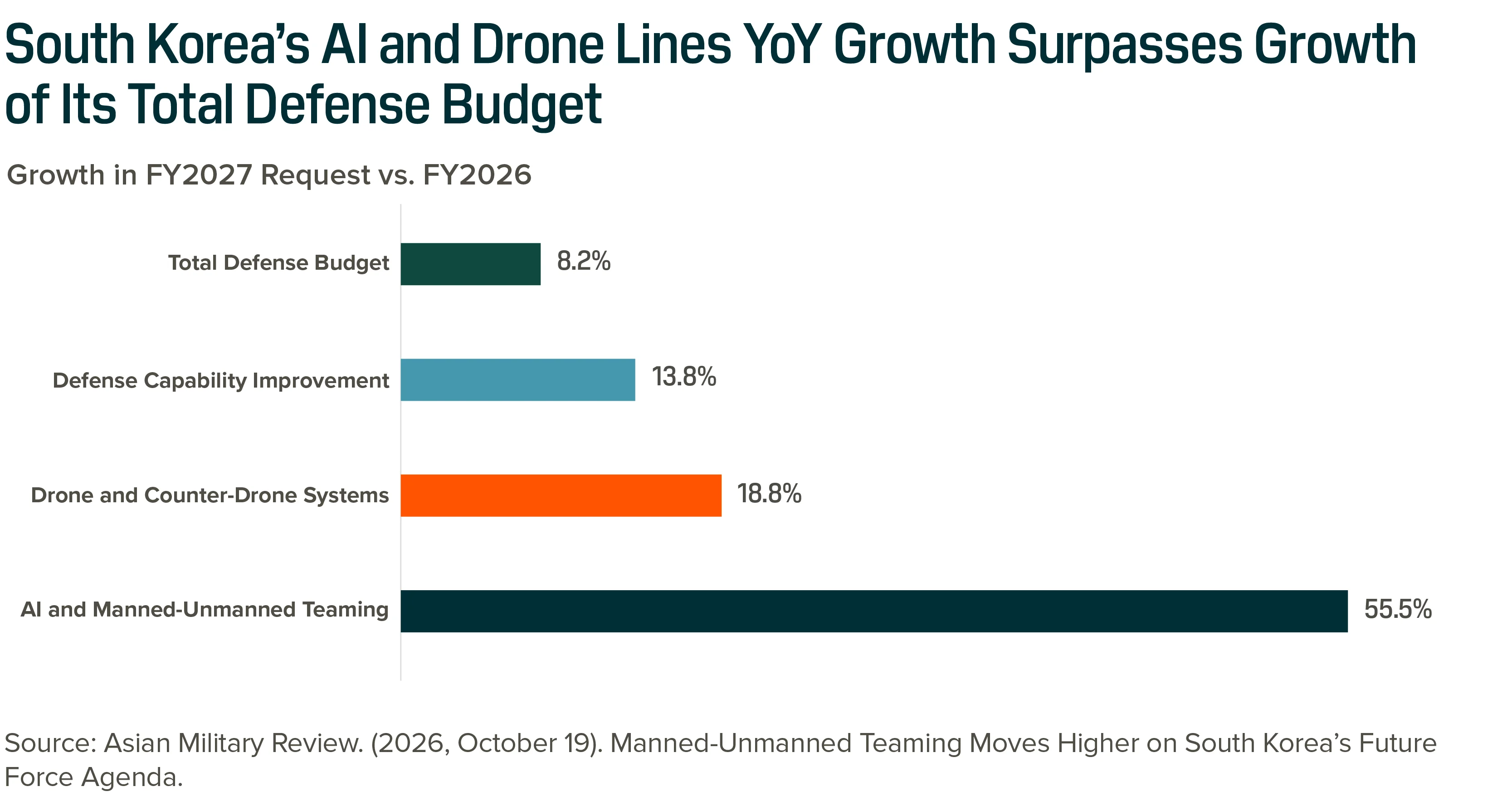
Defense budgets reflect a broader commitment to innovation. South Korea increased research and development (R&D) funding for defense capability improvements by 19.4% to approximately KRW5.84 trillion ($4.36 billion) in 2026, outpacing overall defense budget growth of 7.5%. Its FY2027 request goes further, with AI-related capability funding up 55.5%.23 India raised its Defense Research and Development Organization allocation to INR291 billion ($3.1 billion) for FY2026–27, from INR268 billion ($2.86 billion) the previous year.24 Japan’s approximately ¥277.3 billion ($1.73 billion) FY2026 allocation for unmanned capabilities illustrates how these priorities translate into procurement and development.25
Delivering these capabilities also requires closer collaboration between manufacturers and software specialists. Korea Aerospace Industries’ March 2025 partnership with Shield AI aims to accelerate AI pilot development for operations involving crewed and uncrewed aircraft.26 Such partnerships can combine established engineering and manufacturing capabilities with specialized autonomy software, helping regional contractors expand the functionality of their platforms.
We believe this shift broadens the investment opportunity across unmanned vehicles, processors, sensors, navigation, secure communications, and software. As military systems become more interconnected, suppliers that help integrate and upgrade them could capture a larger role in modernization spending.
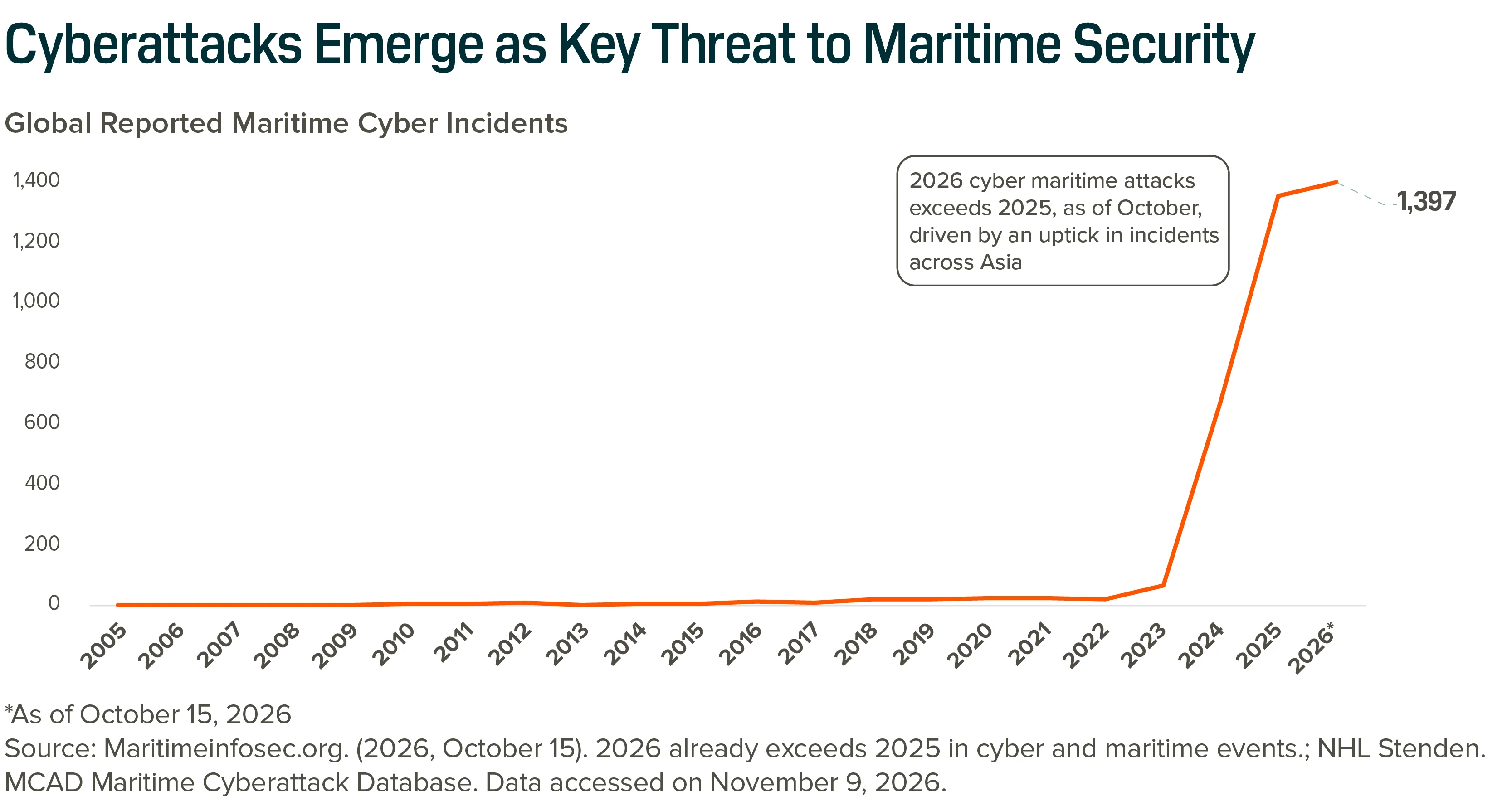
Cybersecurity is another critical front, with growing cyber threats to military and civilian infrastructure prompting targeted investment from governments across Asia. Taiwan’s National Security Bureau reported an average of 2.63 million daily intrusion attempts against critical infrastructure in 2025, which it attributed to China, underscoring the persistent nature of these threats.27 Cyber incidents against maritime targets, a domain central to Indo-Pacific security, have also risen sharply: reported global incidents roughly doubled in 2025, and 2026 had already surpassed that level by October 15.28
Governments are responding with dedicated investment in cyber defense. For example, Japan allocated approximately ¥233.1 billion ($1.46 billion) to strengthening cyber capabilities in FY2026, supporting information system protection, research, training, and cybersecurity across its defense industry.29 Its priorities include AI-assisted response systems and continuous monitoring for threats already inside networks.
SHLA: Targeting Asia’s Defense Technology Ecosystem
The Global X Asia Defense Tech ETF (SHLA) is a passively managed fund offering targeted exposure to Asian companies across three key segments of the defense technology value chain:
The underlying index selects up to 50 of the largest eligible companies across ten Asian listing markets. To maintain high thematic purity, companies must derive at least 50% of revenue from defense-related activities across the segments outlined above, ensuring meaningful exposure to defense, military, or national security applications.
Constituents are weighted by free-float market capitalization, with a 10% cap on individual securities. To maintain diversified regional exposure, companies from each developed-market country are subject to an aggregate cap of 40% and securities listed in each emerging-market country at an aggregate cap of 30%.
We believe SHLA offers investors targeted access to Asian defense technology companies positioned to benefit from rising military budgets, domestic modernization, and growing export opportunities. Its regional focus can complement global defense allocations while providing exposure to Asia’s expanding defense technology ecosystem.
Conclusion: Asia’s Defense Modernization May Be a Secular Growth Story
With leading Asian nations pledging higher defense-to-GDP ratios in the coming years, we believe the region is poised for a sustained investment cycle. Rising budgets can support greater manufacturing scale and technological innovation, helping regional suppliers strengthen their capabilities, compete for international contracts, and reinvest in further development. Companies combining manufacturing expertise with proprietary technology could be particularly well positioned to capture a growing share of Asia’s defense spending.
SHLA offers a focused way to access this intersection of defense spending and technological innovation, bringing the global defense tech investment thesis to the companies supporting Asia’s military modernization.
Related ETFs
SHLA – Global X Asia Defense Tech ETF
Click the fund name above to view current holdings. Holdings are subject to change. Current and future holdings are subject to risk.