In each of the past 15 years through 2024, an Emerging or Frontier Market has led global market performance.1 However, the asset class, as defined by traditional metrics, has underperformed the U.S. Fortunately, investors now have more sophisticated options on how to play the parts of the market they view as most attractive, while avoiding those they deem risky. Between active, passive, thematic, country specific, and regional investment strategies – there are various ways to access the potential outsized growth at discounted valuations often sought in Emerging Market (EM) assets. Moreover, adding EM exposure to a portfolio not only allows investors to access the potential growth opportunities in these markets, but it also adds diversification. Research has shown that including EM equities in a diversified portfolio can help reduce overall portfolio risk, while potentially improving returns.2 The question is, “how much?”
Key Takeaways
Establishing a baseline exposure to EM and then tactically deciding whether to be overweight or underweight from that reference point is a popular approach to EM asset allocation.
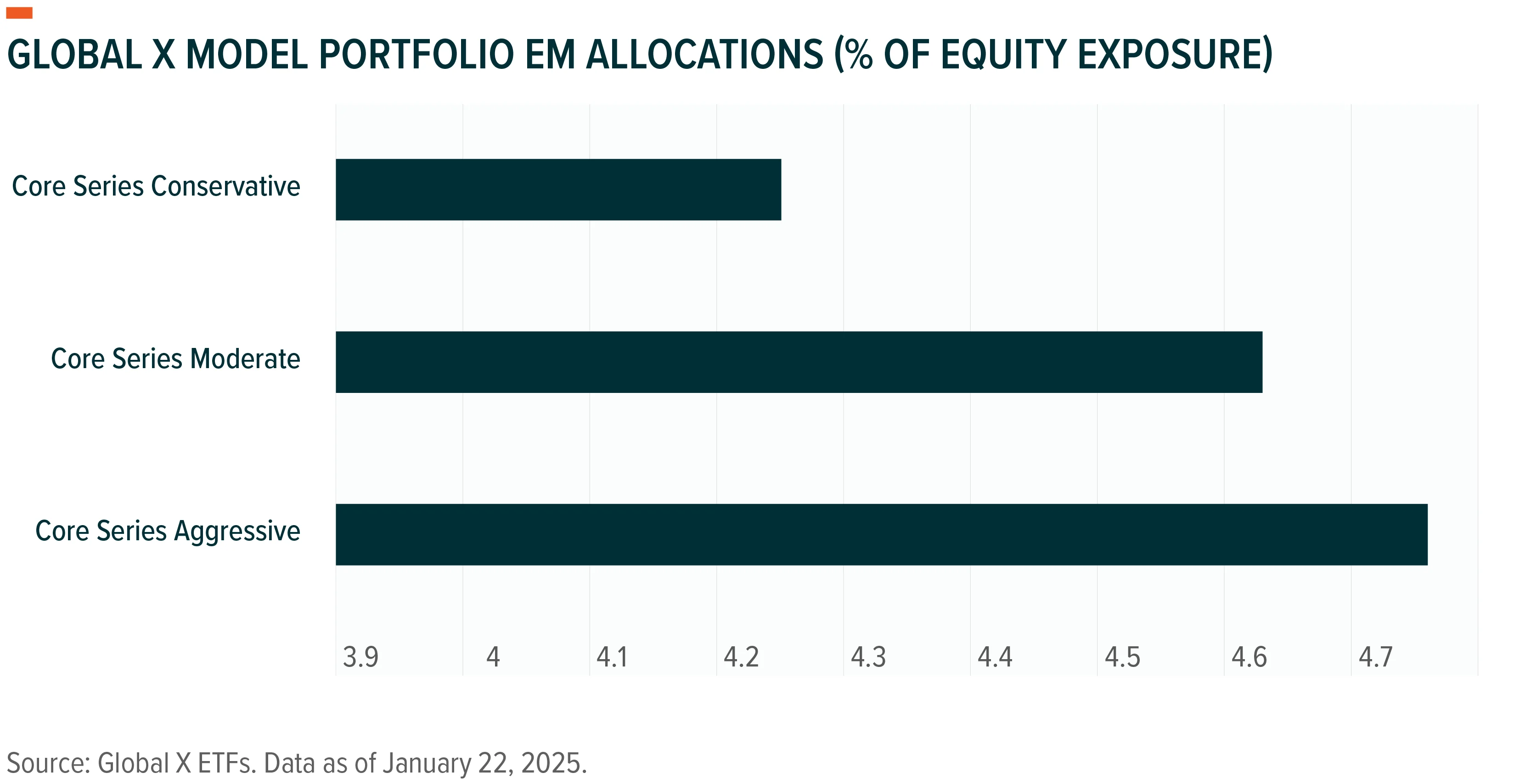
As of January 2025, the Global X ETF Model Portfolio team allocates between 4% and 5% of its equity exposure to Emerging Markets within its multi-asset model portfolios.
Having an EM allocation within a portfolio may help reduce overall portfolio risk while potentially improving returns.
Assessing Three Frameworks for EM Allocations
Following the release of our 2025 Emerging Markets Outlook, a central question among allocators has been determining the optimal allocation to EM. General consensus points to roughly 3% to 7%, however, the broad range spans between 0% and 20%. In this piece we look at three different ways to establish a framework for what base level of EM exposure is appropriate. Allocators can then tactically decide whether to be overweight or underweight from that reference point.
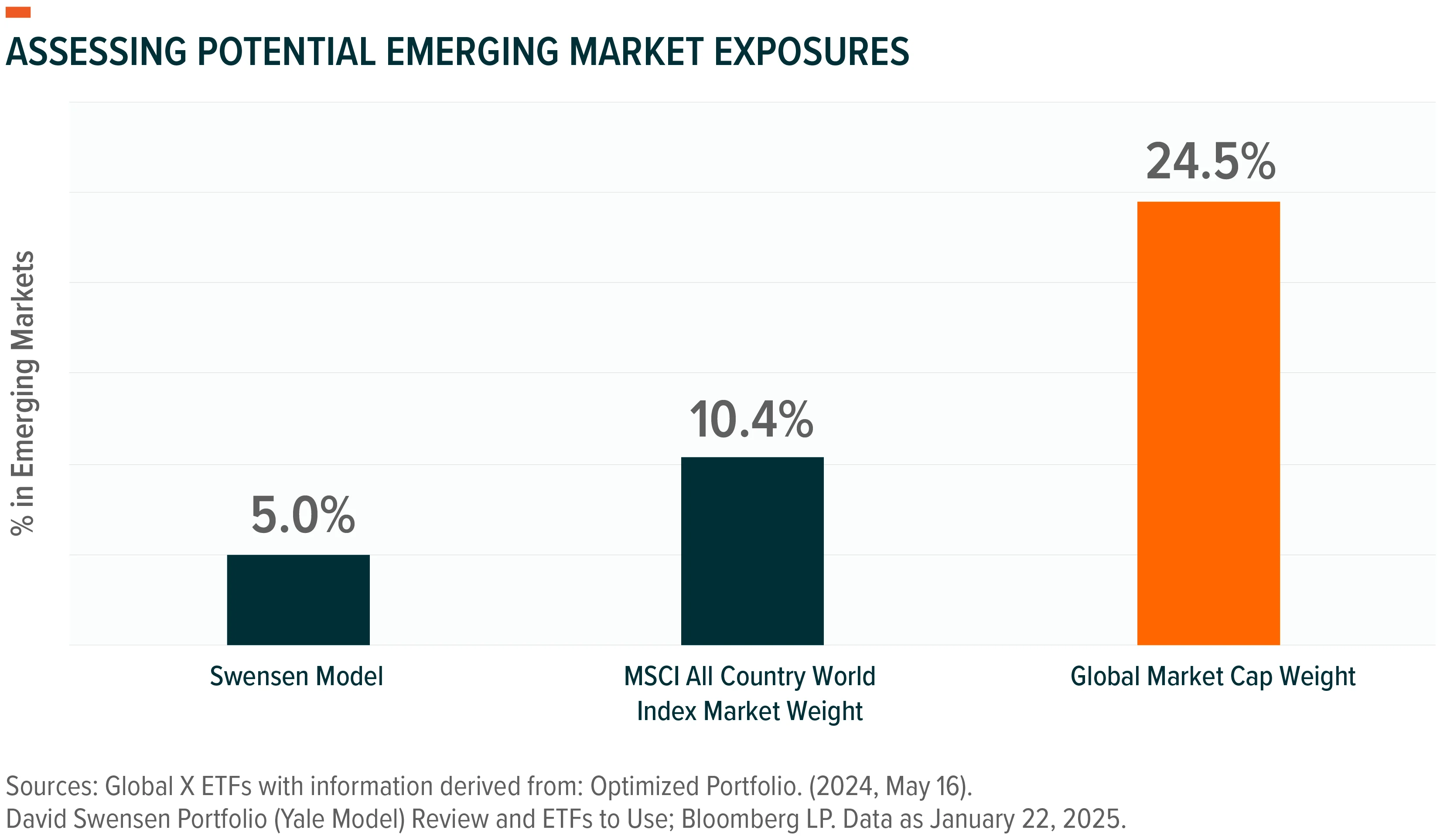
We start out by pointing to the MSCI All Country World Index (ACWI) and its 10.4% position in EM countries.3 This means that to stay “equal weight” to this broad global market index, one would have slightly above 10% of their portfolio in EM assets.
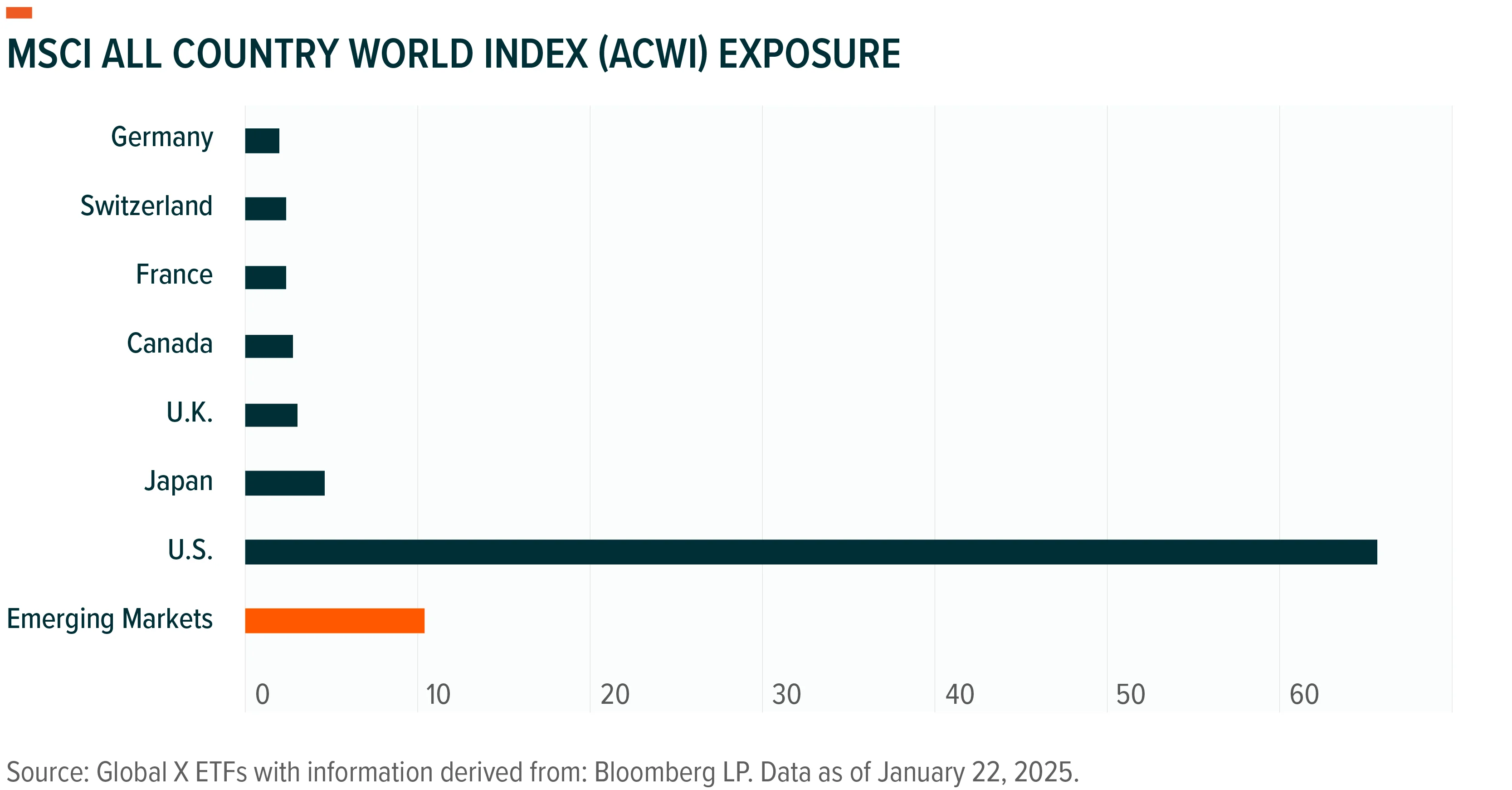
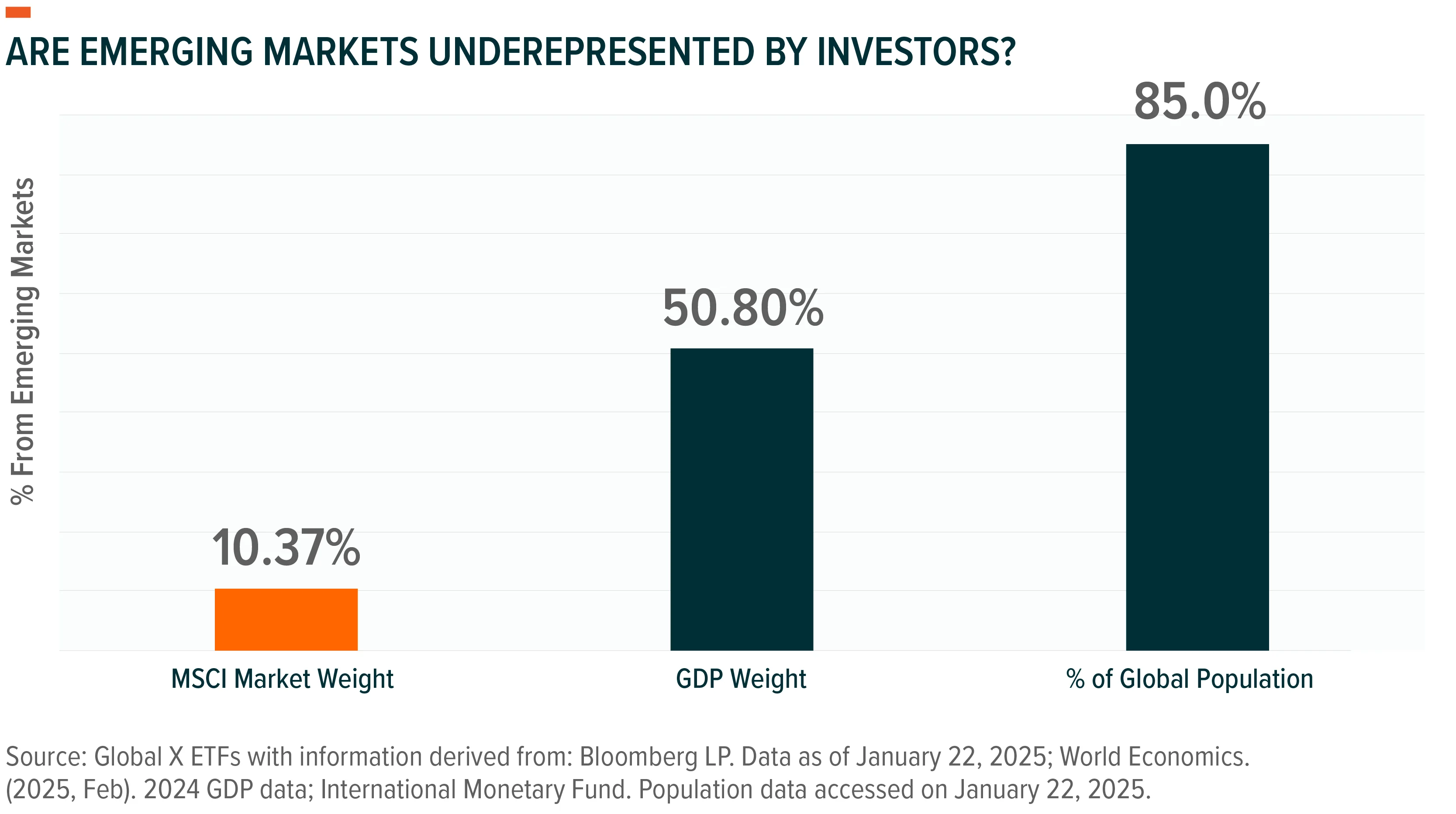
Although 10.4% may seem high to some, one can argue that this figure doesn’t show the correct representation of EM’s potential impact on the global economy. When looking at population size, GDP, and other metrics, 10.4% may seem like a low relative representation for the asset class.
Others may prefer to emulate traditional institutional allocation frameworks, such as the Swenson model (also known as Yale or Endowment Model), which points to a 5% exposure. On the other hand, looking beyond traditional indices and at the entire market, Emerging Markets represent roughly 24% of global market cap.
The Global X ETF Model Portfolio team provides various resources to investors, which includes access to its own strategies as well as tailored allocation analysis. As of January 2025, the Model Portfolio team allocates between 4% and 5% of its equity exposure to Emerging Markets within its multi-asset model portfolios, which represents between 17% and 20% of its international exposure.