


We recently returned from a due diligence trip to Delhi, Gurgaon, and Mumbai where we met with over 25 management teams and local consultants. We left more encouraged by the outlook ahead for Indian equities. Potential forthcoming progress on trade agreements, combined with below average investor positioning, could lay the groundwork for a significant catch-up opportunity.
Key Takeaways
Structural Growth Story Appears Intact: We believe that India remains an attractive long-term standalone investment opportunity based on diversification benefits, structural growth advantages, and historically superior risk-adjusted return profiles.1
Ready for the Turn: Corporates across most sectors appear to be in good shape with de-levered balance sheets, improving cash flows, and attractive return ratios. Regulations are also supporting growth and Ease of Doing Business metrics.
Shifting Government Priorities: With a benign macro backdrop, the Indian Government is ready to support consumers and micro, small, and medium enterprises (MSMEs) to offset a growth drag from trade uncertainty.
A Structural Story Finally Cleared for Takeoff as Headwinds Turn to Tailwinds
In a recent blog post, we wrote about why we believe India merits consideration as a long-term standalone investment. Our argument was based on a combination of diversification benefits, structural growth advantages, and historically superior risk-adjusted returns. We believe the long-term thesis remains robust, but we see near-term opportunities, as well.
Sometimes extreme external pressures, like those India faces today, can create unique opportunities for a country to make large scale changes. In India’s case, the severe balance of payments crisis in 1991 led to a first round of liberalization. In 1998, India’s underground nuclear tests triggered sanctions, but the measures were eased later that year. This marked the beginning of a shift from sanctions-based responses to one of engagement and dialogue with a now strategically significant country. The current trade war creates another trigger for action, focused on further de-regulation and pro-growth government policies.
Taking a step back, a (1) benign macro backdrop (low inflation, rate cuts, significant foreign exchange (FX) coverage, consecutive positive monsoon seasons!), (2) significant improvements in the Ease of Doing Business (Goods and Services Tax cuts, Reserve Bank of India (RBI) easing measures, upcoming wage increases, deregulation, and digitization trends), (3) confirmation of a significant government capex pipeline, and (4) light investor positioning, set up an interesting entry opportunity. In turn, we believe India could be on the cusp of a significant catch-up opportunity to both global and Emerging Market performance.

Light Foreign Portfolio Investment (FPI) Positioning: Over the past year, India’s weight in EM Funds compared to the benchmark weight has declined from an average overweight of ~2.5% to a neutral position, setting up a potential catch-up opportunity.
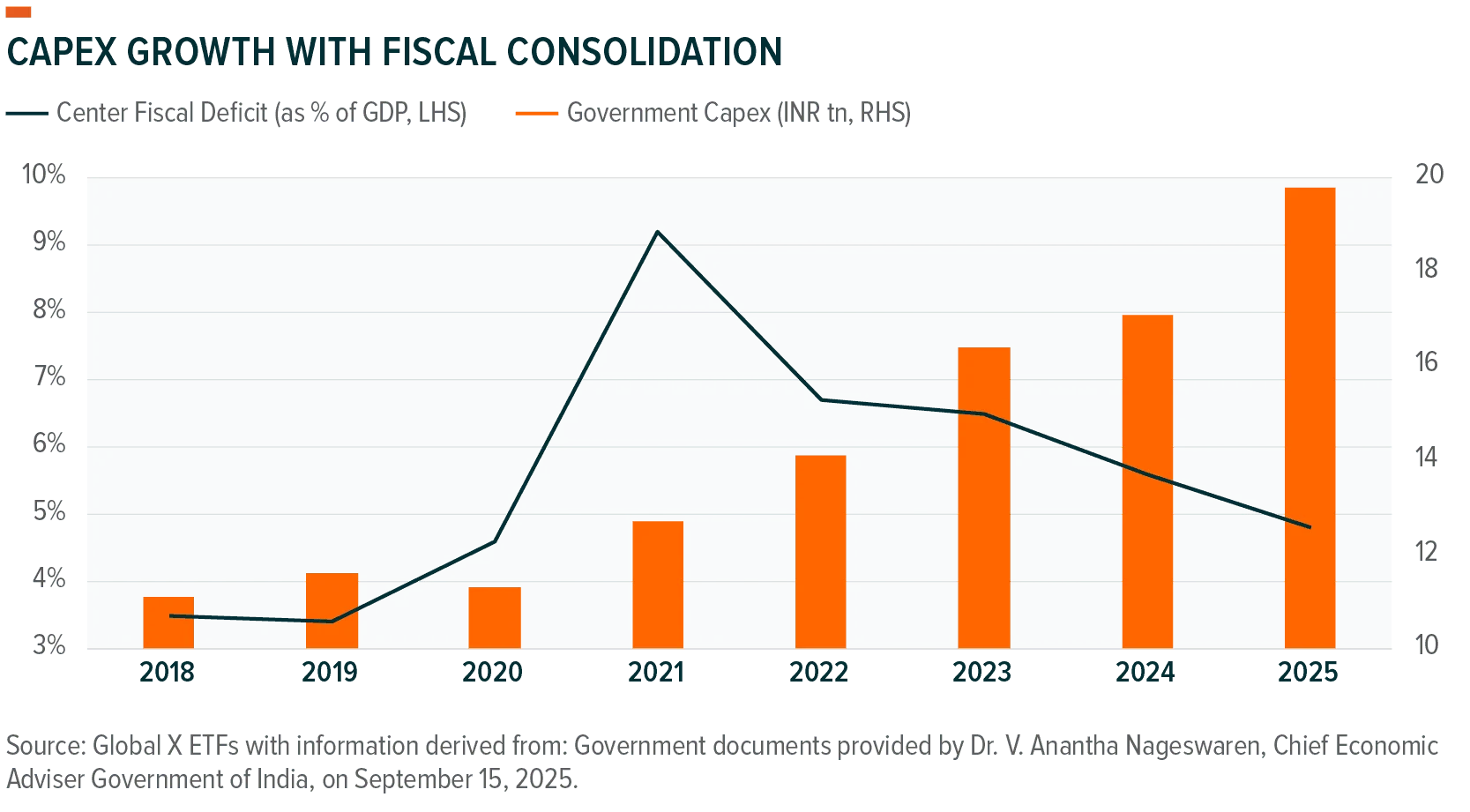
Government Emphasis on Capex Remains: Public sector capex has increased roughly 2x between FY18-26.2 Dr. V. Anantha Nageswaran, the Chief Economic Adviser to the Government of India, told us that, “Continued emphasis on government capital expenditure to boost infrastructure” was listed as the top policy priority for the government. Importantly, India achieved fiscal consolidation (i.e., reduction in fiscal deficits) of more than 5% over the past five years, declining from a peak of -9.2% to reach a fiscal deficit of ~4% of GDP, despite the significant growth in government capex.
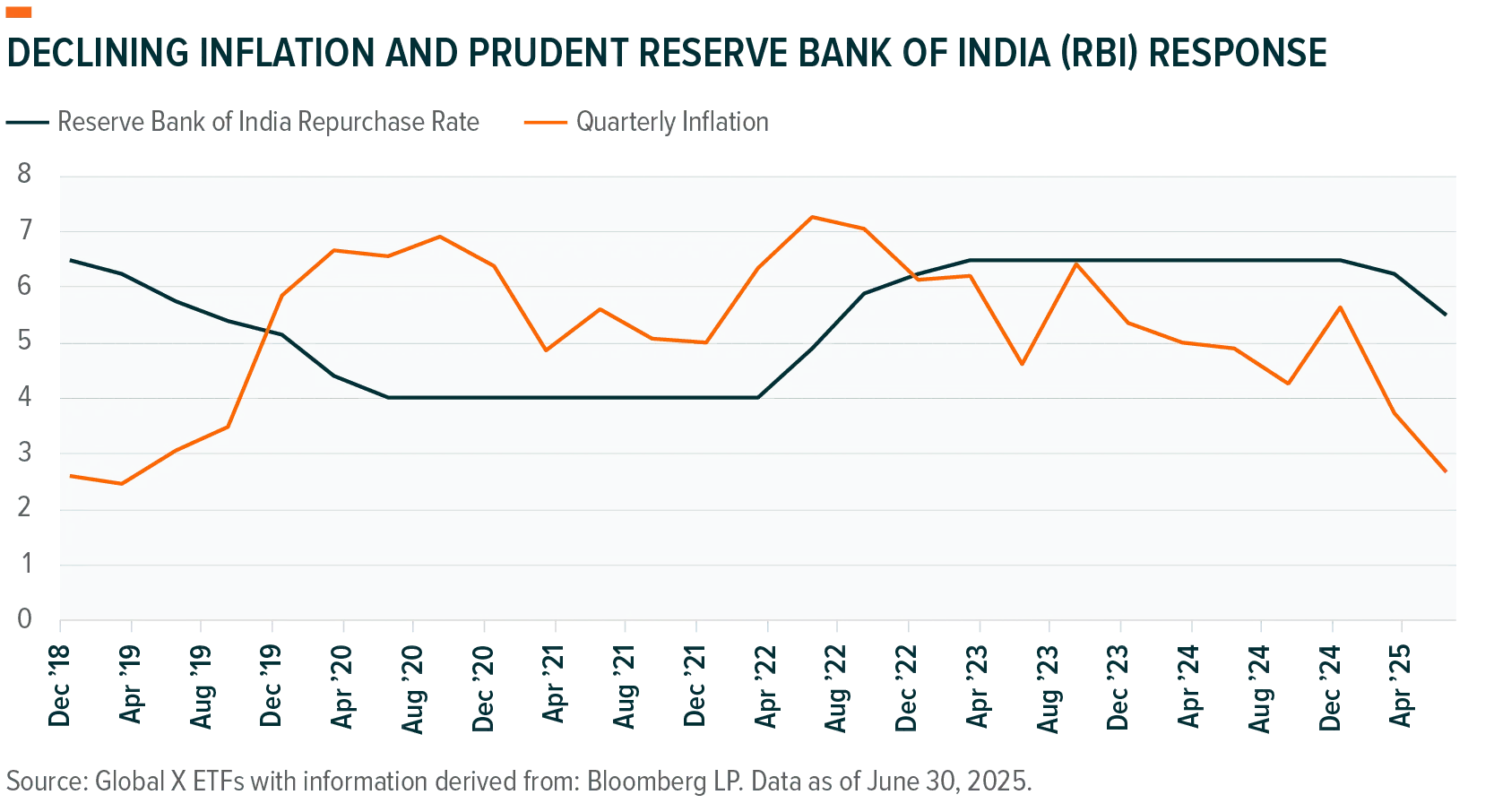
Improvement in Ease of Doing Business and the Rebirth of the Indian Consumer
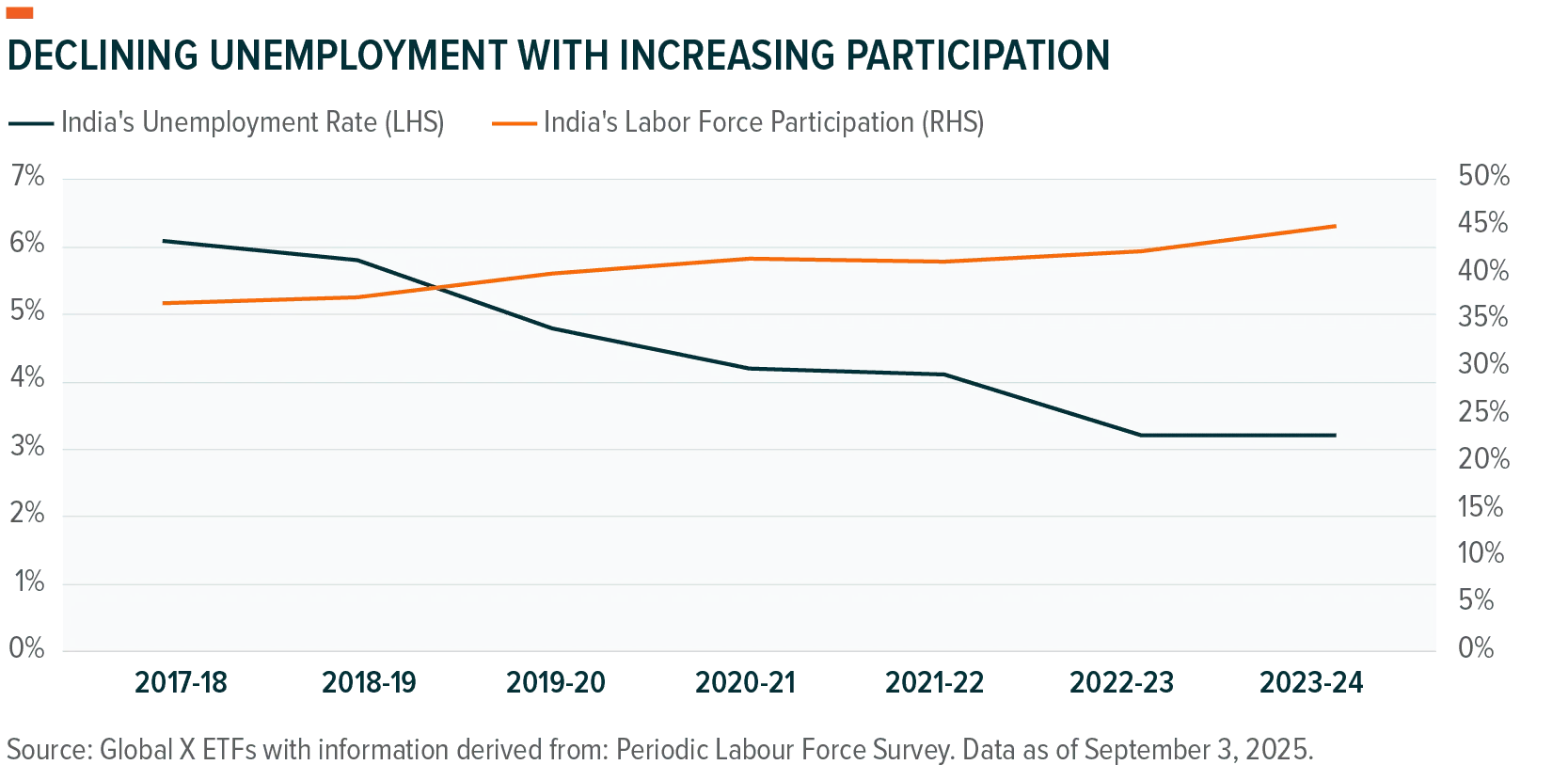
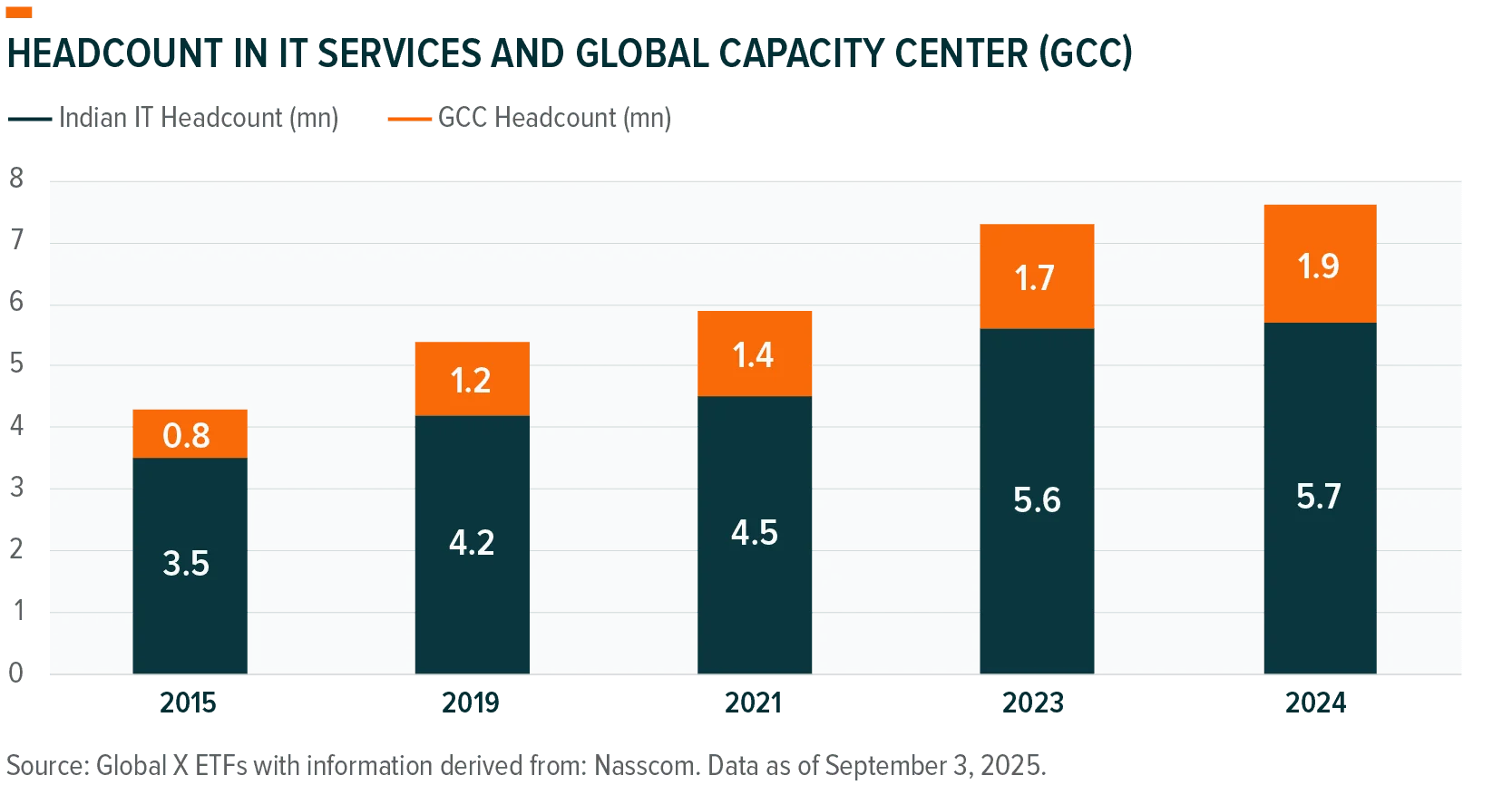
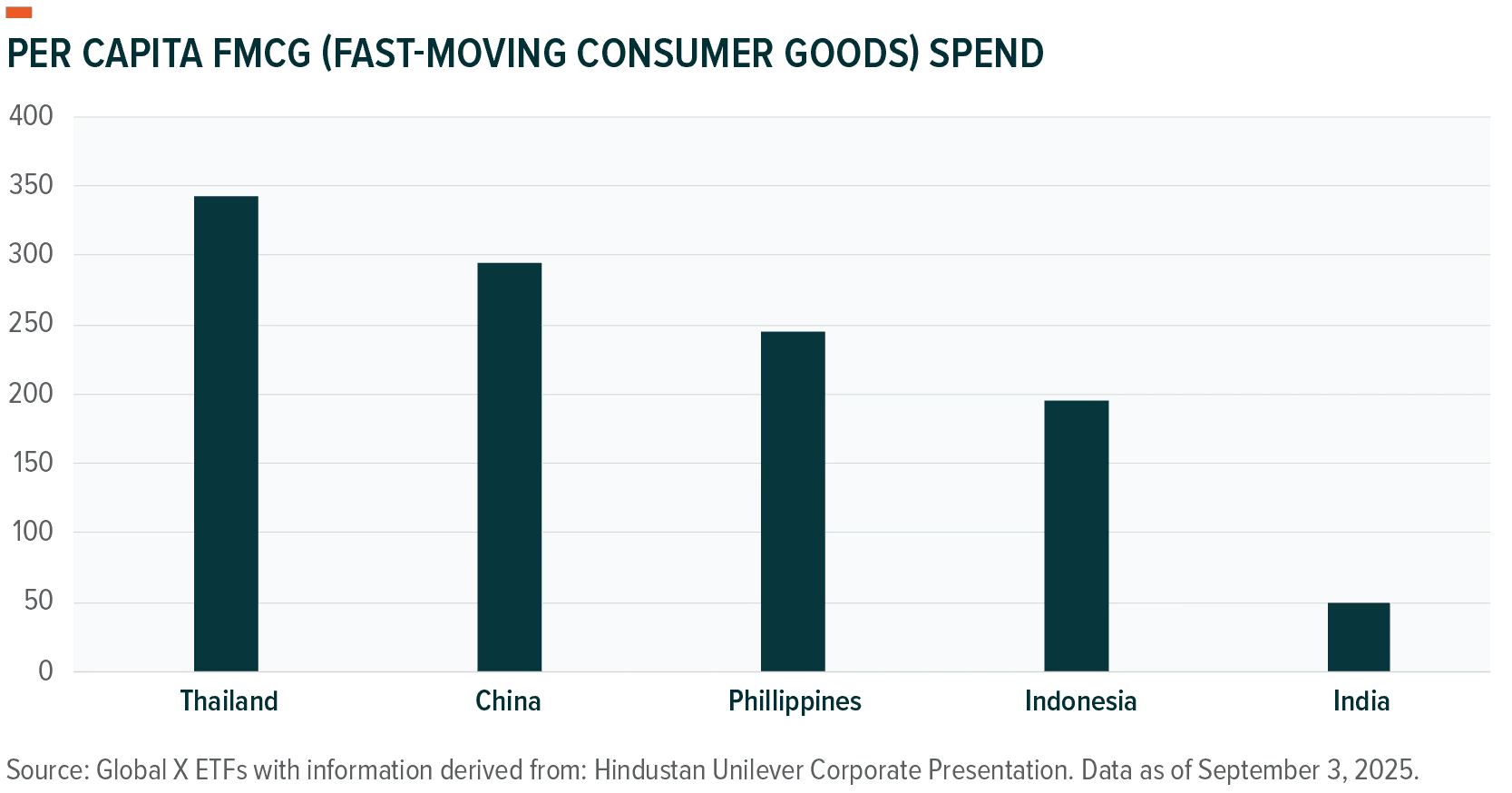
In nearly every meeting, the key theme that stood out was the clear shift in policies to support consumers. After several years of limited or targeted support, the government is finally stepping up to bolster domestic consumption. While India’s Chief Economic Adviser foresees a growth drag of around 0.5% per annum to GDP from trade and tariff headwinds, consumption focused policy changes could more than offset the trade impact, while also supporting a premiumization trend for corporates.8
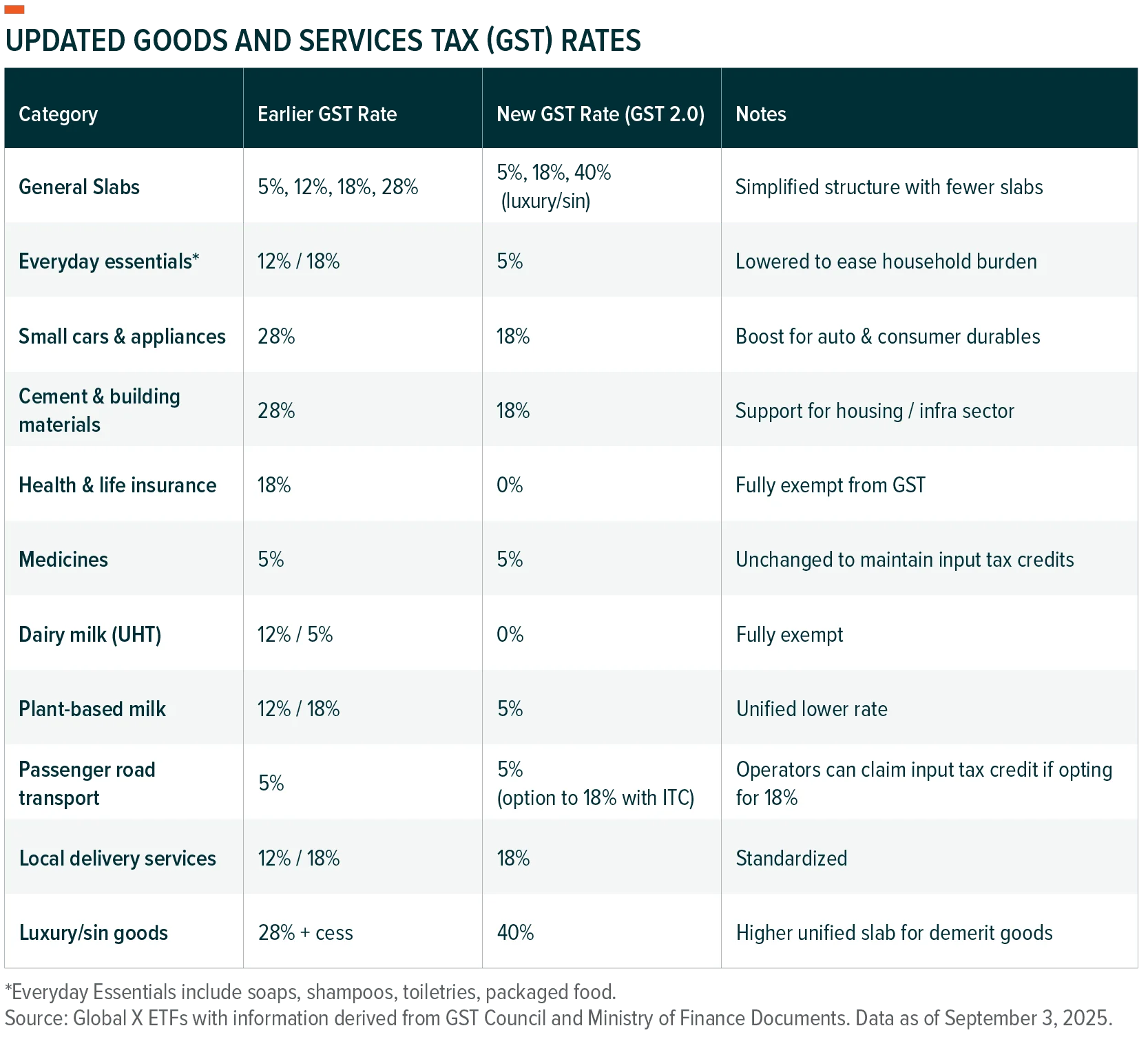
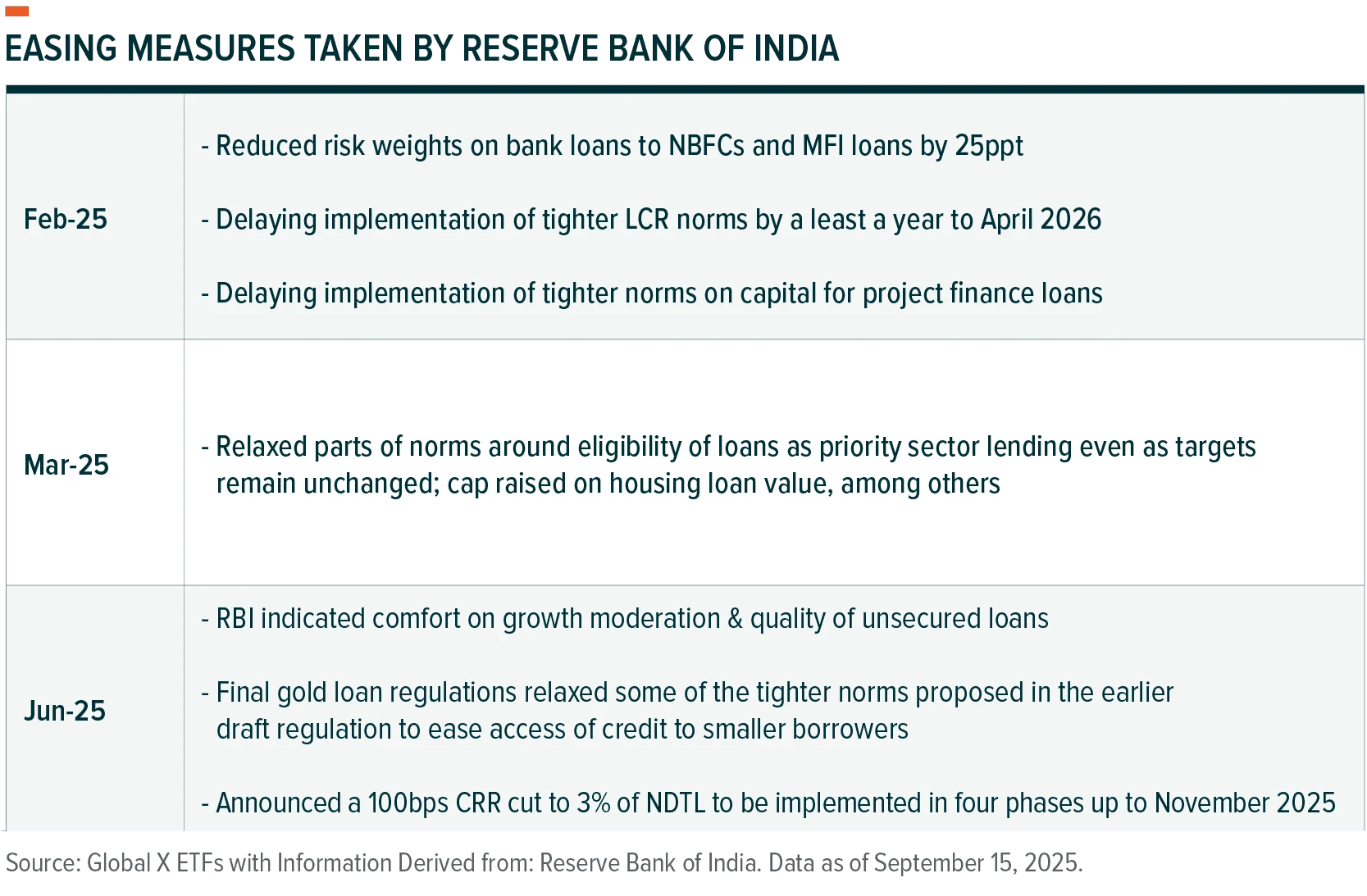


Takeaways From the Ground
Meeting Highlights
Conclusion
Fiscal second-quarter GDP came in as a positive surprise to markets at 7.8%, and the combination of carryforward momentum with prospects for a strong festive season suggests growth will remain strong.14 This would support India’s growth differential versus peers, as well as our longer-term investment thesis that India will maintain a higher growth differential versus the rest of the word for longer. Manufacturing and services are starting to climb, while consumption and investment should continue to anchor growth into yearend. The government has proven itself by achieving fiscal deficit targets, supporting credibility and providing comfort that their recent push to support consumers can potentially help drive a market re-rating. Should domestic demand strengthen with every quarter and the government continue to improve the ease of doing business (e.g. deregulation and digitization) like we expect, we see India being able to achieve its medium-term $10tn GDP target.

