Battery technology is top of mind as demand for consumer electronics, energy storage, and especially electric vehicles (EVs) surges. EV battery chemistries vary widely, and battery makers continue to experiment with different combinations to optimize performance. However, there exists a common thread across commercially viable EV battery designs: lithium. Beyond current use cases, lithium’s prominence in battery supply chains is likely to remain intact for next-generation technologies. We expect the growth of these technologies, particularly in the mobility space, to continue to create compelling opportunities for companies in the lithium and battery tech space.
This piece is part of a series that dives deeper into this year’s iteration of our flagship research piece, Charting Disruption.
Key Takeaways
Lithium is a near ubiquitous ingredient in current lithium-ion battery cathodes.
Solid-state, which could represent the next major innovation in battery technology, is likely to incorporate lithium in both the cathode and the anode.
There is a market for lithium-ion substitutes, although we believe these technologies are unlikely to meaningfully disrupt demand for lithium.
Cathodes Are Driving Demand for Lithium in Current Batteries
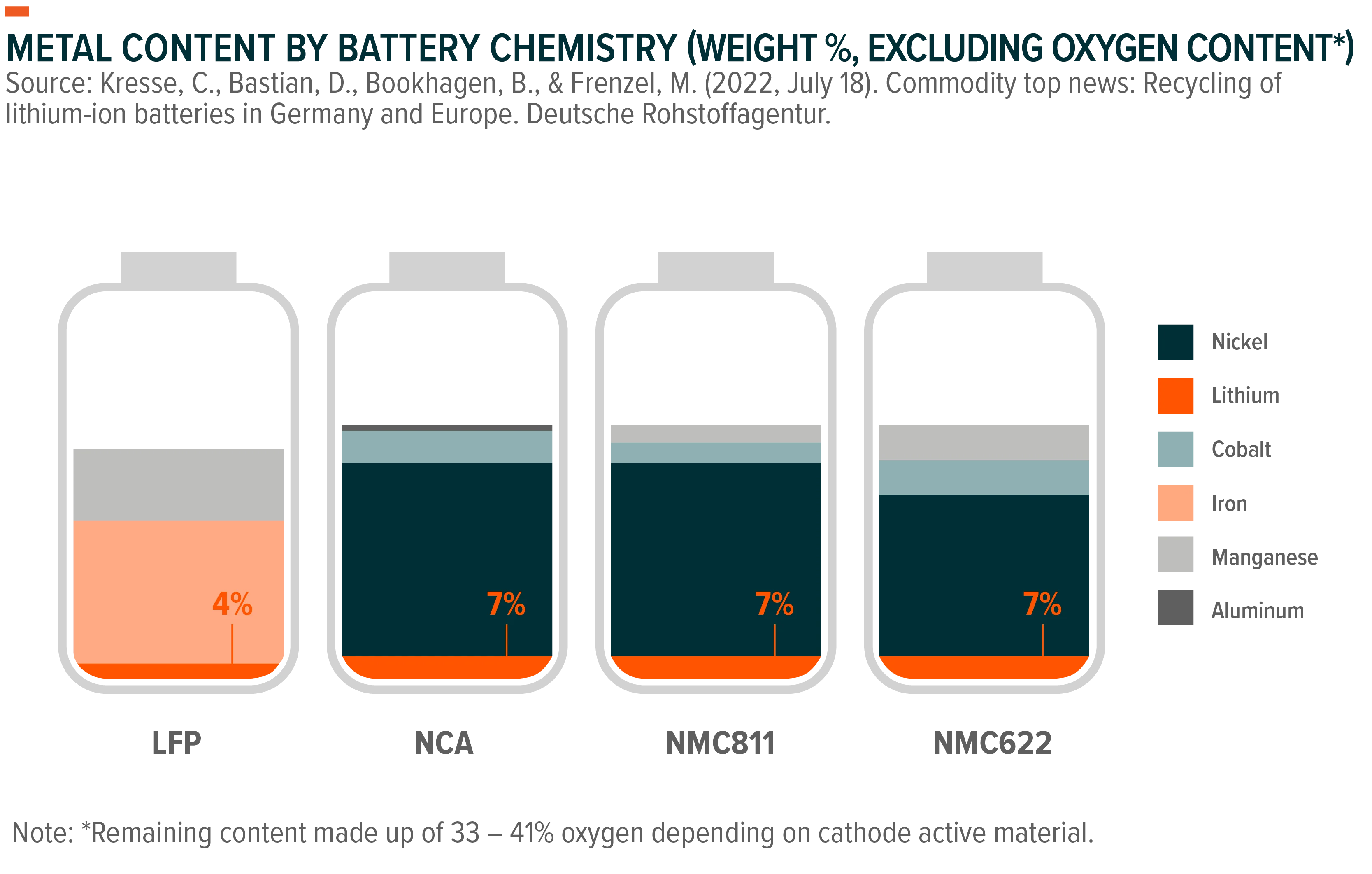
Nearly all pure EVs and plug-in hybrids on the market today require a lithium-ion battery of some sort. Compared to other rechargeable battery types, namely nickel-metal hydrides and lead-acid batteries, lithium-ion batteries offer greater energy density, lower self-discharge, and a longer useful lifespan.1 Lithium is also ideal chemically because the metal readily sheds electrons under the right conditions. This property is necessary for the intercalation reactions that manage charges within a battery. Put it all together and lithium-ion batteries can store considerable energy in a light package while featuring commercially viable recharging properties for EVs.
The primary components of lithium-ion batteries are a cathode, an anode, a liquid electrolyte, and a separator. In most current designs, the cathode houses lithium during the battery’s idle state. Because cathodes determine range and account for most of the cost of the overall cell, EV batteries are often classified based on cathode contents.2 Currently, two of the main cathode archetypes are nickel-based and lithium iron phosphates (LFPs). Nickel-based cathodes support higher energy densities, translating into higher speeds and range for EVs.
Indeed, the range improvements that helped boost the popularity of EVs in recent years are largely attributable to innovation in nickel-based batteries. However, legacy LFP technology is regaining market share due to the proliferation of charging infrastructure. Convenient charging can cause the lesser range associated with LFPs to become a favorable tradeoff for comparably lower costs and superior longevity.
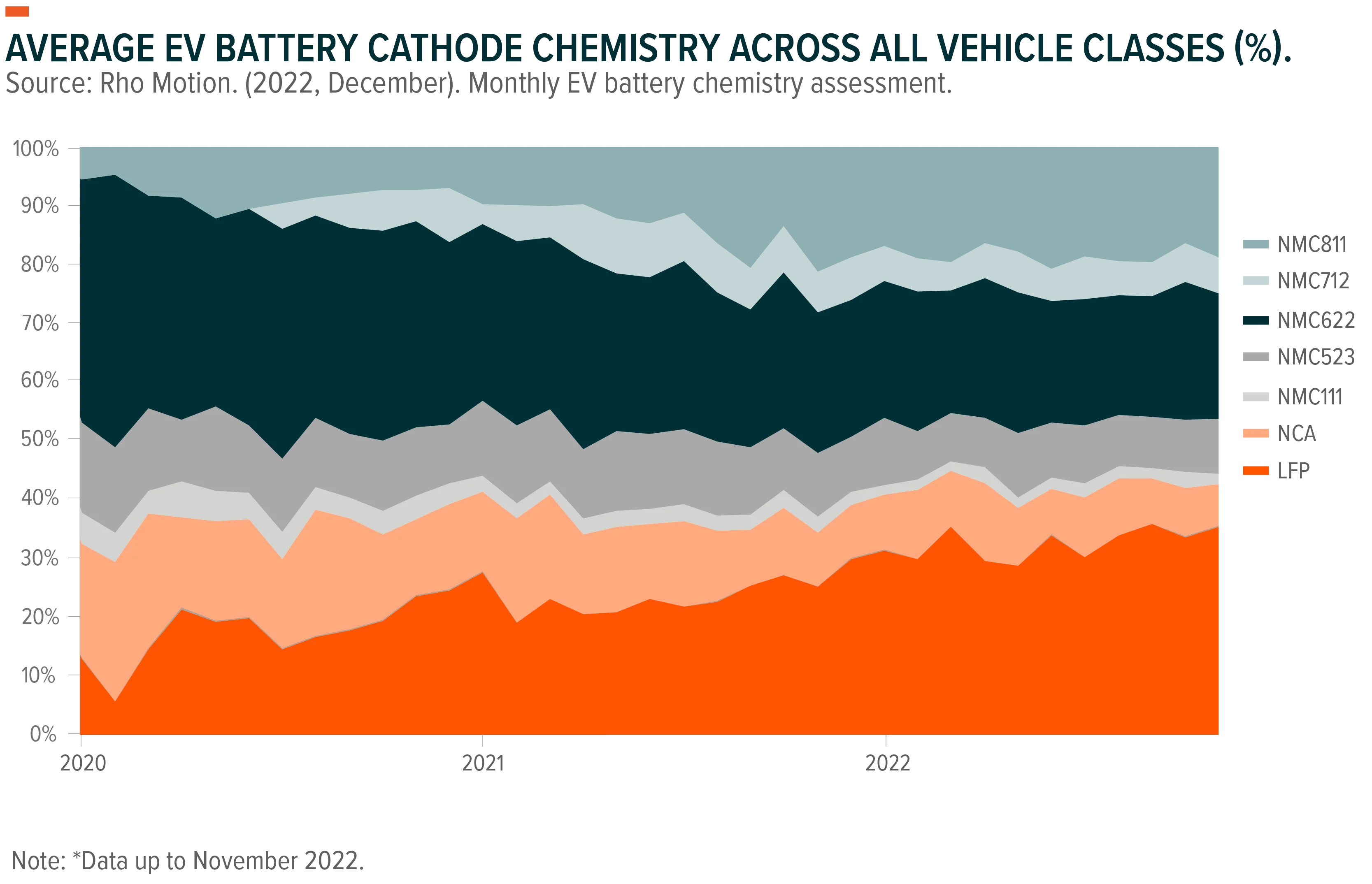
Today, the three most common battery chemistries in EVs are LFP, NMC811, and NMC622.3 Together these three chemistries account for about 75% of the cathodes placed in EVs across all classes globally.4 It is important to note that all cathode chemistries mentioned in this section and captured in the chart below require lithium.
Solid-State Battery Tech Likely to Keep Lithium in Demand
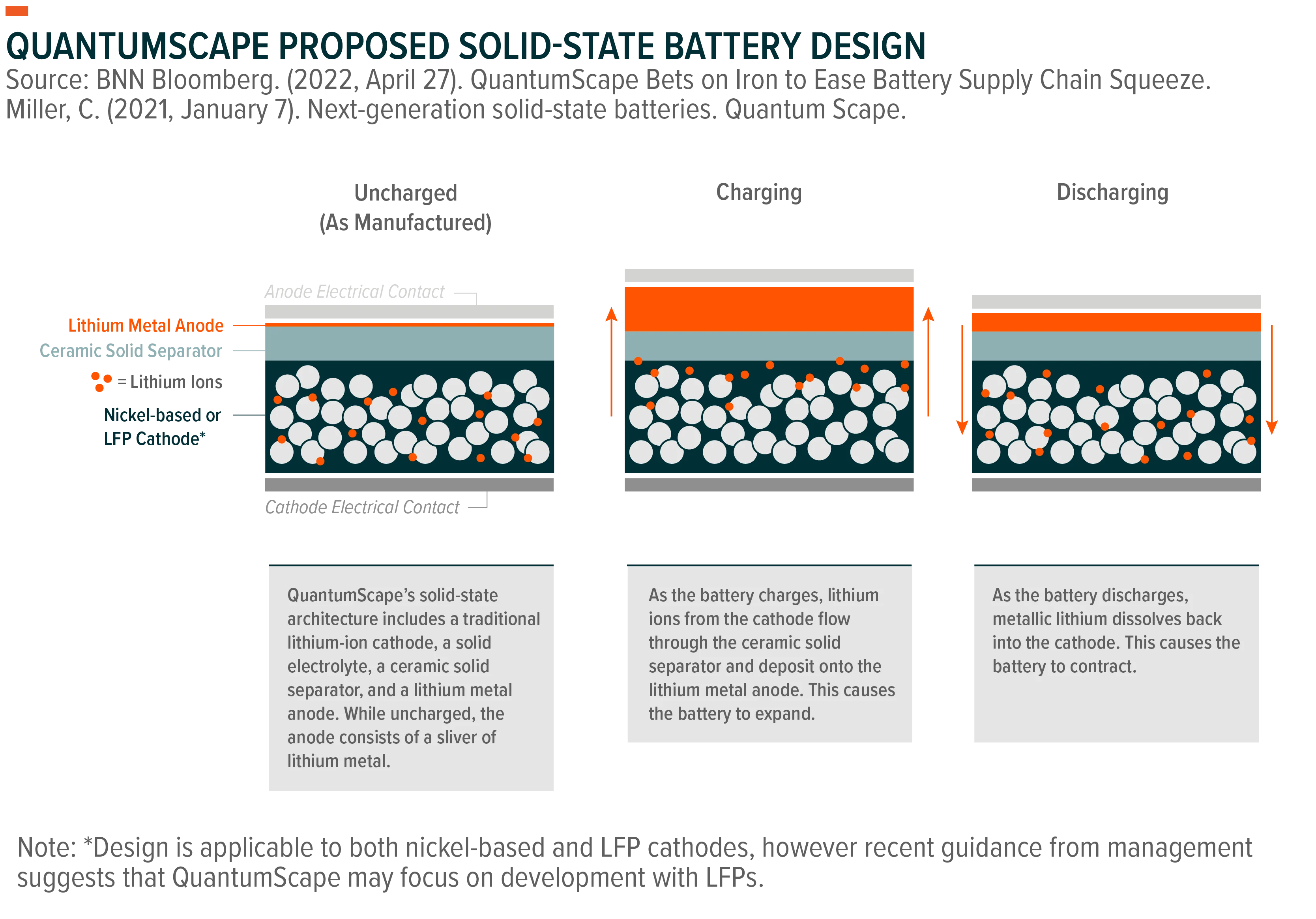
Several automakers and start-ups are racing to develop solid-state battery technology, the often-heralded next generation of EV battery technology. Solid-state batteries replace the liquid electrolytes and polymer gel separators used in current lithium-ion batteries with a solid separator. Possible benefits of fully realized solid-state designs include rapid charging capabilities, increased range, longer lifespans, and improved safety.5 Many solid-state battery blueprints expand the use of lithium throughout the cell.
Generally, solid-state designs leverage traditional lithium-ion cathodes, though designs from solid-state leaders such as QuantumScape and Solid Power could radically change the composition of battery anodes. The solid-state designs that these companies are developing would replace the conventional anode with a slender sheet of lithium metal. Less than 1% of lithium-ion batteries today contain lithium in their anodes.6 Instead, the vast majority of these anodes are fashioned from natural or synthetic graphite. Adoption of lithium metal anodes could boost energy density while reducing the size and cost of the overall pack. Automakers are already testing solid-state batteries, which could hit the EV market as soon as 2025.7
Lithium Alternatives Have a Role, But Unlikely to Dampen Lithium Demand
Certain direct lithium substitutes could play a complementary role in electrifying the grid and the mobility segment. Sodium-ion is one example of a comparable battery technology that does not include lithium. Chinese battery tech company HiNa Battery operates the only commercial scale sodium-ion facility, which opened in November 2022.8 HiNa’s batteries boast an energy density of 145Wh/kg, significantly less than 200–275Wh/kg for most nickel-based batteries in EVs today.9, 10 Even after further development, sodium-ion is likely to offer less gravimetric energy density than current state-of-the-art lithium-ion batteries, not to mention future cathodes or solid-state cells.11 As such, we expect sodium-ion batteries to be more practical for energy storage or smaller electronic equipment than in EVs.
Hydrogen fuel cells are another technology that could play an important role in decarbonization efforts. These fuel cells host an electrochemical reaction that mixes hydrogen with oxygen to produce electricity, with only heat and water vapor as biproducts. Hydrogen already powers some light duty fuel cell electric vehicles (FCEVs); however, we expect most of the opportunity for fuel cells to be in heavy duty transportation and stationary power. As the size of the application scales up, so could the comparative advantage of using a lightweight fuel like hydrogen. We believe batteries will continue to be the go-to technology to electrify light duty vehicles due to efficiency, industry momentum, and existing or planned infrastructure. For reference, the International Energy Agency estimates that 6 million FCEVs will be deployed by 2030, compared to global EV stock of around 350 million at that point.12, 13
Conclusion: Lithium Expected to Remain the Standard in Battery Tech
Whether because of current LFP and nickel-based cathodes, or next-generation solid-state technology, we are unlikely to see a substitute for lithium any time soon. While alternatives such as sodium-ion or hydrogen could aid decarbonization efforts, we do not expect these technologies to supplant lithium-ion in a meaningful way, especially in the EV space.
Related ETFs
LIT – Global X Lithium & Battery Tech ETF
Click the fund name above to view current holdings. Holdings are subject to change. Current and future holdings are subject to risk.