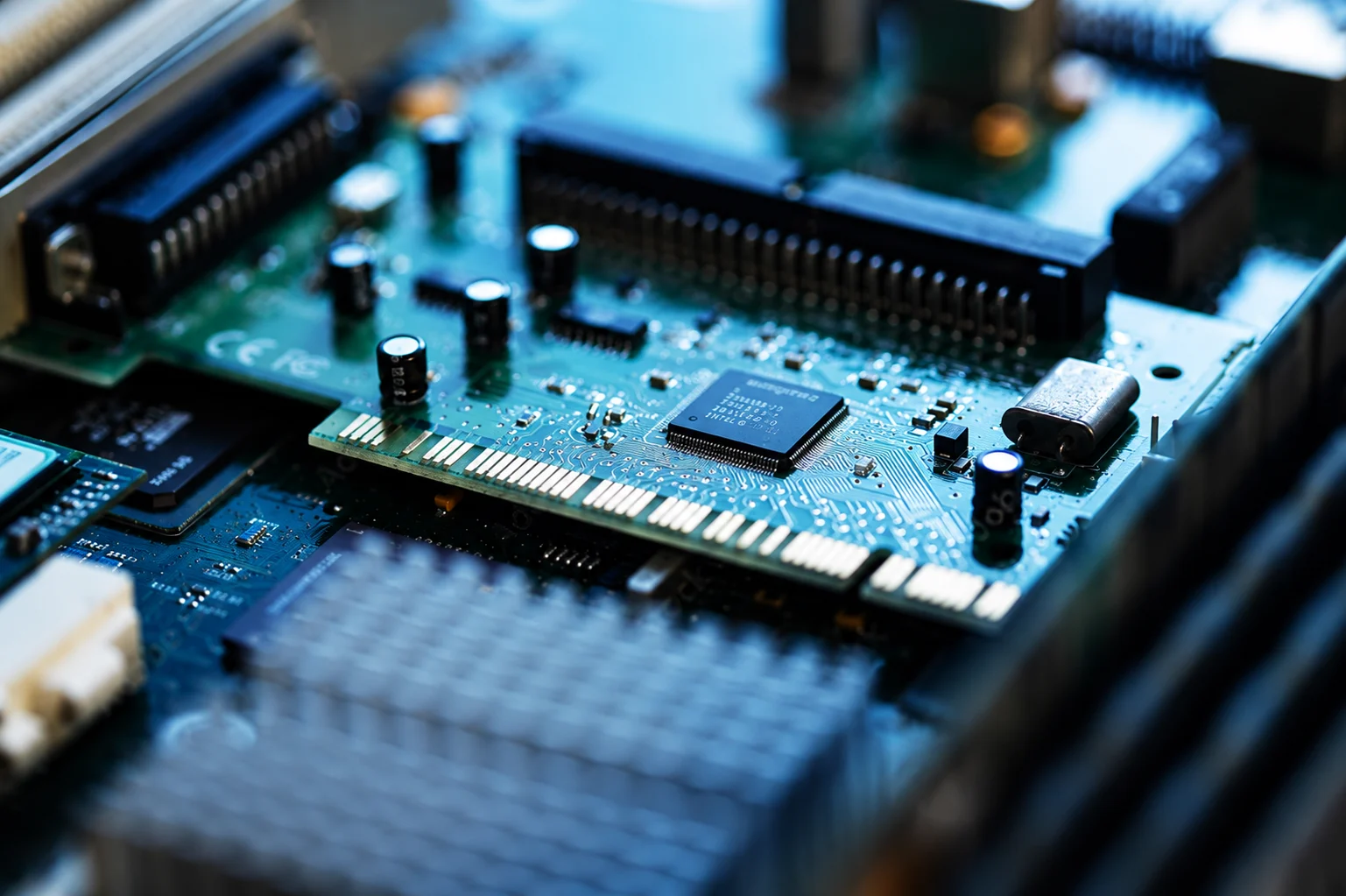
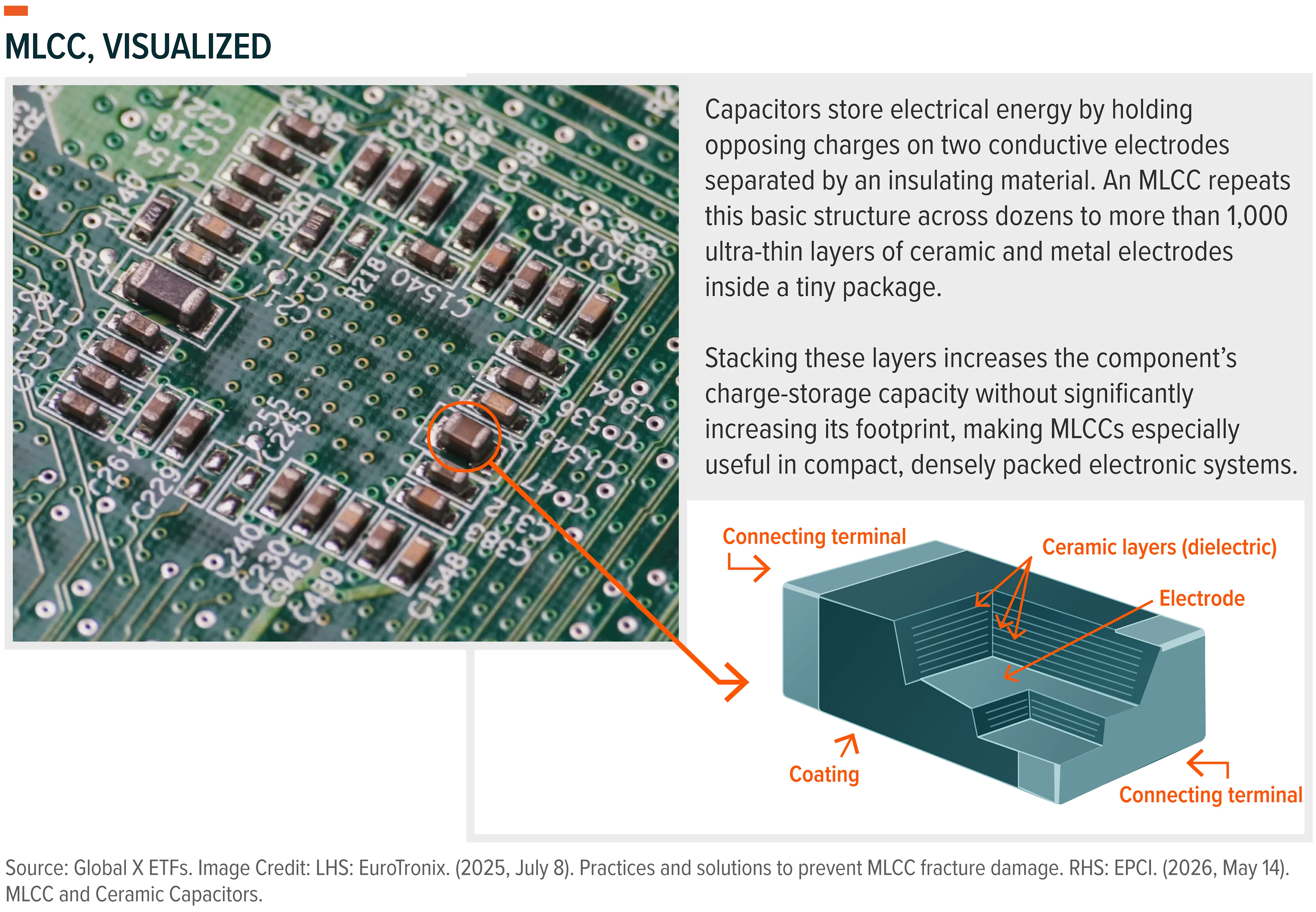
AI’s power-supply challenge extends from the grid to the chip. While much of the focus has been on securing enough electricity for data centers, that power must also be managed as it moves through increasingly dense, power-hungry AI hardware. This is elevating the role of a lesser-known component: the multilayer ceramic capacitor, or MLCC. Built from ultra-thin layers of ceramic and metal electrodes, MLCCs rapidly store and release charge, helping stabilize voltage, filter electrical noise, and keep sensitive circuitry operating reliably.
AI servers can use more than ten times as many MLCCs as general-purpose servers.1 They also require smaller, higher-capacitance products able to withstand greater electrical and thermal stress. Rising volumes and technical complexity are shifting demand toward higher-value, higher-specification products. MLCC demand tied to AI servers could rise 4.3x between 2025 and 2030.2 Yet global supply is concentrated among a handful of manufacturers in Japan, South Korea, and Taiwan, with capacity able to grow only 10 to 15% annually.3
Against this backdrop, manufacturers with the technical expertise and production capacity to meet AI’s increasingly demanding requirements are gaining strategic importance and pricing power. To help investors capture this opportunity, we are introducing the Global X MLCC & Electronic Components ETF (ticker MLCC), which provides targeted exposure to the leading global suppliers of MLCCs and related electronic components through a single U.S.-listed ticker.
Key Takeaways
AI is increasing both MLCC volumes and technical requirements, driving demand for components capable of operating under greater electrical, thermal, and space constraints.
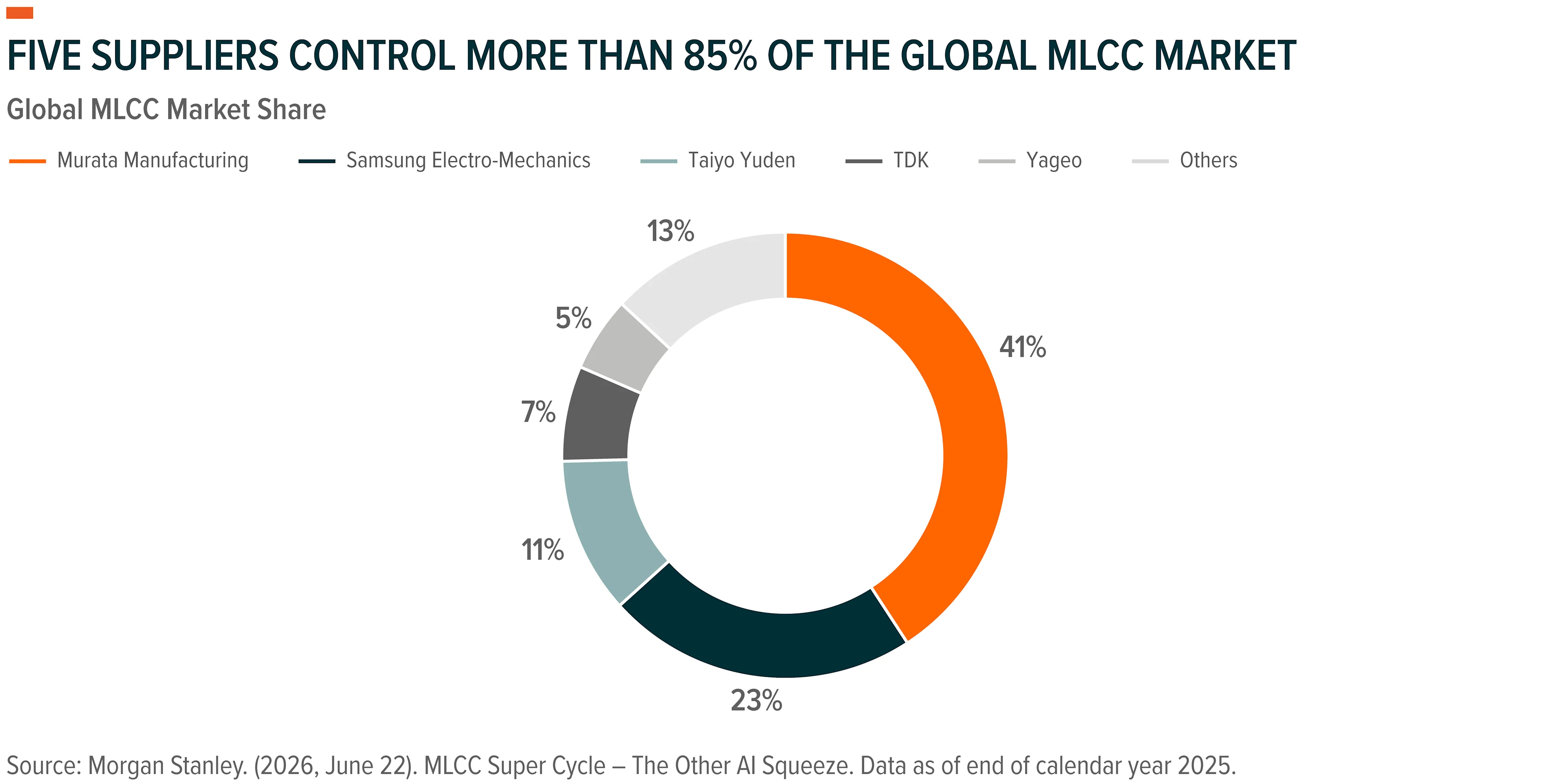
More than 85% of global MLCC supply is controlled by five manufacturers based in Japan, South Korea, and Taiwan, positioning a narrow group of suppliers at an increasingly important point in the AI hardware value chain.4
The Global X MLCC & Electronic Components ETF (ticker MLCC) provides targeted exposure to leading global suppliers of MLCCs and related passive electronic components, concentrating towards the largest suppliers.
MLCCs, Explained
Every modern electronic circuit faces the same basic challenge: power demand can change faster than the system supplying it can respond. A processor shifting workloads, memory accessing data, or a sensor turning on can create sudden swings in current, causing voltage to dip or spike and introducing electrical noise. MLCCs help smooth those fluctuations.
Placed throughout a circuit, typically close to the components they support, MLCCs act as tiny local reservoirs of electrical charge. They release charge almost instantly when demand rises and absorb it when demand falls, helping stabilize voltage. They also filter high-frequency noise, allowing processors, memory, and other components to receive the clean, reliable power they need to operate properly.
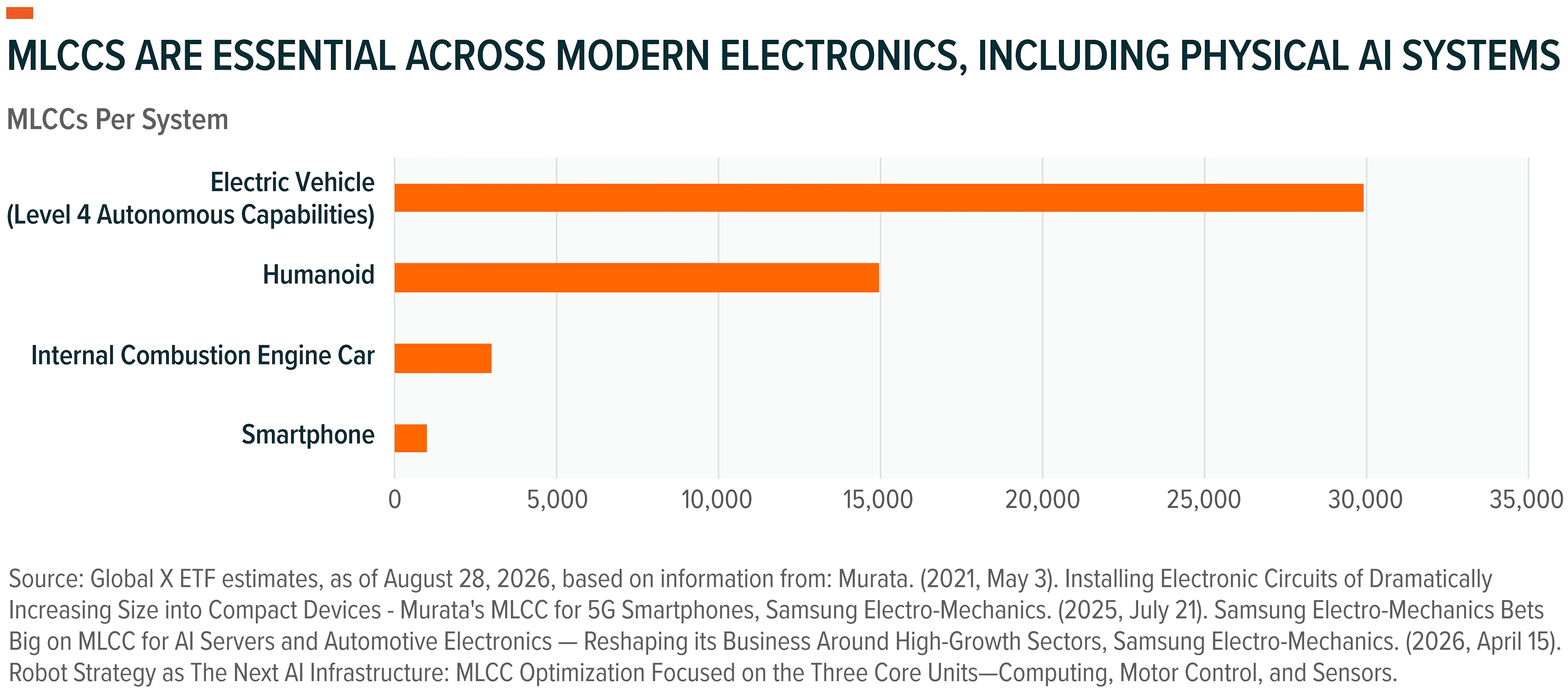
Because they are ubiquitous across modern electronics, MLCCs are sometimes described as the “rice of electronics.” A premium smartphone can contain more than 1,000, while an electric vehicle with advanced autonomous capabilities can use as many as 30,000.5,6 As electronic systems become more power-dense and complex, both the number and value of MLCCs tend to rise.
Historically, consumer electronics drove much of industry demand, exposing suppliers to sharp inventory cycles when smartphone, PC, or television demand slowed. AI servers, electric vehicles, and industrial automation are now broadening the demand base while shifting the product mix toward higher-value components.
AI Infrastructure Drives a Step-Change in MLCC Demand
Power density is becoming a central constraint in AI infrastructure. A single modern AI rack (Nvidia GB300 NVL72) can use roughly 142 kilowatts of power, nearly 16 times as much as a conventional server rack.7 These racks also experience large, rapid swings in current demand, placing greater pressure on voltage regulation and power delivery across the entire system, from chips to cooling and beyond.
For example, a standard Nvidia Grace Blackwell 200 (GB200) chip board can shift from near-idle to full-power loads thousands of times per second. Each transition creates a near-instantaneous surge in the current required by its processors – far faster than the primary power supply can respond. System designers therefore place dense arrays of MLCCs around each AI chip. These capacitors act as local energy reservoirs, releasing charge during the brief interval between the chip’s demand and the power supply’s response.
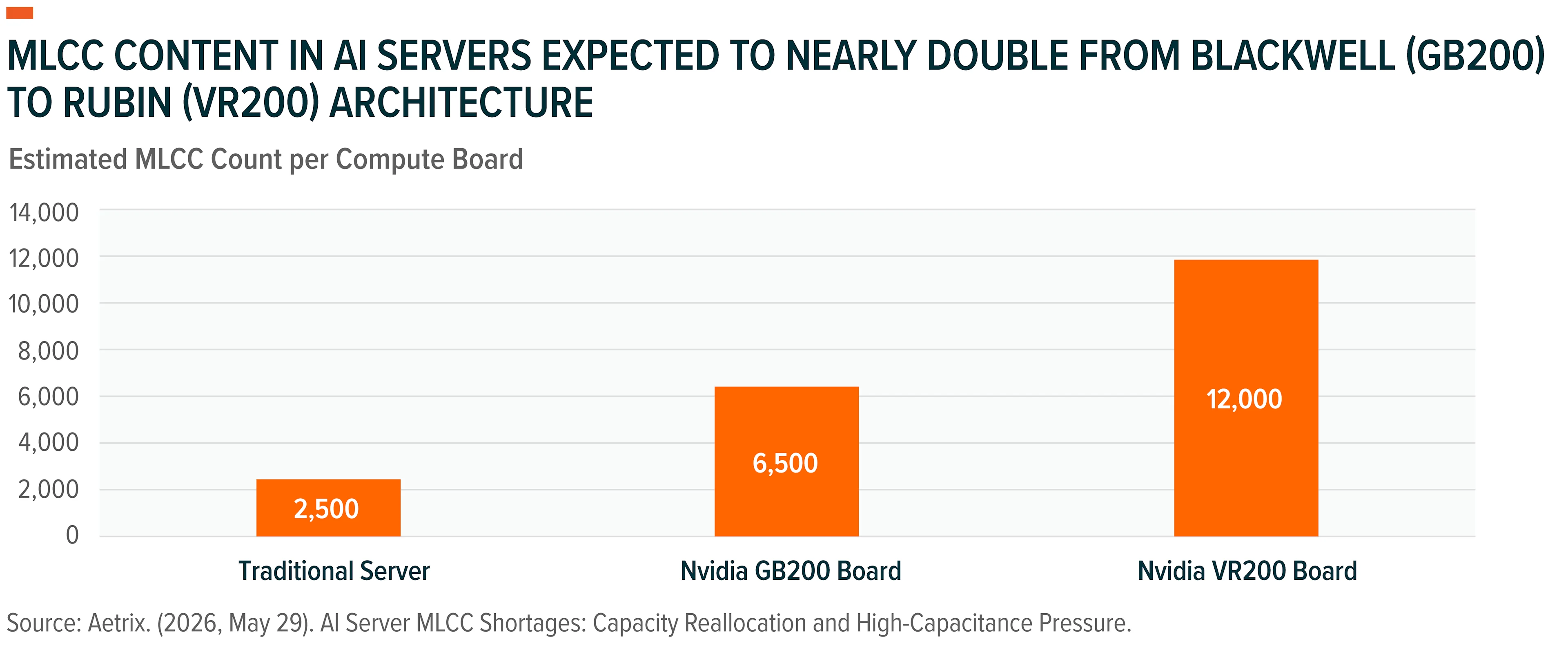
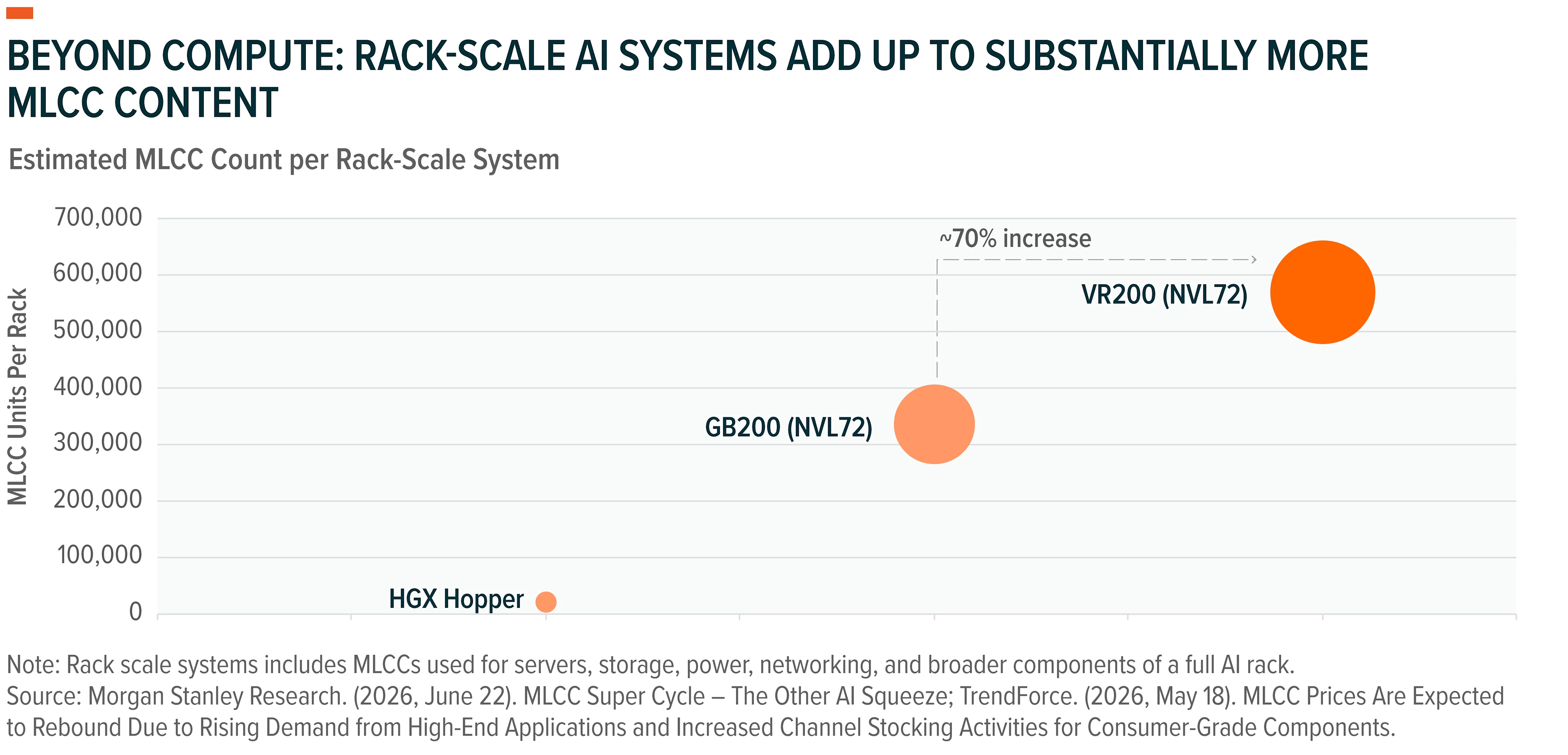
These requirements are driving a step-change in the number of MLCCs used in the latest AI servers. Samsung Electro-Mechanics estimates that individual AI server boards can contain ten times as many MLCCs as a traditional server.8 A single Nvidia GB200 compute board uses approximately 6,500 MLCCs, and the next-generation Rubin architecture could push that to around 12,000 MLCCs.9 Across the compute, networking, storage, cooling, and power-delivery boards housed within a full rack-scale system, an Nvidia GB200 NVL72 rack can contain 300,000 to 400,000 MLCCs. The count could go as high as 600,000 MLCCs on upcoming Vera Rubin racks.10,11
AI systems also require smaller capacitors with higher capacitance, greater voltage tolerance, and stronger performance under thermal and mechanical stress. Because some capacitors must sit close to processors while board space becomes scarcer, manufacturers must store more charge in smaller footprints, which adds another layer of complexity in system design. Some AI-server MLCCs must also support operating temperatures of at least 105 degrees Celsius while these chips are running at full throttle. These constraints are leading chipmakers towards components that are more difficult to manufacture and typically command higher prices.
Lastly, while the demand cycle for the next few years may be server-led, AI consumer devices and other edge-computing hardware could further amplify the demand for MLCCs and passive electronics beyond the current backdrop. Rising power density is also increasing requirements for adjacent passive electronic components, including inductors, resistors, transformers, thermistors, and circuit-protection devices used across voltage conversion, filtering, networking, and power supplies.
Electrification Adds Second Demand Engine
AI is arriving alongside a broader shift toward electrification. A single electric vehicle can contain roughly 20,000–30,000 MLCCs across its powertrain, battery-management system, sensors, cameras, and electronic control units.12 Automotive MLCCs also face significantly higher reliability requirements.13 Development cycles can take roughly three times longer and components can command more than three times the price of comparable IT components.14 Once an MLCC has passed qualification and been designed into a vehicle platform, replacing it may require additional engineering work and customer approval, making supply relationships relatively sticky.
Robotics, industrial automation, and power infrastructure further broaden this demand, which scales with increasing power density.15 Notably, together these applications are diversifying MLCC demand away from consumer electronics and toward markets where qualification and materials expertise create higher barriers to entry.
Advanced MLCC Supply Is Highly Concentrated
More than 85% of global MLCC supply is controlled by five companies: Murata, Samsung Electro-Mechanics, Taiyo Yuden, Yageo, and TDK.16 Their position reflects manufacturing scale and decades of expertise in ceramic formulations, miniaturization, electrode design, process control, and high-volume production.
The underlying manufacturing process further reinforces the concentration. A single MLCC can contain 500–1,000 alternating layers of ceramic dielectric and metal electrodes. Manufacturers print and stack these ultra-thin layers, fire them at temperatures above 1,000 degrees Celsius, and inspect the finished components for microscopic cracks or inconsistencies. Performance depends heavily on materials, component design, and proprietary manufacturing approaches. As MLCCs become smaller and denser, manufacturing tolerances narrow, and production yields become harder to maintain. The materials and process expertise required create significant barriers to entry, particularly in high-capacitance and high-reliability applications.
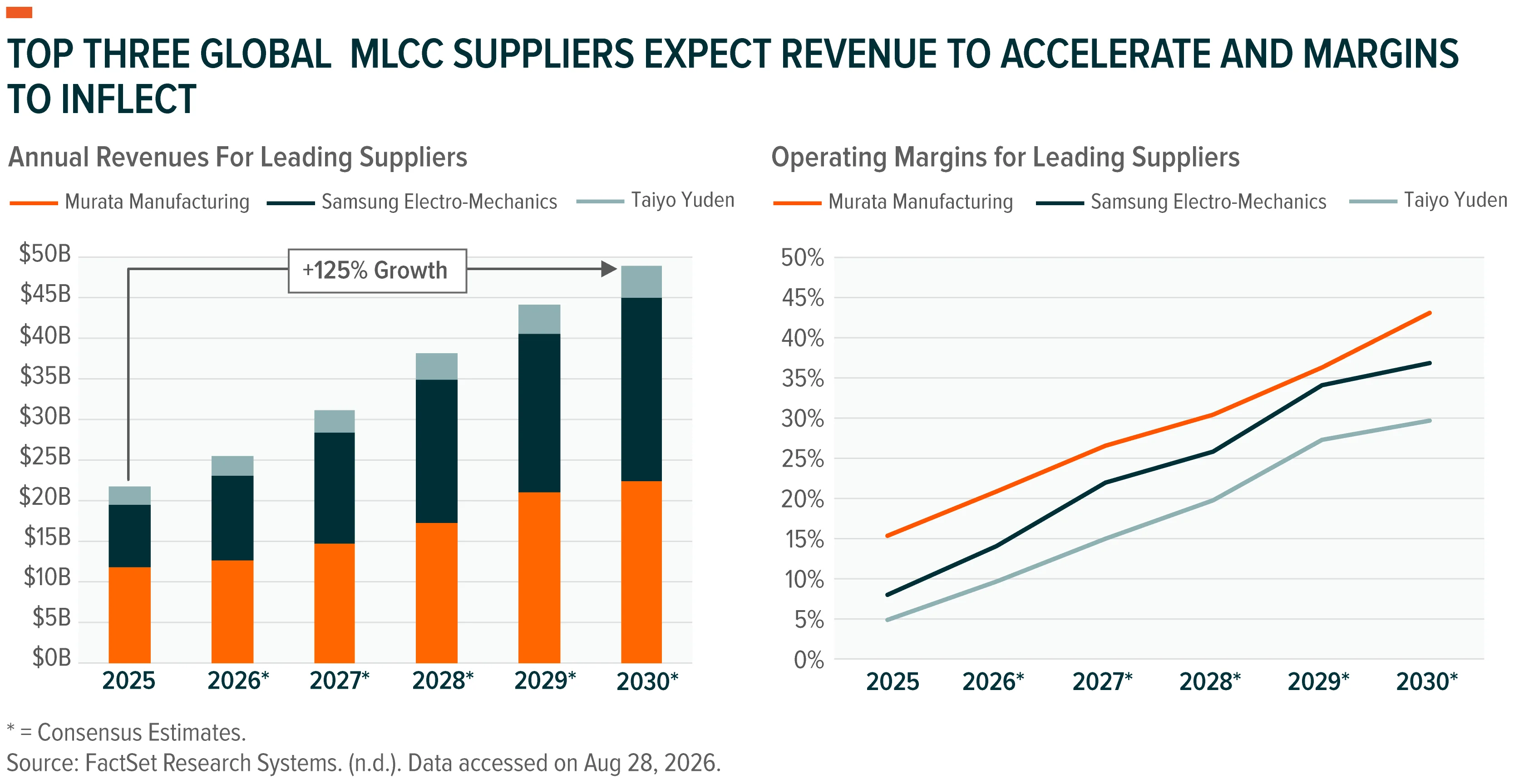
While MLCCs tied to everyday consumer electronics remain readily available, supply is tightening for the high-capacitance, high-voltage, and high-reliability products used in AI servers, vehicles, and industrial power systems. Lead times for certain high-capacitance AI-oriented MLCCs have extended from roughly eight weeks to as long as 20 weeks.17 Book-to-bill ratios for three leading Japanese and Korean suppliers, Murata, Samsung Electro-Mechanics, and Taiyo Yuden, have risen to their highest levels since the pandemic.18
The result is what analysts describe as a K-shaped market: high-end AI and automotive MLCC supply remains tight and expensive, while many commodity-grade MLCCs remain closer to balance. Meanwhile, suppliers are reallocating capacity toward AI-grade products, reducing supply flexibility for commodity components, spreading tightness across parts of the broader market.
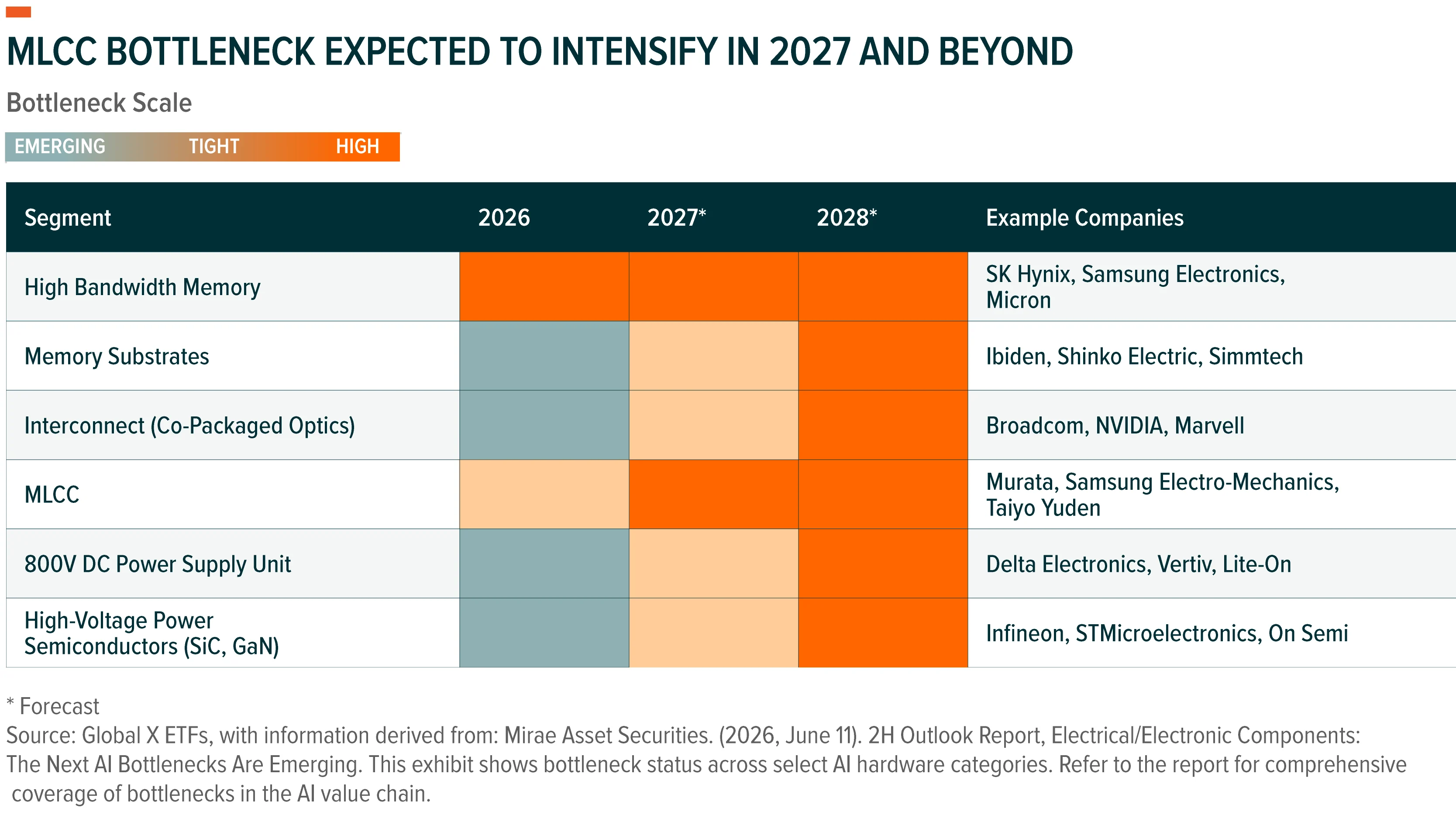
Pricing power has followed. Samsung Electro-Mechanics and Murata have raised prices on both AI-grade and consumer MLCCs.19 AI server demand is also reviving long-term supply agreements as shortages intensify.20 Samsung has signed long-term supply agreements with more than 10 global customers, including its largest-ever annual AI-MLCC supply contract worth $780 million.21
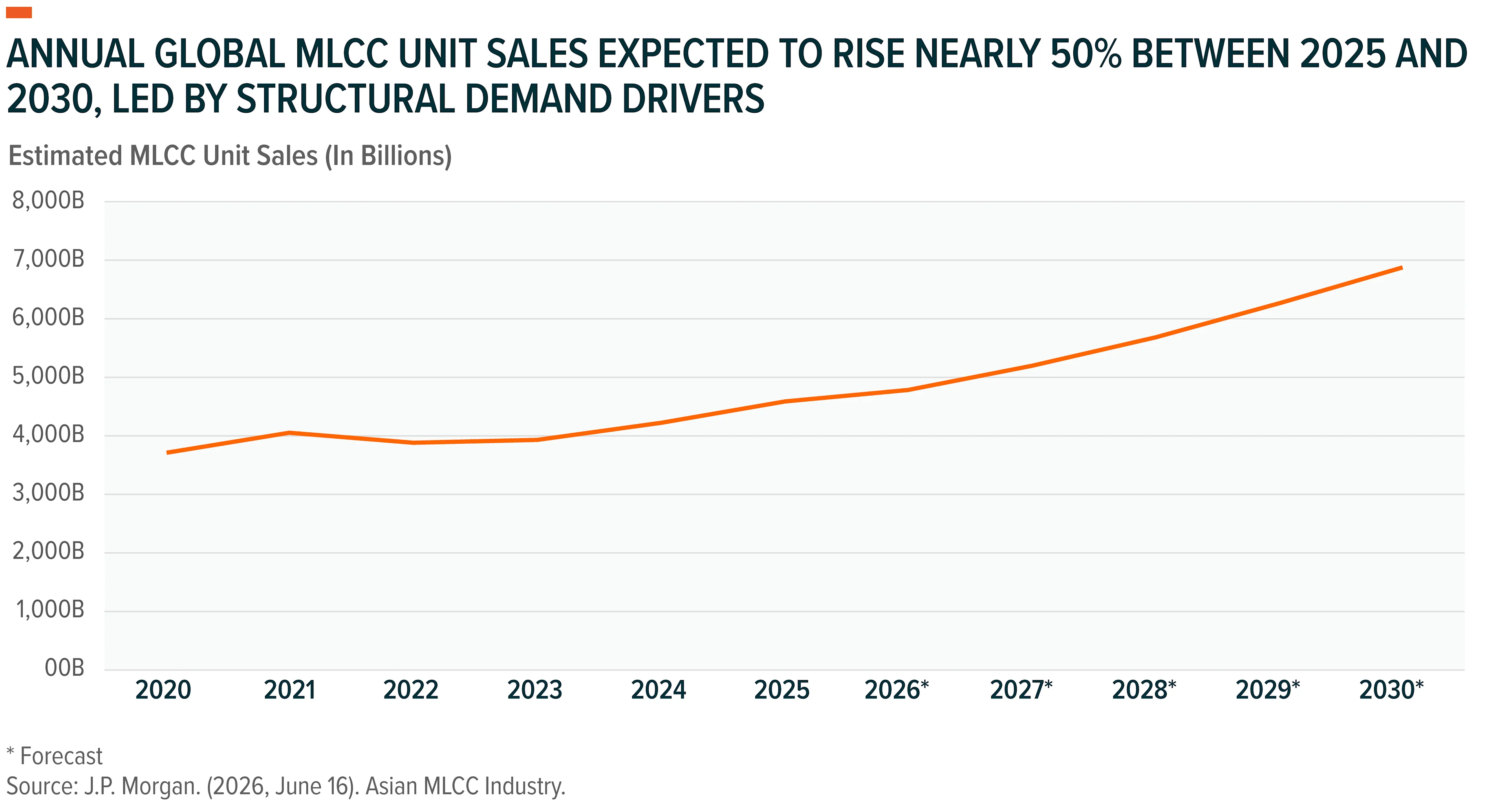
The global MLCC market could grow from $15 billion in 2025 to over $30 billion by 2030, with AI and Data Centers driving nearly 30% of all MLCC revenues by 2030.22 MLCCs represent only a small share of an AI system’s cost, but shortages of qualified components can delay shipments of far more valuable hardware. That gives the relatively small group of advanced suppliers strategic importance well beyond the absolute dollar size of the MLCC market.
Manufacturers are responding with targeted investments, but new capacity takes time. New production lines can require roughly two years to build, and the materials expertise needed to manufacture advanced products at high yields cannot be replicated quickly. Murata and Samsung Electro-Mechanics are expected to make large investments to scale production.23 Yet global MLCC production capacity is expected to expand by only 10–15% annually through 2030, limiting supply response to accelerating demand.24
Global X MLCC & Electronic Components ETF: Targeting the Passive Components Powering AI
We’re launching the Global X MLCC & Electronic Components ETF (ticker MLCC), an actively managed ETF that invests in companies involved in MLCCs and electronic components.
Designed to stay focused on the gatekeepers of an emerging AI bottleneck, the strategy seeks to deliver access to a concentrated group of companies listed in Japan, South Korea, and Taiwan that either derive at least 50% of their revenue from MLCCs and related passive electronic components or rank as one of the three largest manufacturers of capacitors worldwide by revenue.
The approach centers on a concentrated group of up to fifteen qualifying companies, with the two largest qualifying companies generally receiving weights of 20%, while remaining holdings are weighted by free-float-adjusted market capitalization, capped at 15%. This structure deliberately concentrates exposure toward established industry suppliers of MLCCs and passive electronic components, where scale, manufacturing expertise, and constrained capacity can allow a greater share of the economics to accrue.
As demand for MLCCs expands faster than production capacity can scale, we expect these suppliers to benefit from higher volumes, greater capacity utilization, and stronger pricing power. With many of these companies listed overseas, the fund provides access to them through a single U.S.-listed ETF, focused on the suppliers of small but essential components underpinning power-dense AI hardware.
Conclusion: AI Surfaces an Emerging MLCC Bottleneck
As the market begins to price the broader AI hardware stack, attention is shifting beyond compute to the supporting components that make it possible, including passive components that regulate and stabilize power. Within this layer, MLCCs represent a tiny share of system cost, but they play a pivotal role in keeping increasingly power-dense servers stable and reliable. Their growing content per system, rising technical requirements, and concentrated supplier base create a distinct opportunity within the broader AI value chain, reinforced by demand from vehicle electrification, industrial automation, and connectivity.
For investors seeking to broaden their AI exposure beyond the most visible semiconductor names, the Global X MLCC & Electronic Components ETF (MLCC) offers targeted access to an essential but often-overlooked layer of the AI hardware value chain.
Related ETFs
MLCC – Global X MLCC & Electronic Components ETF
Click the fund name above to view current holdings. Holdings are subject to change.