
Why Hydrogen?
From Established Industrial Input to Emerging Energy Solution
Hydrogen is a key industrial input for refining petroleum, producing fertilizer, and processing chemicals, as well as a potentially critical source of low-carbon energy. Global demand surpassed 100 million metric tons in 2025, up 3% year over year, driven primarily by these established uses.1
Two forces could broaden the opportunity: 1) rising demand for reliable onsite power and 2) investment in low-carbon hydrogen production, further intensified by domestic energy security concerns. Together, these trends could support broader adoption across traditional segments as well as new end uses, such as energy storage, transportation, heating, and hard-to-electrify industries.
(1) Data Centers Create New Growth Market for Fuel Cells
Data centers require reliable, around-the-clock electricity, but grid connections can take years. Fuel cells offer a rapidly deployable onsite alternative that can operate on natural gas or hydrogen. Bloom Energy, for example, delivered a 55MW fuel-cell system to Oracle in 55 days in 2025, more than a month ahead of the initial project timeline.2,3
Nearly two-thirds of data center developers say they would deploy onsite power systems as the primary solution in the event of power grid bottlenecks, rather than relocate or delay operations.4 As a result, fuel cell technology producers increasingly highlight “bring your own power” trends as a key tailwind.
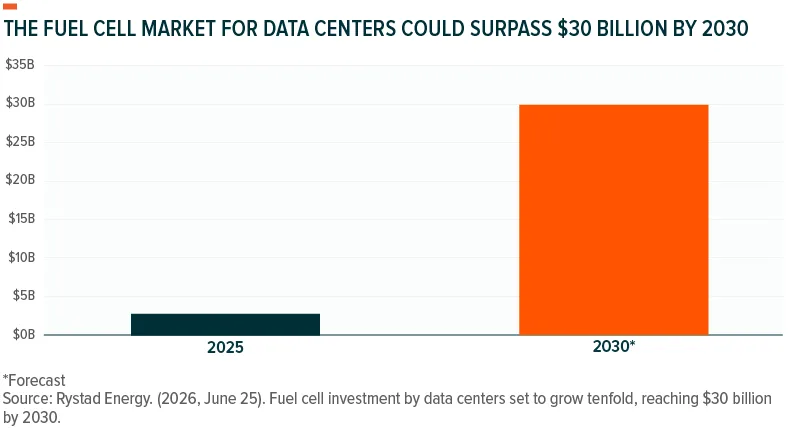
Data-center investment in fuel cells is forecast to rise from $2.8 billion in 2025 to nearly $30 billion by 2030.5 The contracted fuel cell order backlog stands at 9GW, including agreements with Oracle, AEP, Equinix, and Brookfield.6
(2) Low-Carbon Hydrogen Could Expand the Opportunity
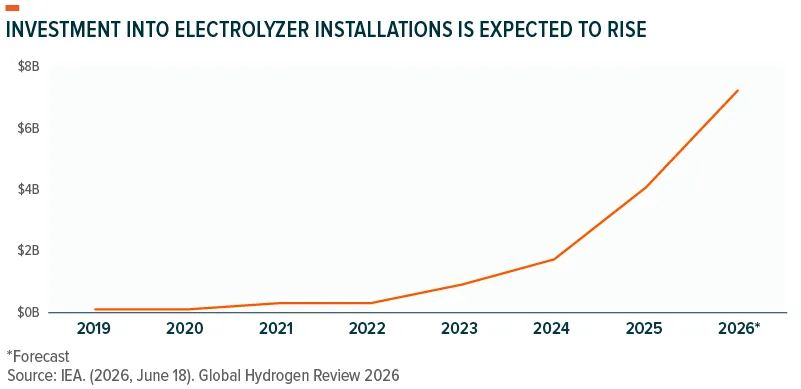
Producers of electrolyzers, which are used with renewable energy to produce emissions-free green hydrogen, could benefit as low-carbon hydrogen production costs fall, and demand and investments rise. Installed electrolyzer capacity could reach 7GW in 2026, up from 4.2GW in 2025.7
Using low-carbon hydrogen can help to reduce emissions in industrial applications, creating a nascent yet growing market for companies throughout the hydrogen value chain.8
Further policy support for low-carbon hydrogen is possible as governments work to derisk energy and industrial processes from global supply shocks.9
HYDR: Delivers Exposure to the Global Hydrogen Industry
Focus on Pure-Play Companies Across the Value Chain
Related ETF
Click the fund name above to view current holdings. Holdings are subject to change.
