Lithium is the undisputed key raw material in battery technology. With demand expected to skyrocket from 1.2 million metric tons in 2023 to over 3.7 million by 2030, electric vehicle (EV) and battery makers are racing to secure future capacity.1
Our team recently got a firsthand look at lithium’s journey from the ground up as we continued our Theme Lab series with a visit to SQM’s operations in Chile’s lithium-rich Salar de Atacama. In our view, understanding the different lithium extraction methods is crucial to assessing the investment potential of companies operating in the increasingly important lithium mining sector. In this piece we examine the extraction methods in use today and consider how emergent technologies could shape lithium mining in Chile and around the world.
Key Takeaways
Chile aims to increase its presence and market share in the lithium market even further, driven by SQM’s ability to increase volumes.
Lithium brine resources are significantly less carbon intensive than hard rock lithium, the other main resource type. This characteristic is one reason why Chile’s place in the so-called Lithium Triangle is so strategic.
Direct Lithium Extraction (DLE), a relatively new extraction technology, has significant potential, but in our view long-term optimism must be balanced with short-term caution.
SQM Is Chile’s Economic Crown Jewel
SQM is one of the largest lithium producers in the world with an estimated market share of 20% and 210,000 metric tons of lithium capacity.2 Its capacity includes both lithium carbonate and the more chemically processed lithium hydroxide, the two main lithium-based battery grade inputs. Supported by $2.2 billion capital expenditure guidance between 2023 and 2025, the company aims to eventually grow its capacity in Chile to 310,000 metric tons.3
SQM is known for its short-term contract strategy, mostly signing contracts at market price with larger clients. In its most recent quarter, average prices reached $51,000/metric ton.4 That financial prowess is one reason why SQM is an economic powerhouse for Chile.
In 2022, SQM contributed $5 billion to Chile’s coffers in 2022, more than any other company.5 The company primarily contributes to the state treasury through lease payments to CORFO, the government’s production development corporation, as well as income tax.
Lithium Extraction 101: Brine vs. Hard Rock
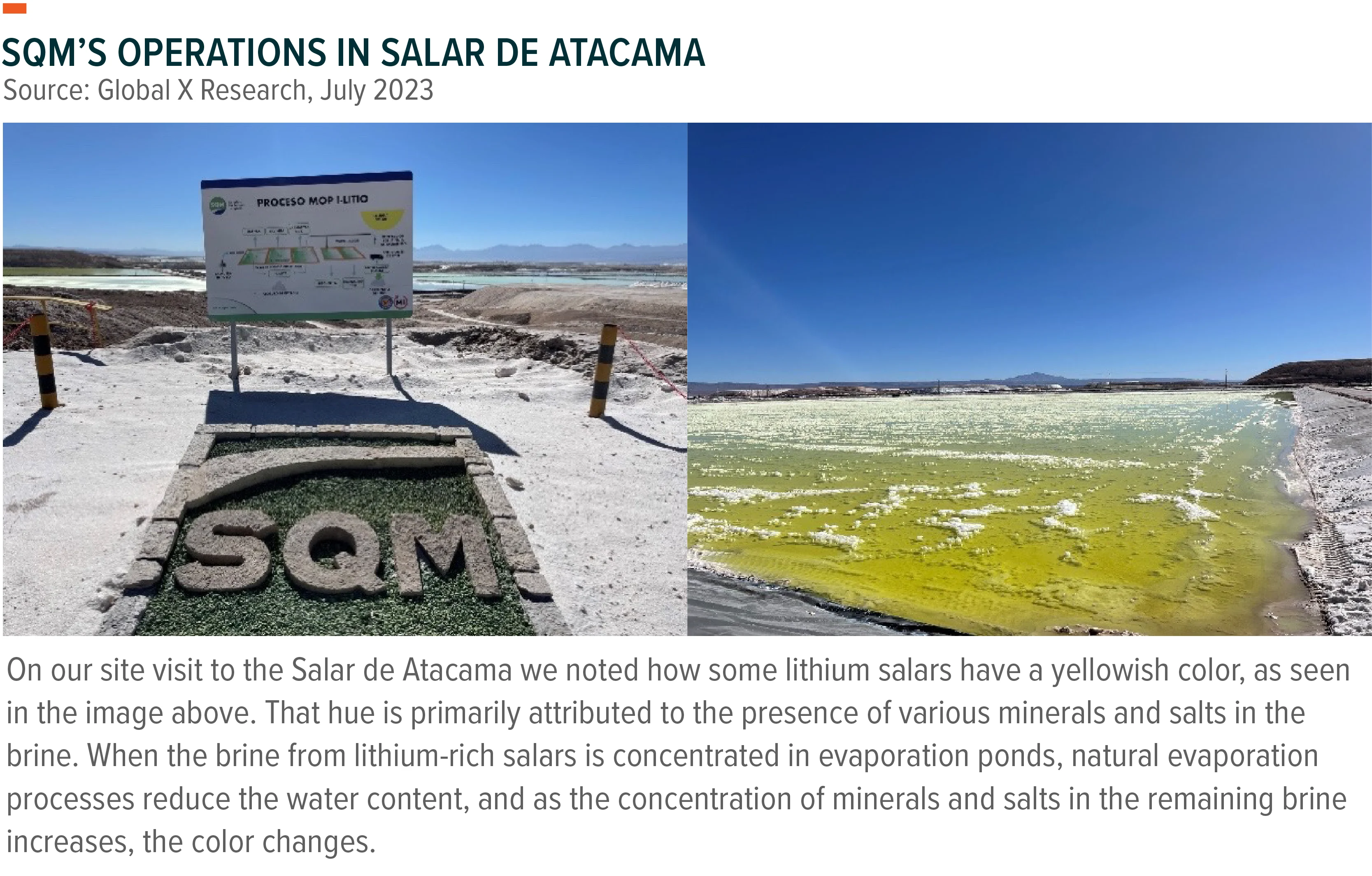
The two primary sources for lithium extraction are brine and hard rock, and their use largely depends on geography. The Lithium Triangle of Argentina, Bolivia, and Chile, which together represented 53% of the world’s lithium reserves at the beginning of 2023, is rich in brine deposits.6 As we saw in the Salar de Atacama, SQM’s lithium and refining operations involve seven steps:
Brine Extraction: SQM drills wells into the Salar de Atacama to access the lithium-rich brine beneath the surface. The brine is then pumped to the surface.
Brine Concentration: The extracted brine is transported to evaporation ponds. Solar evaporation allows the water to evaporate, increasing lithium concentration.
Impurity Removal: During evaporation, impurities like magnesium, potassium, and calcium are concentrated. SQM uses chemical treatments to remove these impurities and ensure a high-purity brine solution.
Lithium Carbonate Precipitation: Soda ash (sodium carbonate) is added to the concentrated brine, causing lithium carbonate to precipitate. The precipitate is separated and collected.
Lithium Carbonate Drying and Refining: The collected lithium carbonate is washed, dried, and further refined to remove any remaining impurities and moisture, resulting in high-purity lithium carbonate.
(Optional) Additional Refining: Depending on customer needs, SQM may perform further refining processed to produce lithium hydroxide or other lithium compounds.
Packaging and Transport: The final lithium product is packaged and transported to customers, including battery manufacturers, for use in various applications.
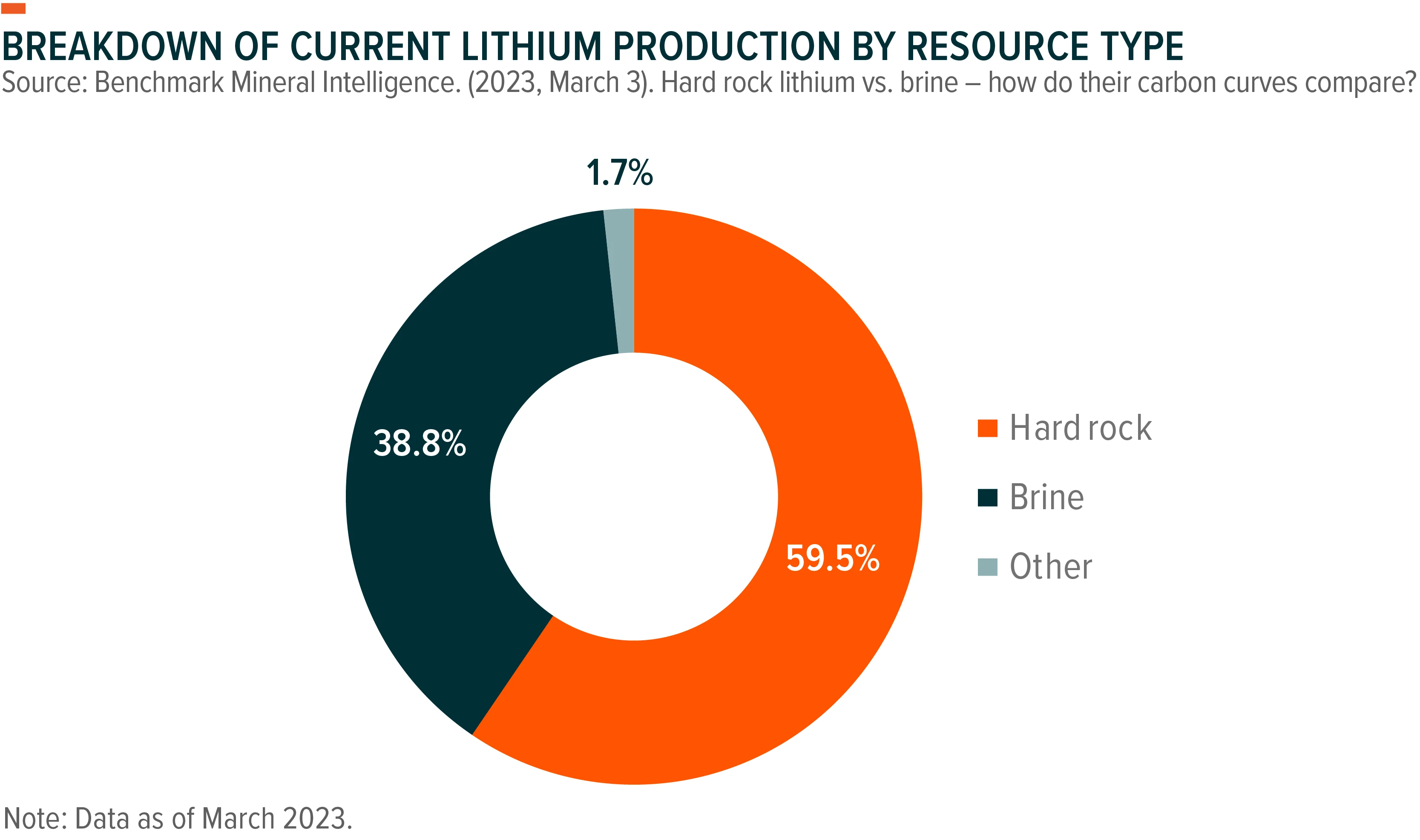
Hard rock extraction involves more traditional mining techniques to extract spodumene, a mineral containing lithium. The extracted ore undergoes a series of crushing, grinding, and concentration processes before it is converted into lithium chemicals. Hard rock sources are abundant in countries like Australia and Canada.
When comparing lithium brine and hard rock sources, carbon intensity is a key consideration. Lithium chemicals derived from hard rock sources can be more than three times as carbon-intensive as those from brine sources, given the energy required.7 At present, brine sources contribute 39% of the world's mined lithium supply.8
Direct Lithium Extraction Still Developing, SQM Focuses on New Brine Tech
Direct lithium extraction (DLE) pulls lithium directly from brines without the need for evaporation, which could result in a less energy-intensive and environmentally impactful process. Conceptually DLE has been known for decades, but interest in commercializing the technology is growing as companies explore additional ways to source lithium. Potential benefits DLE could offer over traditional extraction methods include:
As promising as DLE may be, it remains in the early stages of development and has some obstacles to overcome before wide adoption can occur. On our site visit, SQM noted that each brine deposit possesses unique characteristics, such as lithium concentration and impurity levels. Characteristics like these can complicate the large-scale implementation of DLE, at least in the near future. Instead, SQM highlighted how the company can make their brine evaporation technology more efficient and cost effective. For example, by using new heat exchangers that are more efficient at transferring heat, SQM can reduce the amount of energy needed to evaporate the brine, making the process more sustainable. To yield a higher-quality product, SQM is also using new methods to evaporate brine evenly.
Conclusion: EVs and Battery Tech Start with Lithium Extraction
Whether brine, hard rock, or DLE, lithium miners and their extraction techniques play a critical role in the energy transition’s trajectory, as without lithium there can be no EV battery. SQM is one such miner, and our recent Theme Lab visit confirmed to us that its techniques have the potential to push the industry forward. In addition, new technologies like DLE could eventually boost existing brine resources while also expanding the range of geographies where lithium mining is viable. In our view, it’s important to monitor such developments when assessing lithium exposure, as not all lithium resources are created equal.
Related ETFs
LIT – Global X Lithium & Battery Tech ETF
Click the fund name above to view current holdings. Holdings are subject to change. Current and future holdings are subject to risk.