.jpg&w=96&q=75)
Inflation is the rare risk that touches everyone, every day, yet investors often underestimate how directly it threatens their portfolios. When price inflation accelerates, the damage rarely stays contained: central banks tighten, the cost of capital rises, and both equities and bonds can suffer at the same time, undermining the diversification a traditional 60/40 portfolio is supposed to provide. In our view, the unpredictability of these shocks is precisely the point: rather than trying to forecast the next shock, investors can build resilience by owning the assets at the very source of inflation: commodities.
How Big of a Risk is Inflation to Your Portfolio?
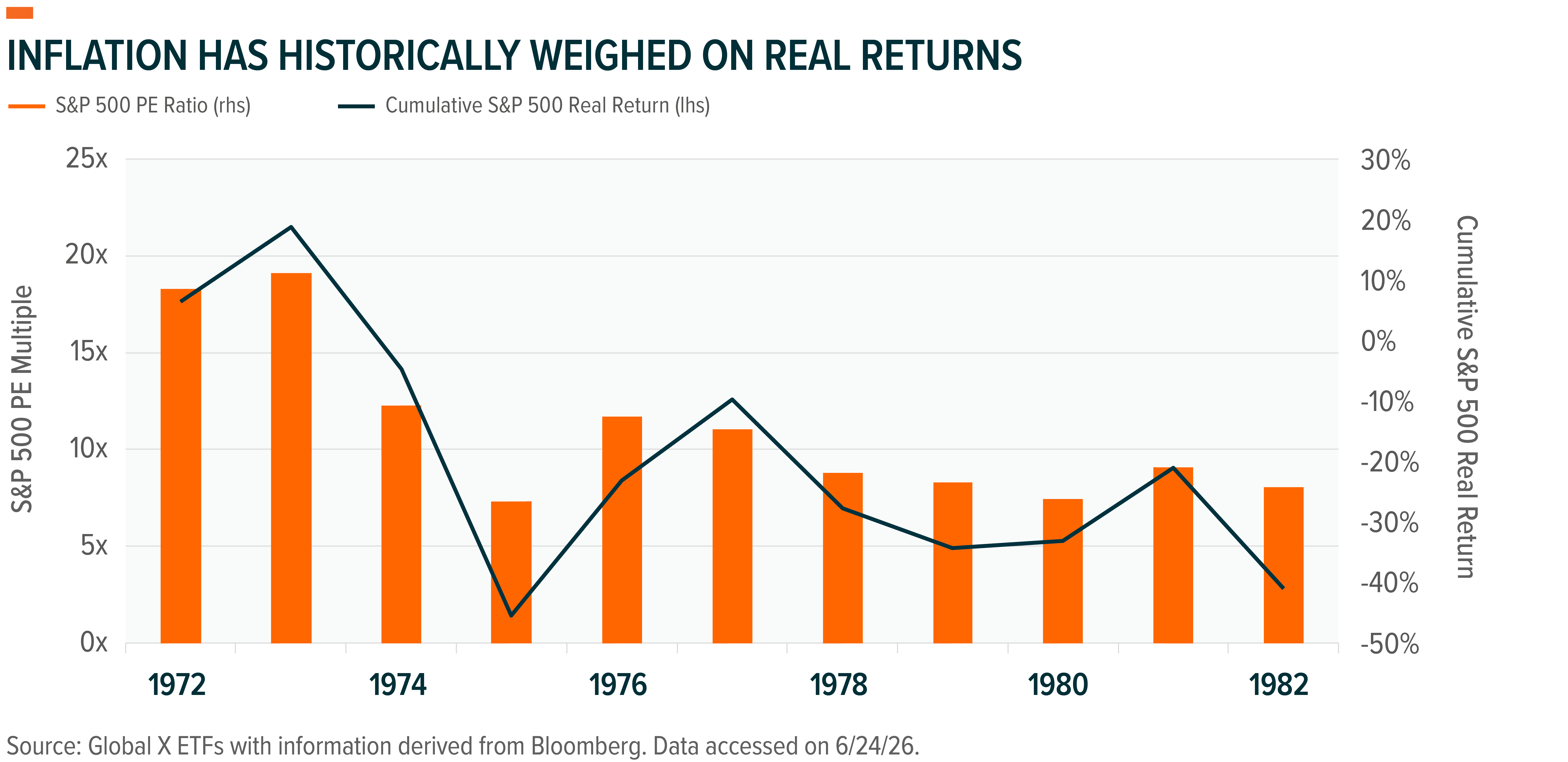
Inflation remains one of the most significant risks facing financial markets today. When inflation accelerates, central banks are often forced to tighten financial conditions through higher interest rates. This higher cost of capital pressures traditional assets not only from a growth perspective, but also drives multiple contraction. The 1970s made this clear, as persistent price pressures produced a prolonged stretch of weak real returns across traditional assets. More recently, the inflation surge of 2022 prompted the Federal Reserve's most aggressive tightening cycle in decades, contributing to double-digit declines across both equities and bonds.1 Looking ahead, supply-side disruptions and commodity volatility are an ever-present risk that no one can reliably predict or time. That inherent unpredictability, and the sudden inflation it can spark, is exactly why portfolio diversification is essential.
Are Commodities an Inflation Hedge?
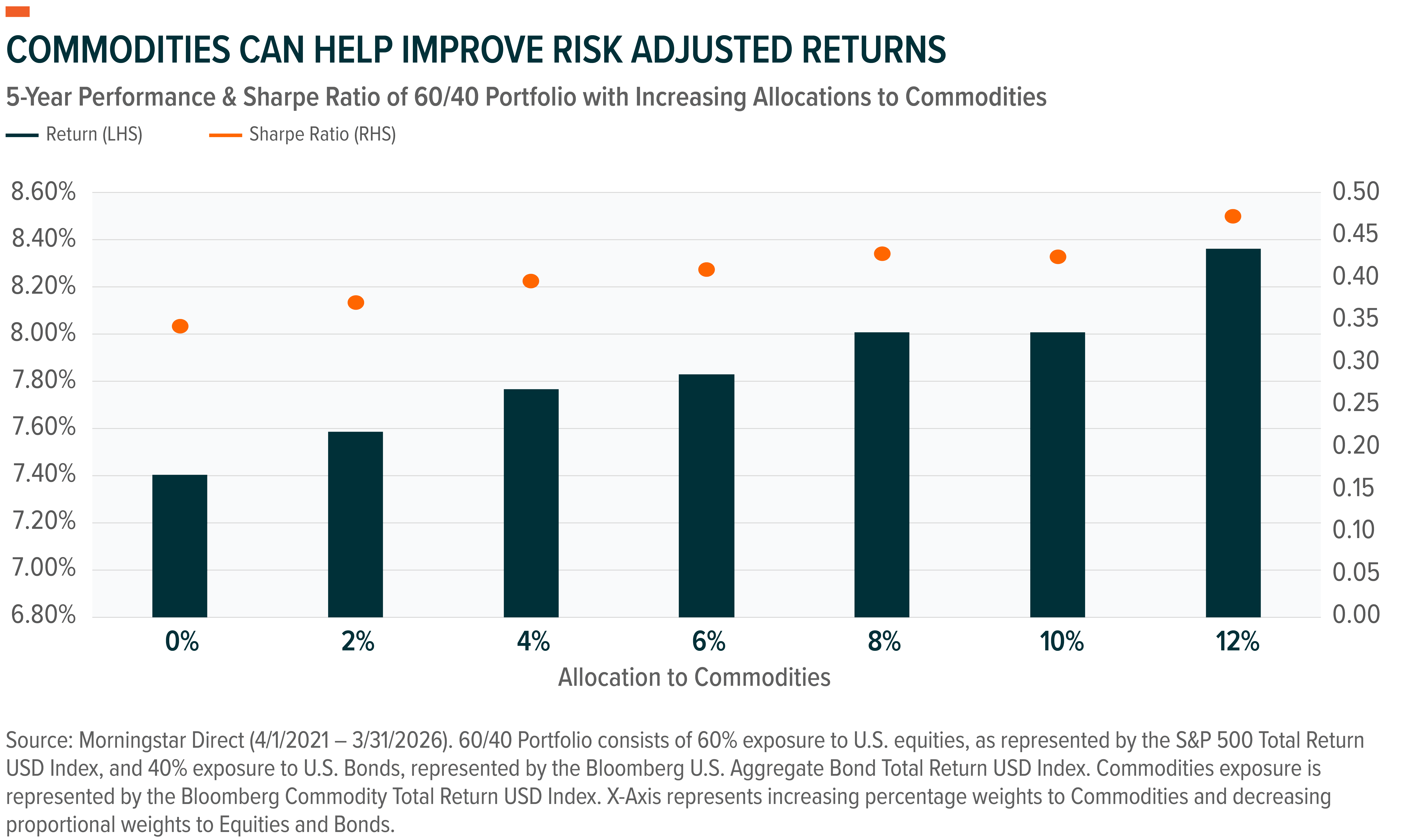
If history is a guide, commodities have helped protect against inflation, gaining in roughly 70% of years when U.S. consumer price inflation accelerated2. The reason is physical: commodities are exposed directly to real-world supply and demand, and those imbalances are often the source of inflation itself. A weaker US dollar could also be inflationary, benefitting the value of commodities which are priced in US dollars. As a result, adding commodity exposure has historically driven higher risk adjusted returns over time3. Keeping it simple, commodities are essential inputs to everyday life: energy moves us to work and heats and cools our homes; agricultural commodities feed us; metals help generate and transmit the electricity we depend on. Given that everyone pays these costs daily, we believe one of the most direct ways to protect against inflation is to own the assets behind it: commodities.
What to Look Out For?
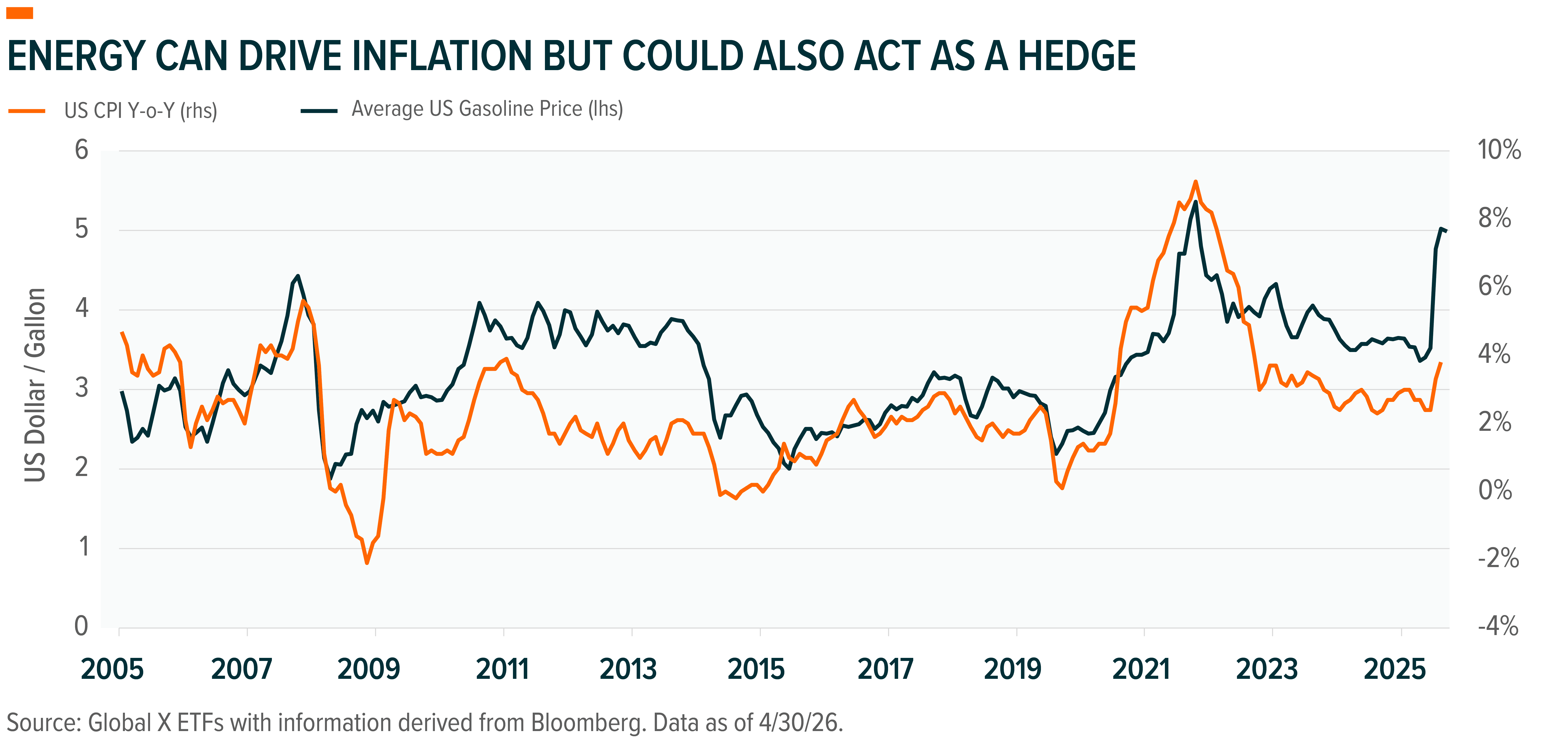
- Your Gas Bill: Can you Protect Against Pain at the Pump? US gasoline prices just witnessed their second geopolitically driven price shock in the past five years, once again reigniting concerns around the fragility of global energy supply. This volatility is especially concerning because gasoline is a meaningful share of consumer spending, making higher energy prices a regressive tax on households. Energy also tends to lead broader inflation, pressuring not just budgets but corporate earnings and equity multiples alike. That dual impact is precisely why energy can serve as a hedge. We believe the best way to protect against rising gas prices is by owning them, while futures-based strategies can offer more direct exposure to downstream products like gasoline or diesel.
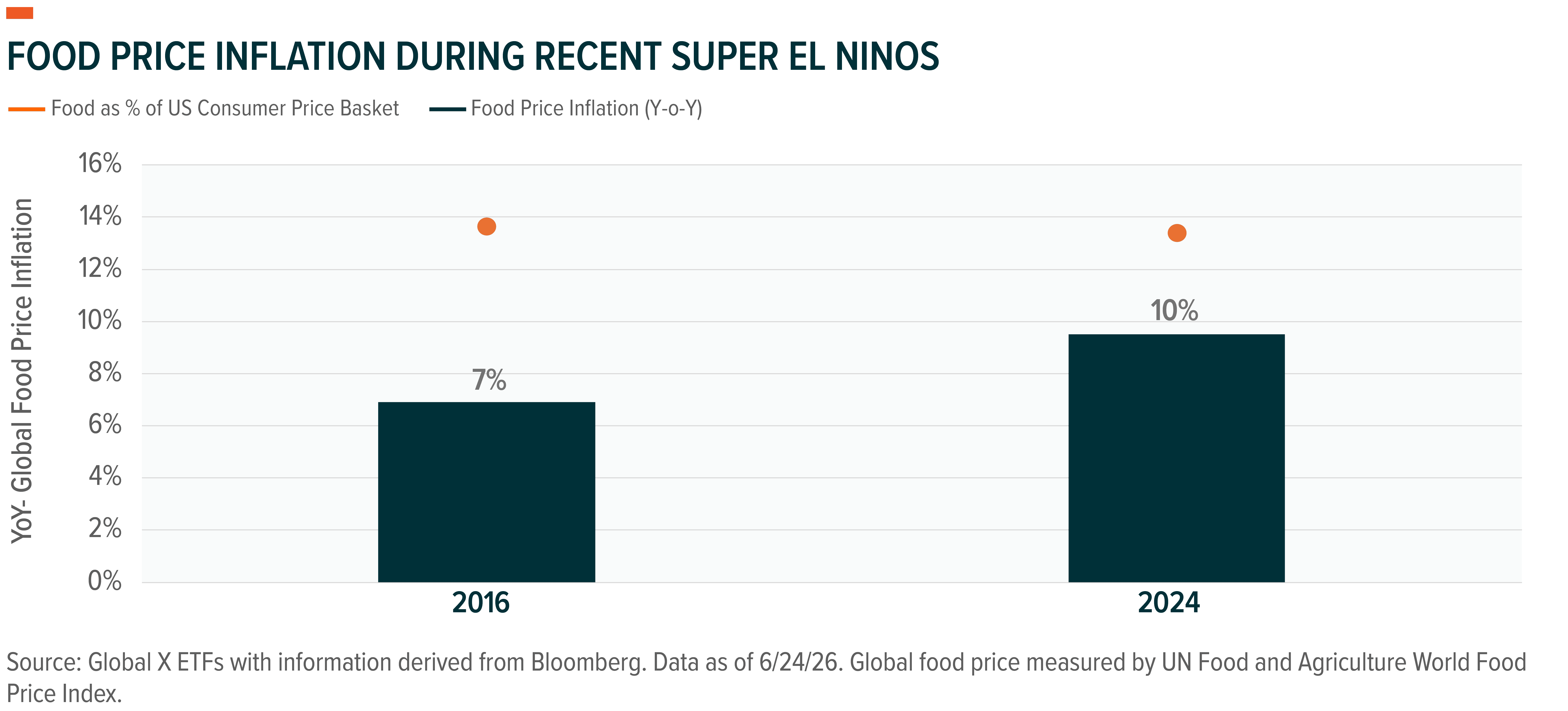
- Your Grocery Bill: What About Food Prices? Agricultural markets face mounting supply-side challenges that could support higher prices ahead. Fertilizer markets remain vulnerable to Middle Eastern supply disruptions, threatening crop yields and planting decisions across key producing regions. A potentially super El Niño pattern adds uncertainty, raising the risk of droughts, flooding, and other weather that can hit global crop production. Investors often have limited options for agricultural exposure through equities and futures-based strategies can hedge agricultural inflation, though complexity and roll yield dynamics support an active approach.
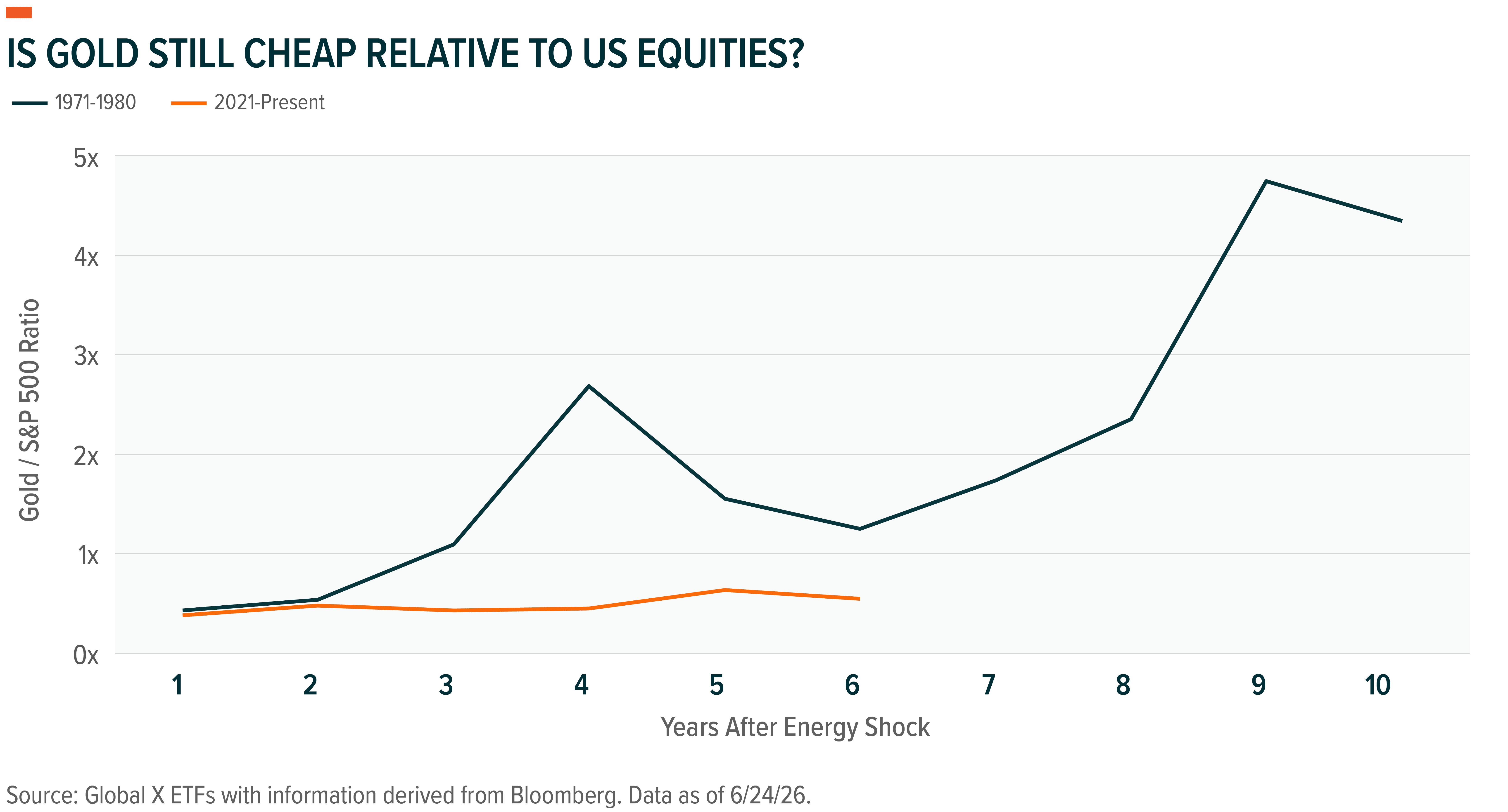
- Your Flight-to-Quality: Are Precious Metals Still a Hedge?: Precious metals have performed unexpectedly since the Hormuz Strait closure began. Gold, the historical “safe” asset, has lagged relative to the apparent geopolitical risks. We attribute this to markets not pricing in any long-term disruption from the energy shock. Gold's performance alongside record-high equities and rising Treasury yields suggests markets view the shock as transitory and assign more risk to accelerating inflation than to prolonged growth slowdown. Looking ahead, the sharp decline in energy prices represents a powerful deflationary force. As a result, disinflation could open the door for a more dovish Federal Reserve and lower real interest rates, both of which have historically benefitted gold.
Conclusion
Inflation remains one of the most significant risks to a traditional 60/40 portfolio, threatening equities through both earnings and multiple compression while simultaneously eroding real returns for bonds. Commodities offer a compelling hedge against this risk, providing diversification precisely when traditional stock-bond correlations break down. Futures contracts offer the broadest exposure to commodities, however capturing that benefit could require active management given the drag from roll yield and the mechanics of maintaining positions. Ultimately, we believe the best way to protect against inflation is to own it through commodities.