


Product ResearchCharting DisruptionArtificial Intelligence
Introducing Charting Disruption: Outlook for 2025 and Beyond
P
Pedro Palandrani
Dec 16, 20245 min read
Get the latest news and updates from our team.
Copyright © 2026 Global X. All rights reserved.
SEI Investments Distribution Co. (1 Freedom Valley Drive, Oaks, PA, 19456) is the distributor for the Global X Funds.
Check the background of SIDCO and Global X's Registered Representatives on FINRA's BrokerCheck.
Arelis Agosto
Pedro Palandrani

This piece is part of a series that dives deeper into the most prevalent themes of this year’s iteration of our flagship research piece, Charting Disruption. This feature focuses on the aging population, as part of a larger Advancing Healthcare section exploring a variety of innovations in the space. For additional insights from the project, please click here.
The global population aged 65 and older is growing at an unprecedented rate, expected to double to 1.7 billion by 2053, far outpacing general population growth.1 This demographic shift, driven by increasing life expectancy and declining birth rates, is particularly pronounced among those 75 and older. Recent medical advances offer promising solutions: GLP-1 treatments, originally developed for type 2 diabetes, have shown effectiveness in treating obesity and related chronic diseases common among older adults. The healthcare industry is also responding with expanded senior living facilities and wireless patient monitoring technologies to meet rising care demand.
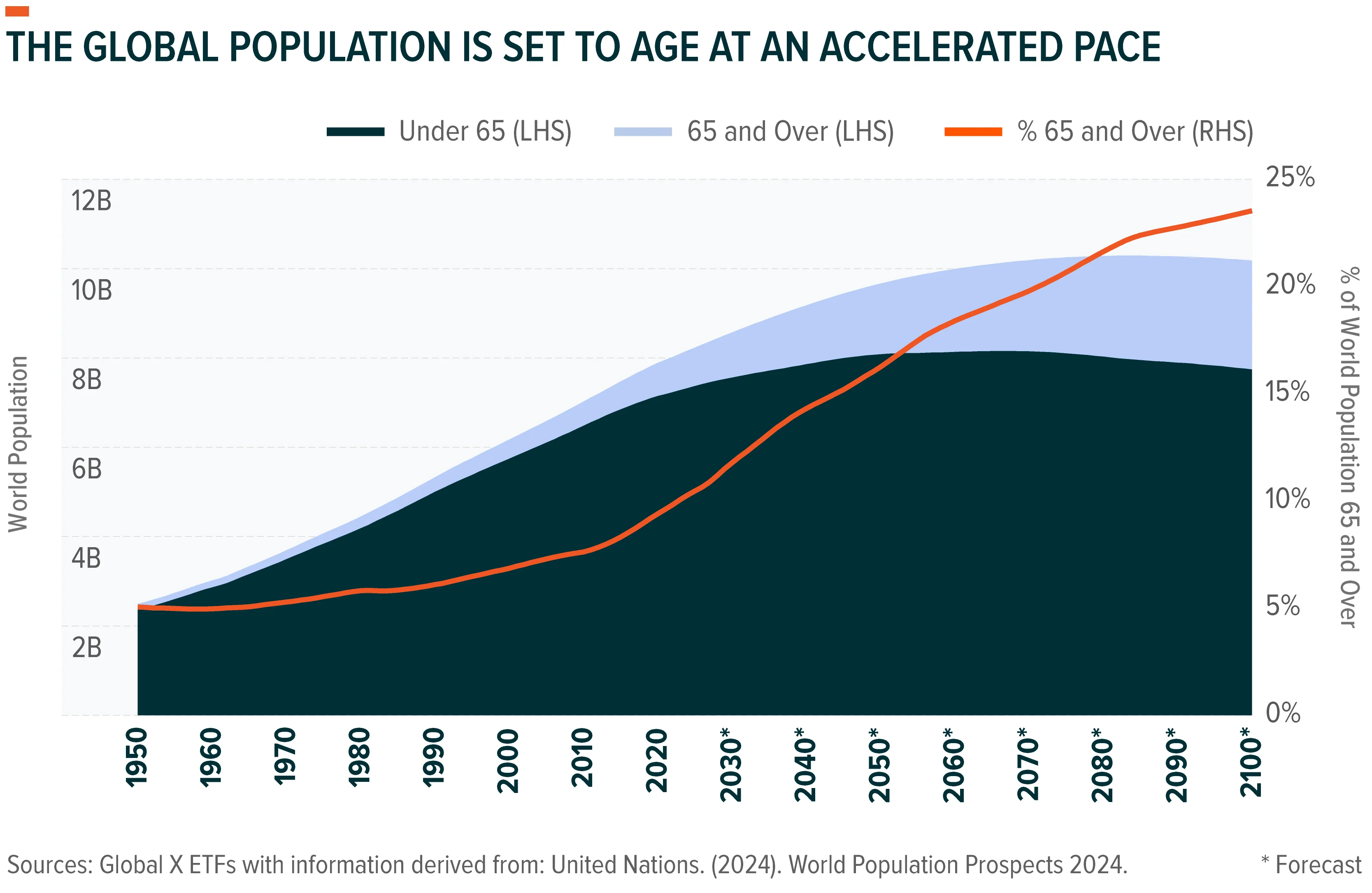
The global population of adults aged 65 and older is increasing rapidly, outpacing the general population and driving greater demand for healthcare services. In the United States, this trend is intensifying pressures on healthcare spending and long-term care supply due to the growing prevalence of chronic illnesses among older adults.
Initially developed for type 2 diabetes, GLP-1 treatments are now being used to address obesity and associated chronic conditions, with weight loss outcomes comparable to bariatric surgery. Ongoing research and FDA approvals for expanded applications are fostering wider adoption.
The U.S. healthcare system is grappling with a growing physician shortage and an increasing demand for long-term care, as caregiver resources and senior care facilities struggle to keep pace. Emerging technologies, like wearable sensors, offer innovative solutions to enhance caregiving and support healthcare for the aging population.
Through 2050, the 75+ age group is expected to grow nearly eight times faster than the general population.2 This trend is driven by an increasing life expectancy - projected to reach 80+ years globally by 2100 - as well as declining birth rates - expected to fall from 30 to 15 births per 1,000 people by 2050.3 These demographic changes present significant healthcare challenges for cost management and care delivery.
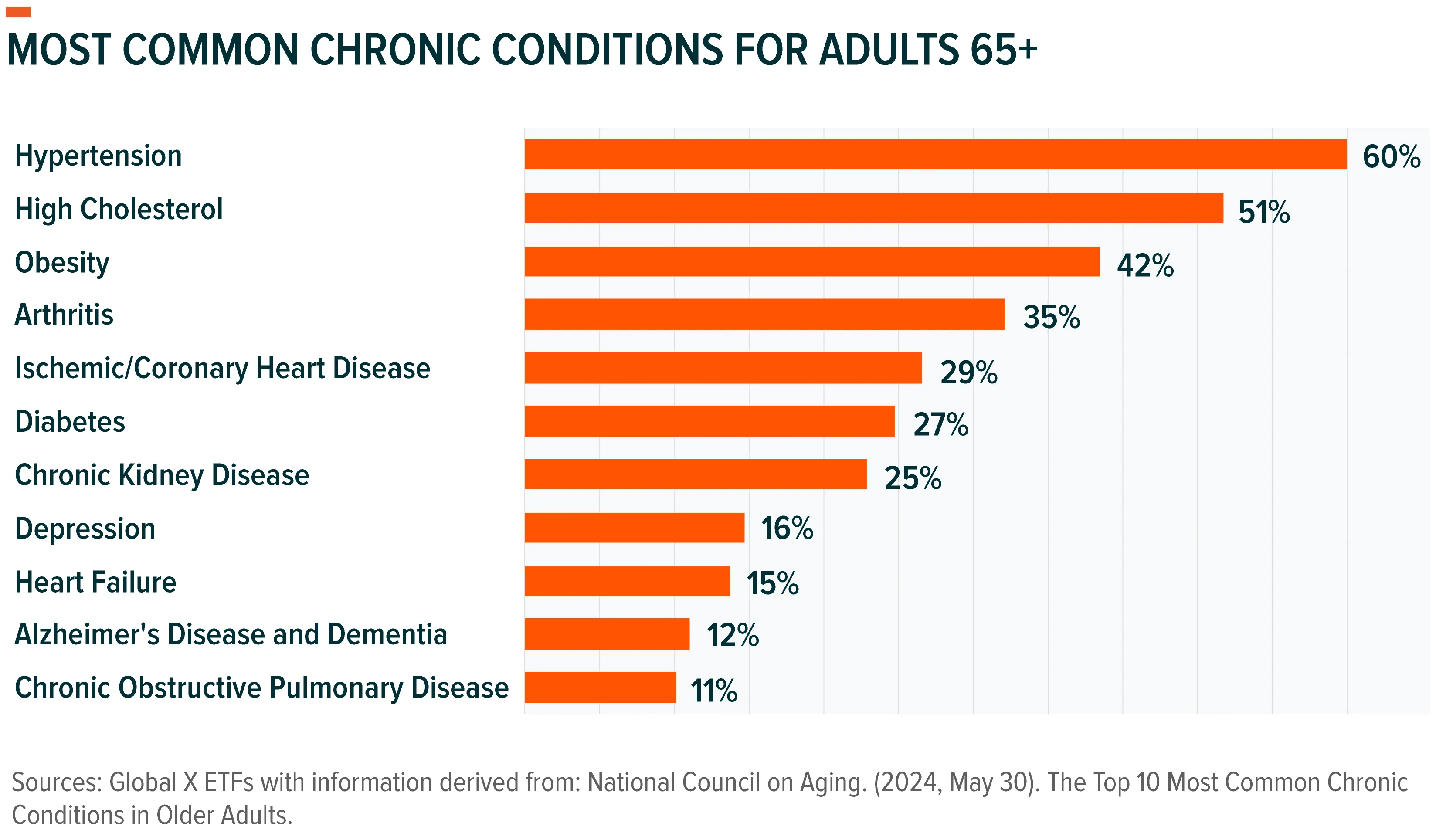
In the United States, adults 65 and older represent 16% of the population but account for 37% of healthcare spending.4,5 This cost concentration reflects the prevalence of chronic conditions - 95% of individuals over 60 have at least one chronic condition, and 79% have multiple.6 The most common conditions are hypertension (60%), high cholesterol (51%), obesity (42%), and arthritis (35%), resulting in complex care needs and higher healthcare costs.7
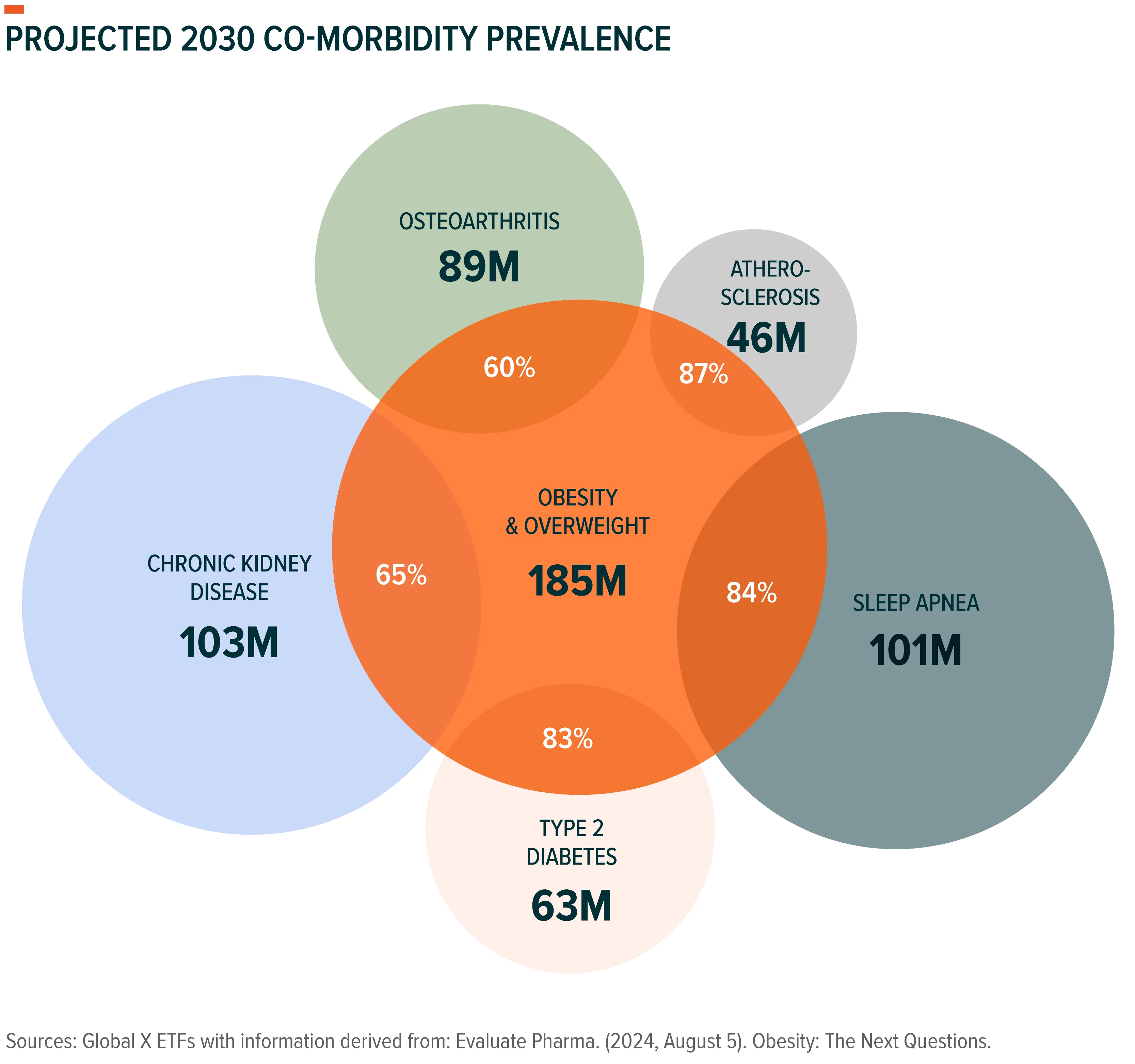
The rising prevalence of obesity has led to a surge in associated health problems, particularly in older patients. New treatments targeting obesity show promise not only for weight reduction but also for addressing multiple chronic conditions common in older adults. GLP-1 treatments were originally developed to treat type 2 diabetes, though high overlap with other chronic illnesses has opened their use to addressing obesity and related conditions.
The success of GLP-1s in treating obesity and cardiovascular risk has driven rapid market growth, with annual revenues projected to reach $150 billion by 2030, up from $55 billion in 2024.8 The category includes 13 approved drugs, with 17 more expected by 2030, and 75 ongoing clinical trials exploring new applications for addiction, liver disease, and neurology.9,10 Market leaders Eli Lilly (Mounjaro and Zepbound) and Novo Nordisk (Ozempic and Cagrisema) anticipate annual revenues per treatment to exceed $20 billion by 2030, reflecting the growing importance of these therapies in managing age-related health conditions.11
Healthcare costs for chronic conditions comprise 90% of annual Medicare spending.12 Weight reduction of 15% in a population of 100,000 people could yield $85 million in savings over five years through chronic disease prevention.13 To improve treatment adherence, newer GLP-1 formulations are being developed with diverse dosing methods and frequencies.
The U.S. healthcare system faces significant staffing pressure, with one-third of physicians expected to retire within the next decade.14 This demographic shift presents a growing market opportunity in senior care facilities. Nearly 70% of older adults will require long-term care, but facility development has not kept pace with demand.15,16 As the U.S. old-age dependency ratio (adults 65+ per 100 working-age adults 20-64) rises from 30.83 in 2024 to 41.58 in 2050, fewer working-age family members will be available to care for elderly relatives.17 This shortage of family caregivers, combined with the current $600 billion burden of unpaid family caregiving, is expected to drive increased demand for professional senior care facilities.18
Technology is emerging as a key solution to address caregiver shortages in elderly care. Wearable sensors enable remote patient monitoring, emergency alerts, and automated medication management - features particularly valuable for older adults who may be prone to falls or medication non-adherence. These devices are especially important for monitoring cardiovascular and neurological conditions common in elderly patients.
The aging global population presents both significant challenges and opportunities in healthcare. The convergence of medical innovations like GLP-1 treatments, expanding senior care facilities, and advanced monitoring technologies offers promising solutions to address the complex healthcare needs of older adults. As demographic shifts continue and the old-age dependency ratio rises, these solutions will become increasingly critical in managing healthcare costs and improving care delivery for an aging population. While challenges persist in staffing and care facility development, ongoing technological advances and pharmaceutical innovations provide a foundation for meeting the evolving healthcare demands of an older population.
1. United Nations. (2024, July). World Population Prospects 2024.
2. Ibid.
3. Ibid.
4. Centers for Medicare & Medicaid Services (CMS). (2024, September 10). National Health Expenditures by Age and Sex.
5. United Nations. (2024, July). World Population Prospects 2024.
6. National Council on Aging. (2024, May 30). The Top 10 Most Common Chronic Conditions in Older Adults.
7. Ibid.
8. Evaluate Pharma. (n.d.). GLP-1 Sales by Indication. Accessed November 1, 2024.
9. Evaluate Pharma. (n.d.). GLP-1 Sales by Indication. Accessed November 1, 2024.
10. National Library of Medicine, National Center for Biotechnology Information. (n.d.). ClinicalTrials.gov Trial Search. Accessed November 1, 2024.
11. Evaluate Pharma. (n.d.). GLP-1 Sales by Indication. Accessed November 1, 2024.
12. U.S. Centers for Disease Control and Prevention (CDC). (2024, July 12). Fast Facts: Health and Economic Costs of Chronic Conditions.
13. Chen, Elaine. (2023, October 17). Our Expensive Obesity Drugs Are Worth It, Novo Nordisk and Eli Lilly Argue in Raft of Studies. STAT+.
14. GlobalData Plc. (2024, March). The Complexities of Physician Supply and Demand: Projections from 2021 to 2036. Association of American Medical Colleges.
15. Johnson, R. W. (2019, April 3). What Is the Lifetime Risk of Needing and Receiving Long-Term Services and Supports? U.S. Department of Health and Human Services (HHS), Office of Disability, Aging and Long-Term Care Policy (DALTCP) and the Urban Institute.
16. Bloomberg, L.P. (n.d.). Healthcare REIT Dashboard. Data as of November 1, 2024.
17. United Nations. (2024, July). World Population Prospects 2024.
18. Reinhard, S. C., Caldera, S., Houser, A., & Choula, R. (2023, March 8). Valuing the Invaluable: Strengthening Supports for Family Caregivers. American Association of Retired Persons (AARP).
This year’s iteration of our flagship research project, Charting Disruption 2025, aims to shed a quantifiable light on what the future may hold.
This year’s iteration of our flagship research project, Charting Disruption 2025, aims to shed a quantifiable light on what the future may hold.
This year’s iteration of our flagship research project, Charting Disruption 2026, aims to shed a quantifiable light on what the future may hold.
This year’s iteration of our flagship research project, Charting Disruption 2026, aims to shed a quantifiable light on what the future may hold.