
Key Takeaways
The overarching takeaway from CES 2026 is that the future is autonomous and it’s approaching quickly. Robotaxis and humanoid robots were two areas that dominated CES 2026. Within our model portfolios and portfolio consulting, robotics is a theme where we anticipate meaningful acceleration this year.
- The era of physical AI has started.
- Open-source foundational models for physical AI have the potential to accelerate progress across
both robotics and self-driving vehicles. - Robots and self-driving vehicles are no longer futuristic, they’re a reality.
Introduction
AI is at an inflection point. 2026 is an incredibly important year for the application of AI in productivity enhancing areas. Training has been a focus of the last few years – this year is all about application, with physical AI taking center stage.
Foundational Models for Physical AI
Across both autonomous vehicles and robotic applications, foundational AI models were a recurring theme. Speed to market and cost are key advantages to utilizing these foundational models as a starting point. Nvidia has positioned themselves as a cornerstone to the infrastructure for physical AI, building open-source foundational models and partnering with key players across the industry.
Foundational models provide a base knowledge that robotics manufacturers can enhance. This helps establish the generalized skillset that can be applied to specific use cases. Ultimately, it is the adaptation to specific tasks related to the end client that provides robotics companies with the data to keep enhancing their products.
Open-source software for self-driving applications is incredibly novel and can help accelerate this theme dramatically. The gap between internally developed systems and open-source driving models is narrowing and is expected to narrow further as more companies contribute to the project. At this stage the open-source models have focused on L2++ functionality, but higher levels of autonomy could be possible in time. Data sharing agreements means that all partners who share data receive improvements based on collective data. In a world where it takes extensive time to train driving models, shared real world data can go a long way to speeding up development.
Self-Driving Vehicles and Robotaxis
L4 self-driving technology has already been deployed in select cities in the U.S. through robotaxis, and the list of cities where this service is available is rapidly expanding as robotaxi companies accelerate the speed at which they enter new markets. The model development phase is complete, it’s now the deployment phase.
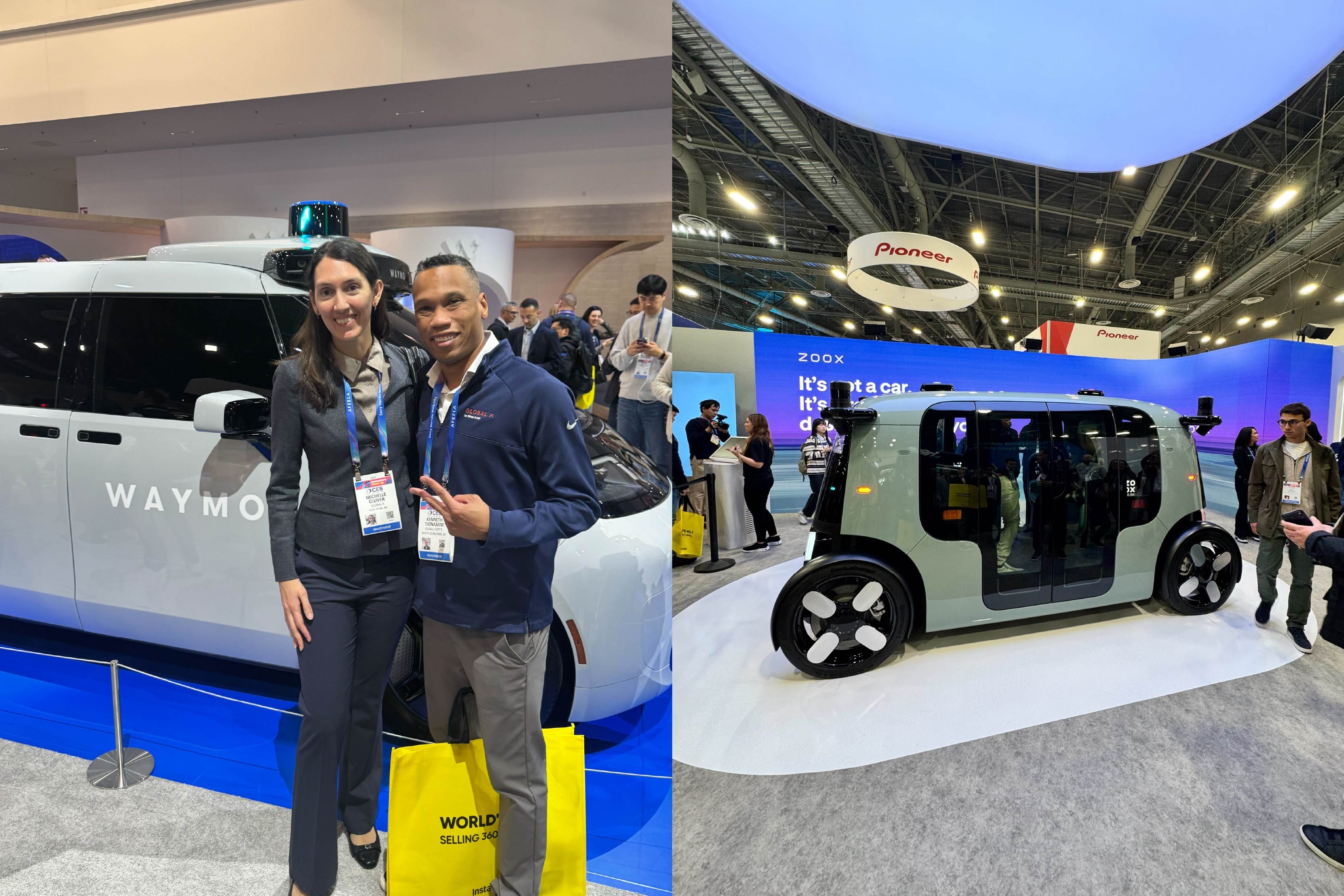
Left: Waymo is already available in 5 major U.S. cities, with expansion plans for 20 cities.
Right: Zoox is actively testing in seven markets while currently providing limited and free public robotaxi rides in Las Vegas.
While consumer-facing L4 self-driving started in robotaxi form, there are plenty more applications for this technology. Tensor’s folding steering wheel as it shifts between autonomous and human driven modes was an excellent reflection of this new era. They believe 2026 will be the year that autonomous vehicles enter mass production. The price points associated with this technology are already decreasing sharply and this trend is likely to continue as the number of sensors declines as companies optimize the positioning and type of sensors. This message was conveyed across both autonomous cars and trucks.
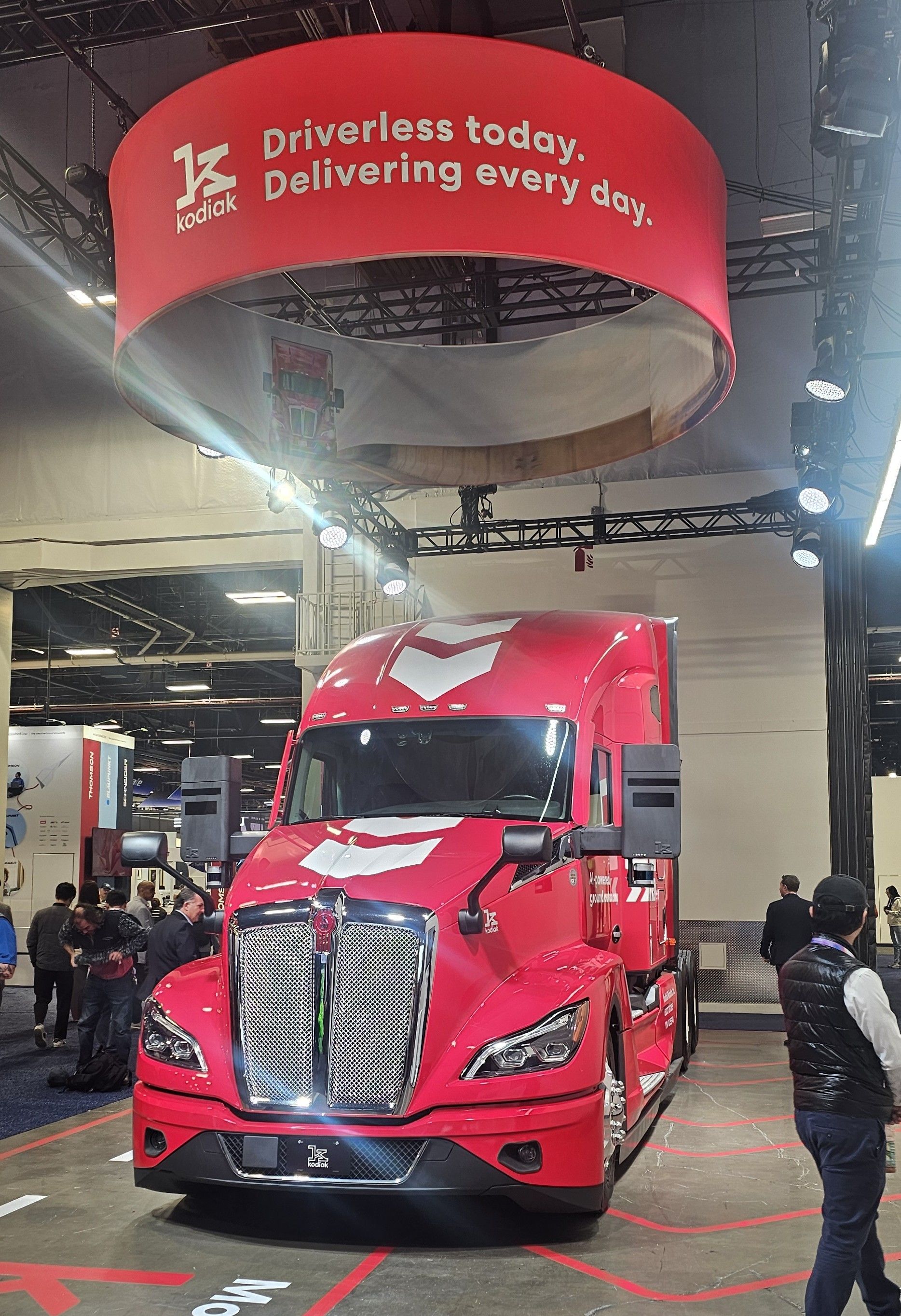
Autonomous trucks are already on the road and have progressed meaningfully in the last few years. There’re no longer restrictions on needing to take a hub and spokes approach, allowing a full end-to-end solution. Insurance is a critical consideration for self-driving vehicles. Kodiak noted that insurers have generally been supportive, with premiums currently comparable to those for human drivers and expected to become more favorable over time.
Kodiak’s modular system simplifies the installation and maintenance of sensor suites while helping enable more streamlined deployment across a wide range of vehicle types. Beyond commercial use, this technology also holds significant potential for military applications—a substantial opportunity given that the U.S. military operates one of the largest logistics network in the world.
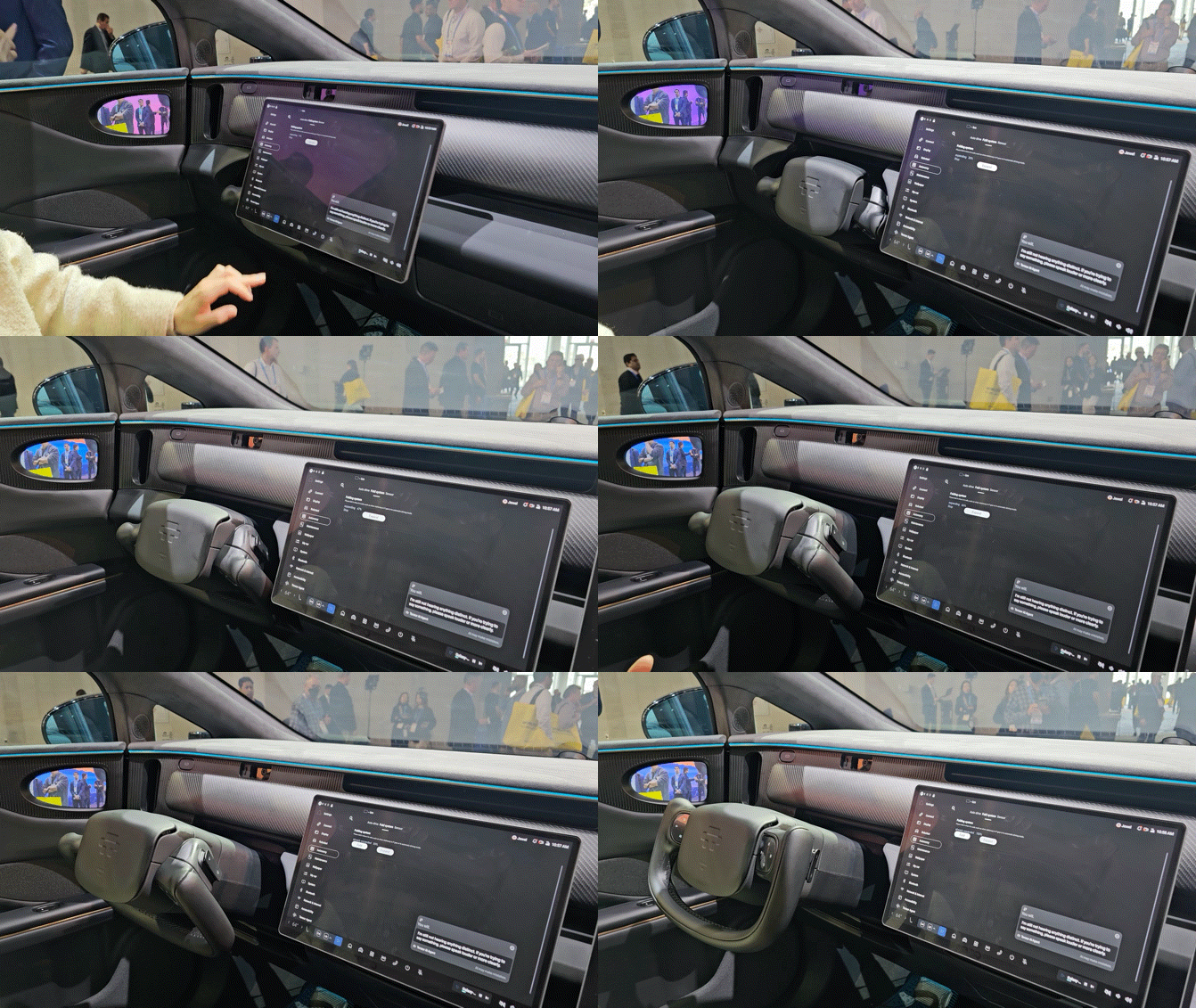
Top: Tensor’s folding steering wheel was an incredible visual for this new age of automation.
Bottom: Kodiak’s modular system simplifies the installation and maintenance of sensor suites while enabling seamless deployment across a wide range of vehicle types.
Robots are Coming
While humanoids dominated the illustrations of robotics, there are so many other form factors that have use cases across factory floors. We believe 2026 will be the year of acceleration across the robotics theme. Physical AI was the catchphrase of CES 2026, and we agree with this underlying trend.
Across CES there were incredible illustrations of robots boosting efficiency or working in dangerous environments such as mining or construction. In the case of construction, AI can increase accuracy, efficiency, and safety. Oshkosh illustrated how a robotic arm could partner with a pair of scissor lifts to efficiently lift a heavy beam and then weld it into place. This was a fascinating illustration of how AI paired machinery could operate across a wide range of useful tasks. Caterpillar took this to the next level with autonomous bulldozers working in supervised teams of five within predefined areas. Beyond lack of worker availability, the use of smart technology also helps with accuracy as the machines will only dig to a predefined depth.
An Army of Humanoids – Ready or Not
Humanoid robots were a dominant feature at CES 2026. Certain were factory floor ready while others had a few more tricks to learn. In our view, Chinese manufacturers dominated from a volume perspective but trailed the cutting-edge robotics applications illustrated by Boston Dynamics. Humanoids have progressed dramatically over the last few decades. Early form humanoids are hardly recognizable.
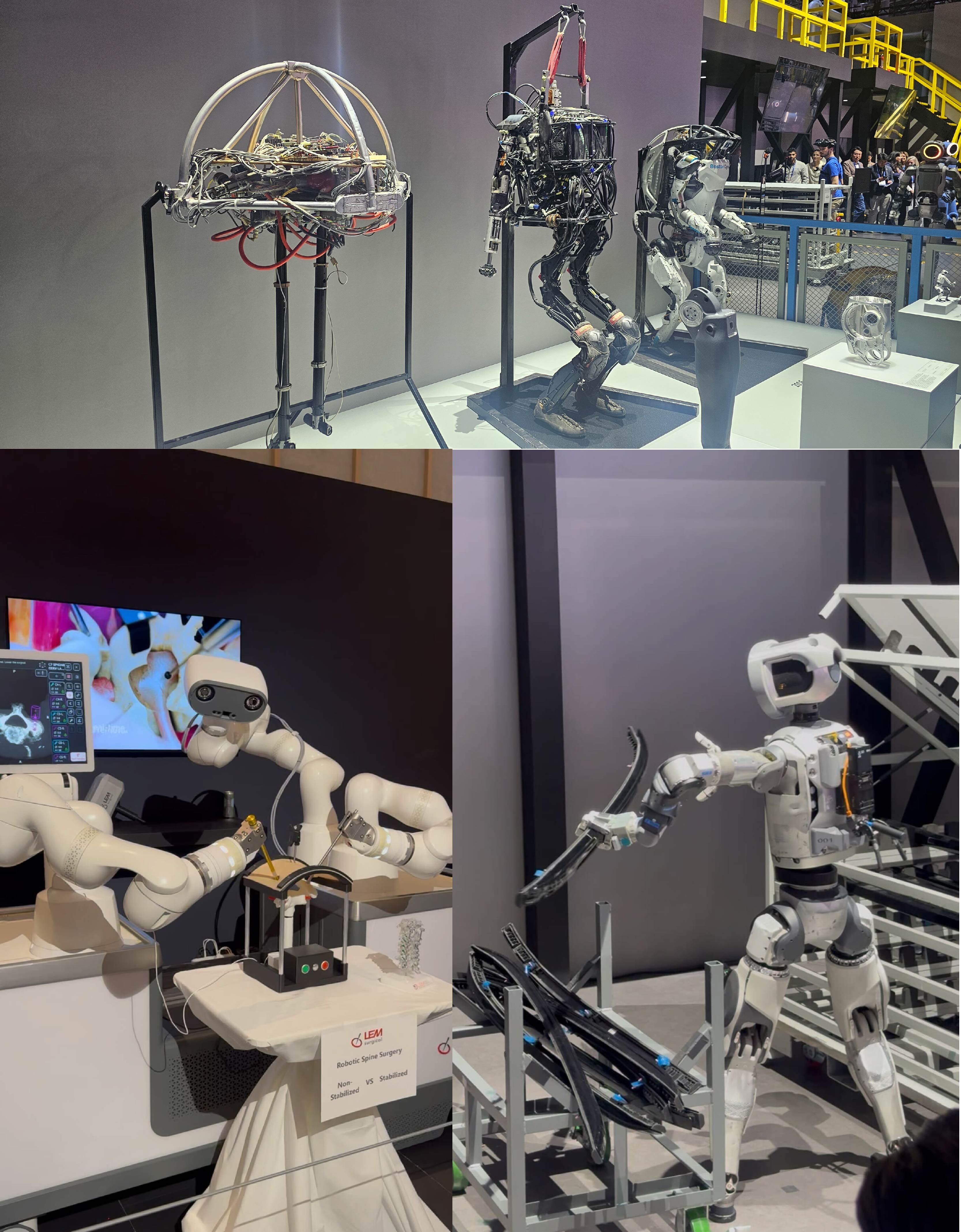
Top: Humanoid robots have come a long way over the last few decades. Boston Dynamic’s robots from 1990, 2007, and 2016 reflect just how far this technology has progressed.
Bottom Left: Robotic spine surgery where a robot can stabilize the bone before operating.
Bottom Right: Boston Dynamic’s recently launched humanoid robot, Atlas. This is currently the most impressive humanoid robot. Atlas is currently in training with the plan to roll them out at Hyundai’s Georgia factory by 2028.
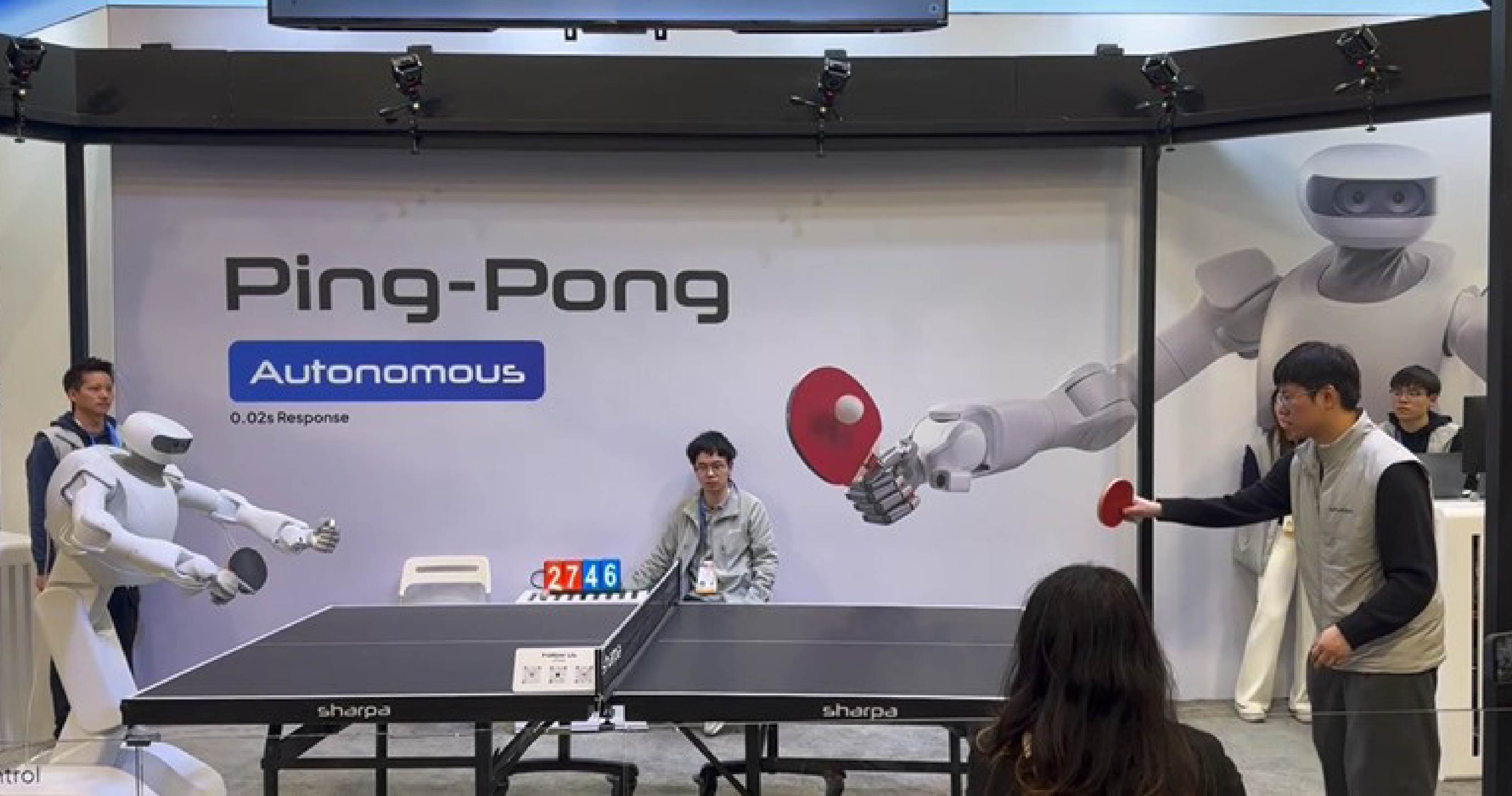
Below: Ping pong robot had some impressive rallies. Entertaining robots like this provide an additional way for robots to learn to track and respond to motion.
Carrying heavy objects and sorting are good examples of tasks where humanoids are well suited, but the applications are expanding. Additionally, these robots are starting to be multi-functional, with Agility Robotics having the ability to autonomously change their hand attachments based on the task.
While functionality has improved significantly, humanoids may take time to be deployed at scale across factories. According to Boston Dynamics’s CEO, these robots need to be able to learn quickly and complete 100s of tasks rather than just a handful. They’re targeting rolling out Atlas at Hyundai’s Georgia factory by 2028. Prior to that point, Atlas needs to learn new tasks within one-to-two days.1
The coordination and mobility of humanoid robots is an area we continue to watch. Advancing the precision of their coordination, how they synchronize movement across limbs and navigate complex environments will be critical for accelerating their practical deployment and reliability. We’ve seen improvement, but there’s more to be done, and we look forward to continued advancements.
The Future is Autonomous & it’s Approaching Fast
CES 2026 was an incredible opportunity to experience cutting edge technology and talk to the business leaders behind these ideas. The foundation has been developed, it’s now about scaling its applications. This is an exciting period for technological advancement, and this has major implications for portfolio positioning.
We believe thematic equity is a critical exposure within portfolios and maintaining a small, dedicated exposure to thematic equity can help advisors avoid trying to time the hot new trend. Given the progression in the AI narrative from the infrastructure layer to the application level, the beneficiaries are likely to continue to broaden away from mega-cap tech. This increases the importance of targeted thematic exposure. Robotics is an area we’re focused on for the year ahead, but believe thematic diversification remains important.