
Mobility once again emerged as a dominant theme at the 2026 Consumer Electronics Show (CES). More notably, for the first time since the early 2020s, the industry’s center of gravity shifted away from electric vehicles (EVs) and back toward autonomous driving. In our view, this transition is being enabled by meaningful advances in both hardware and software, driven by the rapid scaling of the broader AI ecosystem over the past few years. Nvidia’s Alpamayo physical AI platform – announced at CES – exemplifies this shift, aiming to accelerate autonomous driving development by dramatically expanding real-world and simulated data, a critical step toward higher levels of autonomy.
As such, we see a clear inflection point forming for the mobility sector. Robotaxi companies such as Waymo and Zoox noted plans to expand services into new markets in 2026, and Uber also expects to launch its autonomous ride service this year.1 Several traditional automakers also featured more advanced driver assist systems. Additionally, Caterpillar reinforced autonomy in its keynote, showcasing next-generation autonomous heavy equipment for construction and mining that integrates AI, machine learning, and edge computing to improve productivity and safety. 2
Across the show floor, demonstrations featured autonomous vehicle platforms, advances in LiDAR and radar sensing, next-generation battery technologies, and increasingly sophisticated in-vehicle infotainment systems, underscoring how intelligence, automation, and connectivity are converging to reshape the future of mobility.
This is one of two pieces on the leading themes from CES 2026. Read the companion article, CES 2026: AI and Robotics Shift from Hype to Deployment.
Key Takeaways
- The mobility sector is rapidly evolving towards higher levels of autonomous driving that could enhance safety, performance, and the overall user experience.
- Robotaxis are leading the autonomy push for passenger vehicles, while semi-autonomous to autonomous machinery options continue to expand within the construction, agriculture, and mining industries.
- Electric vehicle technologies continue to advance towards next-gen battery technologies, faster charging, and better performance.
Automakers Are Making Meaningful Progress Towards L4 Autonomy
Several automakers and suppliers highlighted progress towards level 4 (L4) autonomous driving systems, with a ramp-up to L3 and L4 systems becoming a reality. Most of the currently available autonomous systems are L2 or L2++, requiring the driver to monitor the system and take control when needed. L3 systems are where a sizeable leap to autonomy takes place. The vehicle is capable of driving itself in certain conditions and drivers no longer have to monitor the system constantly, although one is still needed in case an intervention request is made. L4 systems are designed to respond to unpredictable surroundings without the need for any human intervention, removing the need for a driver.
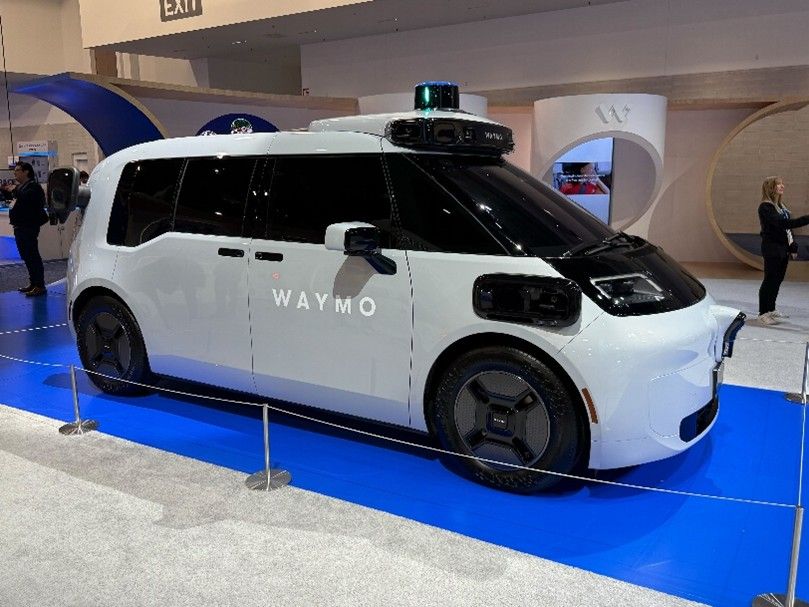
Our team noticed that the rideshare industry remains a clear leader in L4 autonomy. Waymo featured Ojai, its minivan-like robotaxi that is built by Chinese automaker Geely, which is expected to launch into commercial service by late 2026. The van operates autonomously using 13 cameras, six radar sensors, and four LiDAR sensors.3 Waymo has logged over 100 million miles of L4 autonomous driving, and the company is now working on expanding into more than a dozen cities over the next year, including cold weather climates like Denver and Indianapolis.4
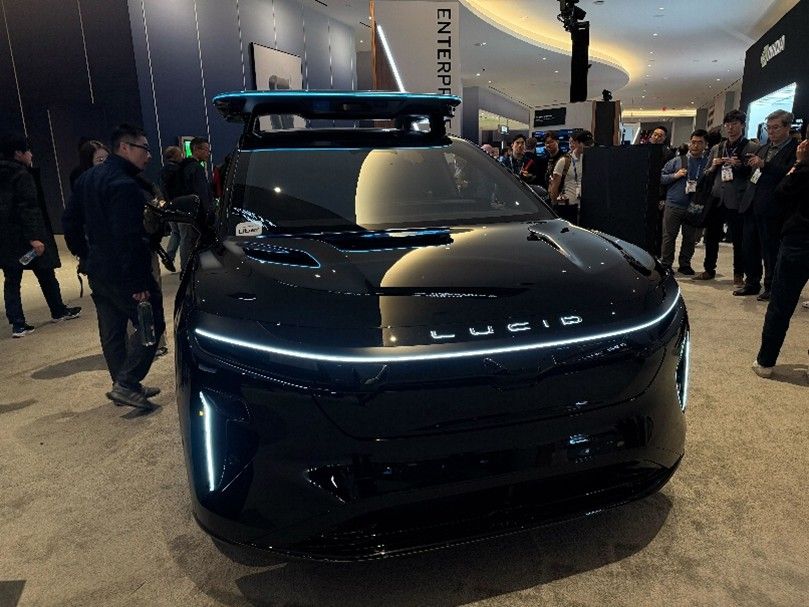
Hyundai also highlighted its Ioniq 5 robotaxi, while Uber featured its Gravity robotaxi in partnership with automaker Lucid and autonomous driver platform provider Nuro. Lucid is scheduled to begin production later this year in Arizona, and Uber plans to begin commercial use of the robotaxi in San Francisco in late 2026. Privately-held Tensor also debuted what it is calling ‘the world’s first personal robocar.’ The car is fully designed with L4 autonomy in mind, including a retractable steering wheel. Orders are first being opened up to customers in the Middle East.
Waymo and Uber Highlighted Upcoming L4 Robotaxi Models
Sources: Global X ETFs with information derived from: Waymo. (2026, Jan 6). CES Presentation.; Lucid. (2026, Jan 8). CES Presentation.
Traditional automakers also highlighted progress towards higher autonomy. BMW showcased its electric iX3 model with a L2 driver assist system that can provide steering assistance, speed control, and potentially enhanced safety. Ford is rolling out an AI-powered voice assistant in late 2026, and the automaker plans to include L3 autonomy systems alongside a new universal electric vehicle platform by 2028.5
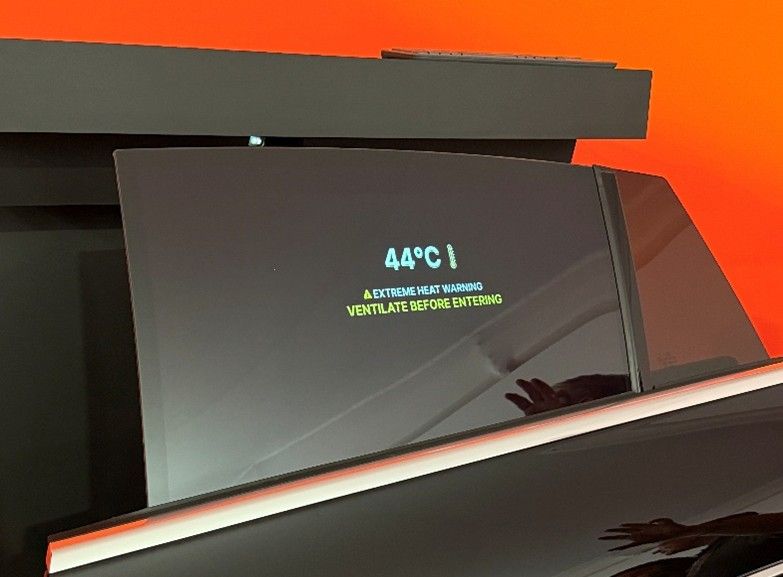
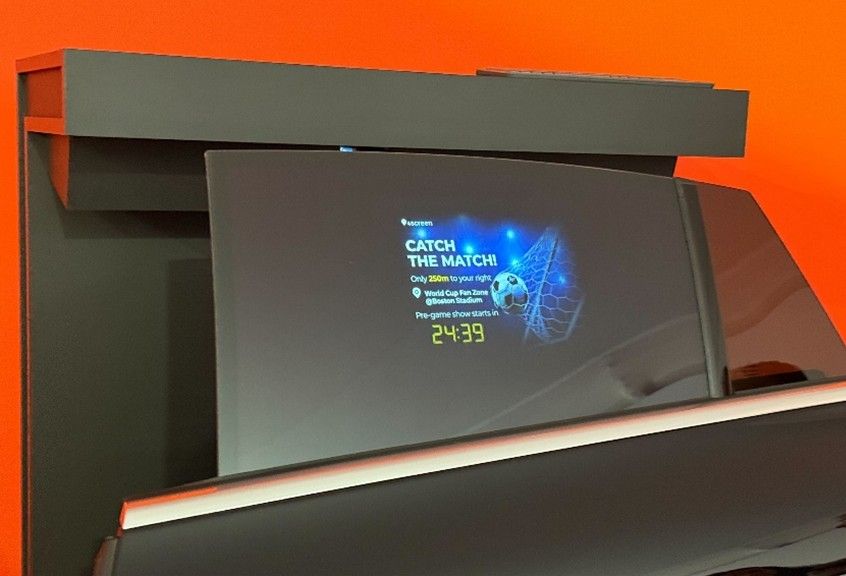
Automakers also remain focused on user experience as the industry begins to adopt L3 and L4 systems on a broader scale. With less or even no focus needed on the road, infotainment systems and personalization can become a central piece of the experience. This creates opportunities for fully digital, customizable dashboards, cabin intelligence systems, dynamic lighting, and personalized messages or advertisements that can be seen on the outside windowpanes, expanding the opportunity set for companies in the autonomy value chain.
Aumovio’s Window Projection Technology Could Enhance Safety, Personalization in Future Vehicles
Sources: Global X ETFs with information derived from: Aumovio. (2026, January 8). CES Presentation.
Partnerships Take Center Stage, Offering the Potential to Accelerate Autonomy and Electrification
Partnerships appear to be more pivotal than ever before on the path to fully autonomous vehicles. One of the most notable announcements was NVIDIA CEO Jensen Huang unveiling the Alpamayo tech platform, which includes open-source vision language models alongside simulated and physical AI driving datasets.6 With the physical AI system, Nvidia aims to provide researchers and automakers a foundation for building ‘thinking’ autonomous systems. In addition, the open physical and simulated datasets can help automakers more quickly build systems that can handle different geographies and the ‘long-tail’ of potential driving scenarios.
Mercedes-Benz and Lucid are among the companies already using the Alpamayo driving model. During our visit with Lucid, the automaker’s management team noted how the Nvidia partnership can help speed up the development of advanced driver assistance system (ADAS) functionality from L2++ to L3/L4. The partnership between Lucid, Uber, and Nuro has also likely contributed to all three companies scaling their autonomous capabilities. The three companies are initially planning to deploy 20,000 Lucid-Nuro robotaxis across U.S. and international markets, with the potential for additional orders over the coming years.7
Privately-held autonomous long-haul trucking company Aurora noted how its partnership with German-based tech manufacturer Aumovio can help bring down hardware costs while producing at scale. Aumovio will also provide a backup computer in the event the primary system fails. The two companies are also working with Amazon Web Servies (AWS) to further accelerate ADAS technology development while ensuring stringent safety standards.8
Original equipment manufacturers (OEMs) and suppliers remain committed to bringing down costs and further improving efficiency for EVs. For example, progress being made towards the commercialization of solid-state batteries stood out, with companies like Schaeffler and Donut Labs featuring models for cars and motorcycles, respectively. Schaeffler is currently working with three OEMs and two cell manufacturers to test and scale its solid-state technology, aiming to bring it to production by 2030. Next-gen solid state batteries could offer significantly higher energy density, faster charging, and enhanced safety.9 Additionally, Sony Honda Mobility, a joint venture between Sony and Honda, unveiled its latest AFEELA 1 EV model, which is expected to roll out later this year.
Autonomous Applications Continue to Expand Beyond Passenger Vehicles
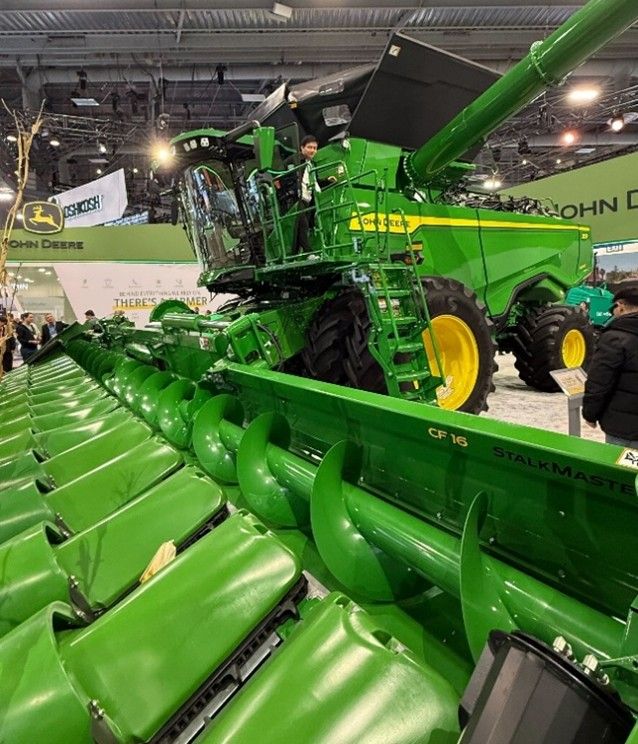
Deere featured its highly automated X9 combine harvester, which uses the company’s tech stack, cameras, and satellite imagery to monitor and identify crops. The self-driving machine can auto adjust speed, harvesting, and processing settings, boosting efficiency and minimizing crop losses. Deere estimates that the combine’s predictive ground speed automation can potentially boost productivity by 20%.10
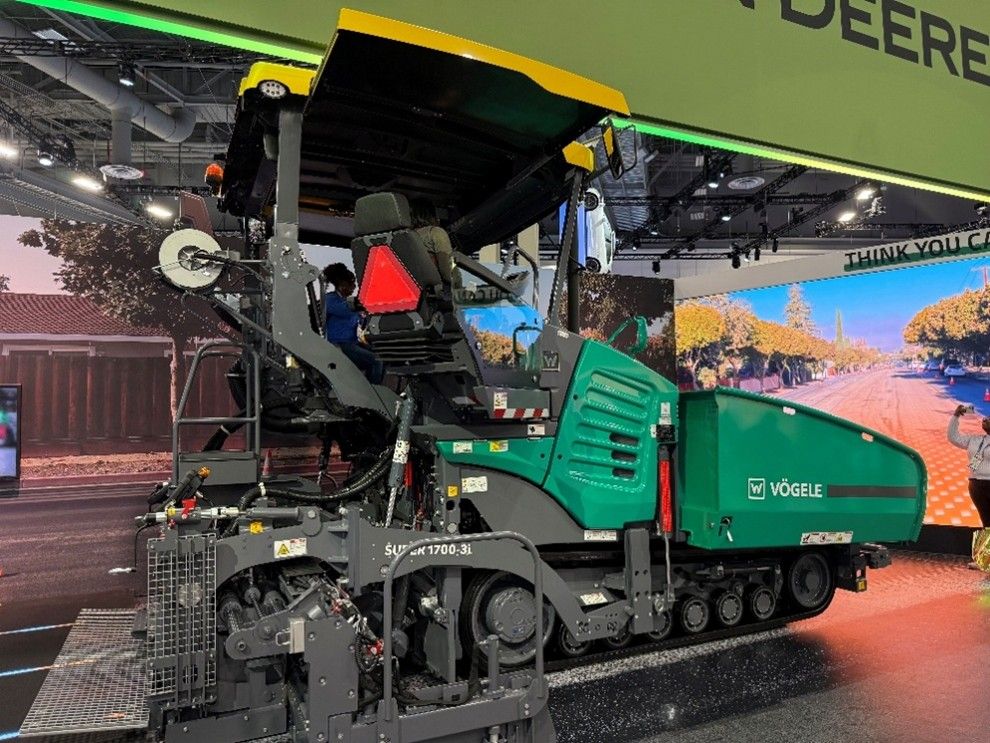
Deere also displayed its Vogele Road Paver, extending its agriculture-grade technology stack into road construction to automate steering and road-width adjustments. The equipment could lead to significant material savings while addressing labor shortage and safety concerns.
In previous years, Deere featured its autonomous tractors and precision sprayers at CES. As of December 2025, the company has more than 1 million connected machines in operation, with its digital operations center platform covering more than 500 million engaged acres around the world.11
Deere Featured Its Semi-Autonomous Combine Harvester and Road Paver Equipment
Sources: Global X ETFs with information derived from: John Deere. (2026, Jan 7). CES Presentation.
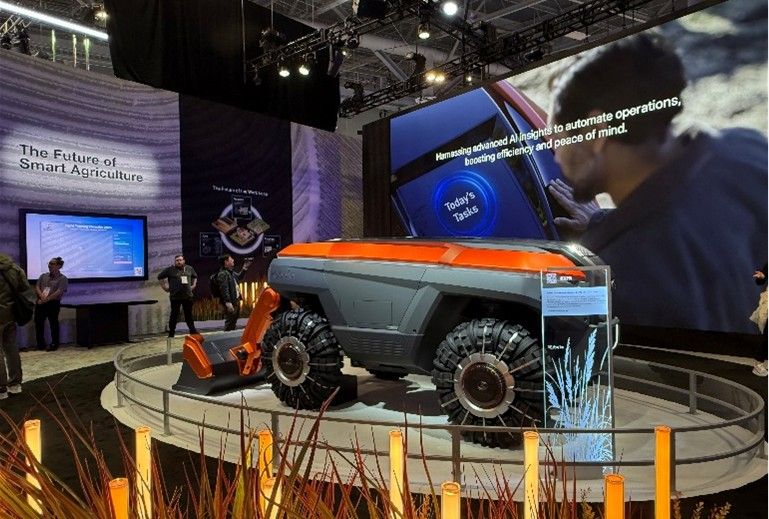
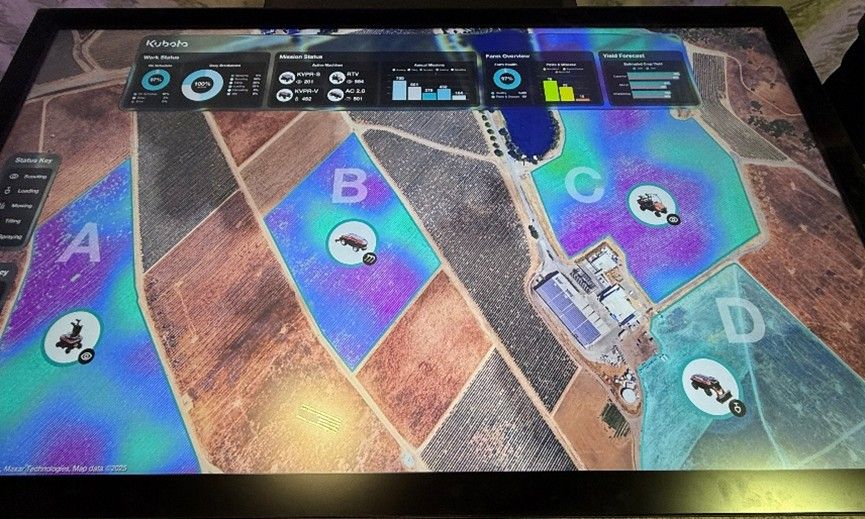
Kubota also showcased its AI-powered agriculture equipment, including a narrow tractor and ‘transformer’ robot that could be used for multiple applications. Kubota’s Digital Twinning System, which leverages data collected by the real-world equipment in the field, was also featured as a solution that can help boost precision farming and operational efficiency.
Caterpillar showcased semi-autonomous and autonomous machinery for construction and mining operations, which could boost site efficiency and safety. Aurora discussed their progress with L4 autonomous long-haul trucking in the United States, which could double truck utilization and help address labor shortages. The company launched its first commercial self-driving trucking service in Texas in May 2025.
Kubota Presented Next-Gen Equipment and Digital Twin Systems as the Future of Smart Agriculture
Sources: Global X ETFs with information derived from: Kubota. (2026, Jan 8). CES Presentation.
Conclusion: Mobility’s Advancements Deserve Market Attention
CES 2026 once again underscored the rapid acceleration towards a more autonomous and electric future for mobility. Robotaxis remain at the forefront of L4 autonomy. However, more strategic partnerships and the introduction of Nvidia’s Alpamayo model could accelerate the speed to market on additional advanced autonomous models. These technologies set a foundation for a future where passenger vehicles, trucks, and industrial equipment are smarter, safer, more efficient, and more dynamic.